Arminius and the Battle of Teutoburg Forest: Comprehensive Study Guide and Historical Analysis
Arminius and the Battle of Teutoburg Forest: Essential Historical Context

The Battle of Teutoburg Forest represents one of antiquity's most decisive military catastrophes — a calculated ambush that annihilated nearly 20,000 Roman soldiers, erased three entire legions, and permanently redirected the course of European history. In September 9 CE, amid the dense woodlands and treacherous marshlands of what is now northwestern Germany, a coalition of Germanic tribes led by the chieftain Arminius systematically destroyed Roman forces under Governor Publius Quinctilius Varus over several days of relentless slaughter that sent shockwaves through the Roman Empire.
This was far more than another frontier skirmish between Rome and so-called barbarian peoples. The Clades Variana (Varian Disaster), as the Romans termed it, stood as Rome's most severe military reverse since Hannibal's triumph at Cannae in 216 BCE. Three veteran legions — the XVII, XVIII, and XIX — were wiped out completely, and their numbers were never reactivated, a mark of lasting shame and superstition. The disaster so shattered Emperor Augustus that, according to the historian Suetonius, he would repeatedly strike his head against the palace walls, crying out "Quinctilius Varus, give me back my legions!"
The figure of Arminius himself makes this battle particularly compelling. A Germanic prince who had been raised in Rome, granted Roman citizenship, achieved the rank of Roman knight (eques), and served with distinction as a commander of Roman auxiliary forces before turning on his patrons in spectacular fashion. His deep understanding of Roman military doctrine, combined with his capacity to unite traditionally warring Germanic tribes and his strategic brilliance in selecting both terrain and timing, allowed him to orchestrate an almost flawless ambush against one of history's most formidable military organizations.
The battle's repercussions extended far beyond the immediate loss of life and territory. Rome permanently abandoned its ambitions to conquer Germania east of the Rhine River, establishing the Rhine-Danube frontier that would define the empire's northern boundary for centuries. This defensive posture ensured that Germanic territories remained outside Roman cultural and political influence, allowing distinct Germanic identities to evolve that would eventually shape medieval and modern Europe.
Arminius's victory ensured that Germania would not become another Gaul — Romanized, urbanized, and absorbed into Mediterranean civilization. Instead, the Germanic tribes preserved their autonomy, languages, and warrior traditions, ultimately playing decisive roles in Rome's eventual collapse centuries later. The Battle of Teutoburg Forest thus represents a pivotal moment when Europe's destiny hung in the balance, and the outcome determined that northern Europe would develop along fundamentally different lines from the Mediterranean world.
This comprehensive analysis examines the complex historical context leading to the battle, dissects the key figures whose decisions shaped the outcome, reconstructs the multi-day ambush itself, explores the immediate and long-term consequences, and considers how modern archaeology has revolutionized our understanding of this legendary confrontation.
Key Takeaways
- The Battle of Teutoburg Forest (September 8-11, 9 CE) resulted in the annihilation of three Roman legions — approximately 15,000-20,000 soldiers killed
- Arminius, a Romanized Germanic chieftain and Roman auxiliary commander, orchestrated the ambush by betraying his Roman patrons
- The defeat ended Roman expansion east of the Rhine River, establishing the frontier that would last centuries
- Emperor Augustus was so traumatized that he reportedly cried "Quinctilius Varus, give me back my legions!" and never recovered emotionally
- The destroyed legion numbers (XVII, XVIII, XIX) were never reassigned in Roman military history
- Arminius united multiple Germanic tribes who would normally compete with each other, demonstrating exceptional political skill
- Archaeological discoveries at Kalkriese since 1987 have confirmed the battle site and provided physical evidence of the massacre
- The battle became a powerful symbol of Germanic resistance, especially exploited during 19th-century German nationalism
The Roman Vision for Germania
Understanding Teutoburg Forest requires examining Rome's broader strategic goals, the nature of the Germanic territories they sought to control, and the political dynamics that made such a catastrophic defeat possible.
Augustus's Imperial Ambitions
Following Julius Caesar's conquest of Gaul in the mid-1st century BCE, the Rhine River served as a natural boundary dividing the largely Celtic tribes into distinctly Romanized provinces and free Germanic chiefdoms. For decades, this frontier remained relatively stable, but Emperor Augustus harbored far more ambitious plans.
Augustus envisioned extending Roman control to the Elbe River, hundreds of miles east of the Rhine, creating a new province called Germania that would encompass much of modern Germany and Poland. This expansion would accomplish multiple strategic objectives: securing a shorter, more defensible frontier; accessing the region's timber, minerals, and agricultural resources; and eliminating the threat posed by independent Germanic tribes who could potentially ally with other enemies of Rome.
The conquest appeared feasible. Roman legions had proven themselves against Celtic Gauls, Spanish tribes, and eastern kingdoms. Germanic warriors, while fierce, seemed disorganized compared to Roman military efficiency. Most importantly, Rome could exploit divisions between Germanic tribes, using some as allies against others — a divide-and-conquer strategy that had worked repeatedly throughout Roman expansion.
In the winter of 17/16 BCE, Legio V Alaudae lost its aquila (eagle standard) to the Sicambri tribe. Every legion carried an aquila as an embodiment of Roman spirit; losing it was the ultimate disgrace. With an aquila now in the hands of the Sicambri, Augustus realized the necessity of bringing the region of Germania to heel. The loss of a legion's eagle was not just militarily humiliating — it was a spiritual catastrophe that demanded vengeance. This incident galvanized Augustus's determination to subjugate Germania completely.
Initial campaigns showed promise. Between 12 BCE and 9 CE, Roman forces under commanders like Drusus (Augustus's stepson) and later Tiberius (Augustus's adopted son and future emperor) pushed eastward, establishing forts, building roads, and seemingly pacifying Germanic territories. By 6 CE, the region north of the Main River between the Rhine and the Elbe was administered as a Roman province by Publius Quinctilius Varus.
Rome's strategy combined military presence with administrative integration — collecting taxes, imposing Roman law, settling disputes through Roman magistrates, and generally treating Germania as it had treated other newly conquered territories. The only unconquered region was the kingdom of Maroboduus, ruler of the Marcomanni, situated in Bohemia. This powerful kingdom remained neutral but watched Roman expansion warily.
By 9 CE, the conquest appeared nearly complete. Roman forts dotted the landscape, Germanic auxiliaries served in Roman armies, and local elites like Arminius had adopted Roman ways. The transition from military occupation to settled province seemed to be proceeding smoothly. This perception of success would prove catastrophically wrong.
Germanic Society and Political Fragmentation
The Germanic peoples Rome sought to conquer were not a unified nation but a complex mosaic of tribes, each with distinct identities, territories, and interests. Major tribes included the Cherusci (Arminius's people), Chatti, Marsi, Bructeri, Chauci, Angrivarii, and many others. They spoke related but mutually distinct languages, followed similar religious practices, and shared certain cultural values while maintaining fierce tribal independence.
Germanic society organized around kinship groups and personal loyalty rather than abstract legal structures. Leaders earned authority through martial prowess, generosity to followers, and success in warfare rather than inheriting it automatically. This made Germanic politics fluid and volatile — a successful war leader could rise rapidly, but failure meant equally rapid loss of status.
Tribes valued freedom intensely, resenting external authority and prizing the ability to make their own decisions. This individualism extended to warfare — Germanic warriors fought ferociously but often as individuals seeking personal glory rather than as disciplined units following commanders' orders. This made them formidable in ambushes and raids but less effective in set-piece battles against Roman formations.
Religion permeated Germanic life. Sacred groves, springs, and natural features served as sites where tribes worshipped gods like Wodan (Odin), Donar (Thor), and others. Priests and priestesses interpreted omens, and warriors believed that dying bravely in battle ensured entry to warrior paradises. This religious worldview made Germanic fighters willing to take tremendous risks and accept heavy casualties in pursuit of victory.
Economically, tribes lived primarily through agriculture, animal husbandry, and hunting. Unlike the highly urbanized Mediterranean world, Germania had few cities — most people lived in scattered farmsteads or small villages. This dispersed settlement pattern made the region difficult to control militarily but also meant it lacked the concentrated wealth that made other conquests profitable for Rome.
Tribal warfare was endemic but typically limited in scope. Raids for cattle, slaves, or revenge were common, but wars of conquest aiming to destroy or absorb other tribes were rare. Tribes formed temporary alliances when facing common threats but dissolved them once the threat passed. This fragmentation had historically prevented Germanic peoples from threatening Rome seriously — they fought each other far more than they fought Romans.
Arminius's achievement was not simply military but political: he united tribes who normally competed or fought each other into a coalition focused on a common enemy. This required exceptional diplomatic skill, charisma, and a compelling vision that transcended traditional tribal rivalries.
Varus's Misgovernance
Publius Quinctilius Varus acted as governor of the proto-province of Germania. He had command of the three legions constituting the army of Germania Inferior: Legio XVII, Legio XVIII, and Legio XIX. His appointment proved disastrous, not because he lacked ability entirely but because his skills matched poorly with the situation he faced.
Varus came from an old patrician family and had served competently in other positions. He had been consul in 13 BCE and had governed both Africa and Syria, where his administrative abilities had proven adequate. He was also connected to the imperial family through marriage to Augustus's grandniece, giving him the political connections that typically led to prestigious appointments.
However, Varus was fundamentally an administrator rather than a soldier. His experience in Syria — a wealthy, urbanized, thoroughly Romanized province — had taught him to govern through bureaucracy, taxation, and legal structures. He approached Germania with the same mindset, attempting to impose Roman civil administration on a territory that was barely pacified militarily.
Varus's critical mistake was cultural tone-deafness. He tactlessly treated the high-spirited Germans as inferior and tried to Romanize them against their will. This policy roused resentment among the Cherusci and led to Varus's disastrous defeat. He held court sessions to settle disputes according to Roman law, imposed taxes Germanic tribes found oppressive, and generally behaved as if Germania were already a settled, peaceful province rather than contested territory requiring careful negotiation with potentially hostile peoples.
Varus also failed to recognize or respond to warning signs. Segestes, a pro-Roman Germanic chieftain (and ironically, Arminius's father-in-law), repeatedly warned Varus that Arminius was plotting rebellion. According to sources, Segestes even urged Varus to arrest the conspirators. Varus dismissed these warnings, trusting Arminius's apparent loyalty and his own judgment about Germanic affairs.
This trust was not entirely foolish — Arminius had every reason to appear trustworthy. He had been raised in Rome, served loyally in Roman campaigns, achieved Roman citizenship and equestrian rank, and commanded auxiliary troops. He spoke Latin, understood Roman culture, and had personal relationships with Roman commanders. From Varus's perspective, Arminius represented exactly the kind of Romanized local elite that facilitated Roman rule throughout the empire.
Varus could not conceive that someone so integrated into Roman systems would betray them. This failure of imagination — the inability to understand that assimilation could be tactical rather than genuine — would cost him and his legions everything.
Arminius: The Architect of the Ambush
No figure better embodies the complex relationships between Rome and the peoples it sought to conquer than Arminius. His life straddled two worlds, and his choices shaped history.
Roman Education and Military Service
Arminius was born into a noble family among the Germanic Cherusci tribe around 18/17 BCE. His father, Segimer, served as a chieftain, and Arminius grew up familiar with both Roman and Germanic cultures. His unusual trajectory — from Germanic prince to Roman officer to leader of Germanic resistance — began in childhood.
As part of Rome's standard practice for managing potentially hostile territories, young Arminius and his brother Flavus were taken to Rome as hostages, ensuring their father's cooperation. This was not imprisonment — high-status hostages received excellent education and treatment, with the goal of creating Romanized elites who would support Roman interests when they returned to their homelands.
In Rome, Arminius received military training in tactics, strategy, engineering, and command. He learned Latin, studied Roman law and customs, and was socialized into Roman elite culture. By his early twenties, he had achieved significant success: Roman citizenship, equestrian status (a rank below senator but still prestigious), and command of auxiliary troops. He served with distinction in campaigns in Pannonia (modern Hungary and Croatia area), fighting skillfully and demonstrating leadership.
Arminius frequently acted as a messenger between the Romans and the Germanic tribes, and it was in this role that he was able to curry favor for his revolt among the tribal leaders. His position as cultural intermediary gave him unique access to both Roman military planning and Germanic tribal councils — access he would exploit brilliantly.
Everything about Arminius's public persona suggested a success story of Romanization. He was precisely the kind of figure Roman administrators pointed to as proof that "barbarians" could be civilized and integrated into the empire. Varus trusted him implicitly. But behind this Roman exterior, Arminius nurtured a different identity. Whether he always planned betrayal or whether Roman treatment of his people drove him to it remains debated. What is certain is that by early 9 CE, Arminius had decided that Roman rule threatened everything he valued about Germanic freedom and culture.
Building the Conspiracy
It is unknown when Arminius decided to plan an attack against Rome and its forces; it could have occurred during his time as a youth during his "Romanization" as a hostage, or even as late as his service in Germania under Varus. Regardless, his mind was made up by early 9 CE when he began deceiving Varus and recruiting Germanic leaders and warriors to his cause.
Arminius's challenge was immense: unite tribes who traditionally competed with each other, convince them to risk everything in attacking Rome's legions, maintain absolute secrecy until the trap was ready, and coordinate a complex ambush over difficult terrain against a professional army. Any single failure could doom the entire enterprise.
His recruiting pitch emphasized shared grievances and common danger. Roman taxation, legal interference, and cultural arrogance offended tribal independence. More ominously, if tribes did not resist now, Rome would continue consolidating control until resistance became impossible. The window for effective action was closing — now or never.
Arminius also had to overcome suspicions about his own loyalties. His Roman connections made some Germanic leaders wonder whether he was a genuine ally or a Roman agent provocateur. His ability to convince skeptics of his sincerity while simultaneously deceiving Varus demonstrates extraordinary political skill and personal charisma.
The coalition he assembled included the Cherusci (his own tribe), Marsi, Chatti, Bructeri, and Chauci, among others. Each tribe contributed warriors, with the combined force numbering perhaps 15,000-20,000 fighters — substantial but not overwhelming compared to three Roman legions with auxiliaries.
The planning was meticulous. Archaeological excavations at Kalkriese reveal that the attack had been carefully prepared during the summer. Warriors constructed camouflaged earthwork fortifications along the planned ambush route, stockpiled weapons, and positioned themselves for coordinated attacks. Arminius was not leading a random rebellion but an ingeniously planned operation.
Crucially, Arminius maintained his role as Varus's trusted adviser throughout these preparations. He attended Roman military councils, provided intelligence about Germanic affairs, and behaved entirely normally — a performance that required nerves of steel given that discovery meant certain death not just for himself but for the entire conspiracy.
The Deception of Varus
The trap required Varus to take his legions through specific terrain where Arminius's forces waited in ambush. To accomplish this, Arminius fabricated a report of a rebellion by distant tribes — possibly the Angrivarii — requiring Roman military response.
The timing was perfect. September marked the season when Roman armies left summer camps and marched back to permanent winter quarters along the Rhine. Varus's legions would be moving anyway — Arminius simply needed to convince Varus to take an alternate route through the Teutoburg Forest and adjacent marshlands rather than following the usual military roads.
Arminius's argument must have seemed reasonable: dealing with the rebellion quickly would prevent it from spreading; taking a different route would allow Varus to both reach winter quarters and suppress the uprising; Germanic auxiliary troops (commanded by Arminius) could guide the legions safely through terrain they knew well; speed was essential before rebels could consolidate their position.
Varus accepted this logic. From his perspective, it was a routine security operation — quashing a minor rebellion before it became serious. He had no reason to doubt Arminius, who had served loyally and whose advice on Germanic affairs had always proven sound.
Historians also tell us that Segestes, the Roman father-in-law of Arminius, forewarned Varus; unfortunately, the Roman commander disregarded this and marched his legions toward total annihilation. Even explicit warnings could not overcome Varus's trust in Arminius and confidence in Roman military superiority.
The decision made, Varus ordered his legions to prepare for the march. They would follow Arminius's route through the forest, deal with the supposed rebels, and arrive at winter quarters in time for the cold season. None suspected they were marching toward the most catastrophic Roman defeat in generations.
The Battle of Teutoburg Forest
The battle itself unfolded over multiple days in September 9 CE, as Germanic warriors systematically destroyed three Roman legions through ambush, attrition, and terror in some of the worst terrain imaginable for Roman military operations.
The Roman March into the Trap
The Roman army moved out of summer camps sometime in March and followed Varus's plan. Logistical challenges beset the army and security was lax. The location of the summer camp is unknown, but probably near or at what is now Minden, Germany.
By September 9 CE, Varus commanded an impressive force. Including cavalry squadrons and auxiliary cohorts, plus non-combatants like servants, merchants, and soldiers' families, the column stretched for miles and numbered perhaps 20,000-25,000 people total. This massive column began its march following Arminius's proposed route.
The terrain was catastrophically disadvantageous for Roman tactics. The route passed through dense forest, marshlands, and narrow passes between hills — exactly the environment where Roman discipline and superior equipment provided no advantage. Heavy rain made the ground muddy and treacherous, hindering movement and making it impossible to see far ahead.
Roman legions excelled in open-field battles where they could form disciplined lines, coordinate maneuvers, and use their superior training and equipment effectively. Confined to narrow paths through forest and marsh, they could not deploy properly. The baggage train — wagons carrying supplies, equipment, and non-combatants — further restricted mobility and created chaos when attacked.
Day One: Initial Assault
The attack commenced suddenly and from multiple directions. The result was a bloodbath that lasted three days, and up to 30,000 people were killed. Germanic warriors emerged from forests on both sides of the Roman column, launching javelins, arrows, and rocks before melting back into cover.
The attacks were coordinated but not a single massive assault. Instead, Arminius employed hit-and-run tactics, striking isolated sections of the column, killing soldiers, and disappearing before Romans could organize effective counterattacks. This approach maximized Germanic advantages — knowledge of terrain, mobility in forest fighting, and ability to disengage — while minimizing their disadvantages in direct combat against armored, disciplined Roman troops.
The Romans attempted to maintain formation and march forward, but casualties mounted steadily. Wounded men could not keep up with the column. The baggage train blocked paths, preventing rapid movement. Panic spread as soldiers realized they were surrounded in unfamiliar, hostile territory with no clear path to safety.
By nightfall, the Roman force had traveled only a few miles at enormous cost. They attempted to establish a fortified camp, but the ground was unsuitable and time was limited. The exhausted, demoralized troops spent a miserable night knowing the attacks would resume at dawn.
Days Two and Three: Annihilation
The second day brought more of the same horrors. Germanic attacks continued from all directions. Roman officers tried to maintain order, but the situation deteriorated steadily. The column fragmented as different sections became separated in the confusing terrain.
Worsening rains and a violent wind are said to have affected the fighting capabilities of the already exhausted soldiers. The weather became another enemy — cold rain soaked through equipment, bowstrings weakened, metal armor became heavy and cold, and visibility dropped to near zero in the dense forest.
Discipline began breaking down. Some Roman units maintained cohesion and fought effectively when attacked, but others panicked and fled. The auxiliaries, many of whom were Germanic themselves, faced impossible choices — continue fighting for Rome against their own peoples, or desert to the attackers. Many chose desertion, leaving the legions even more isolated.
By the third day, the situation had become hopeless. The Roman force was surrounded, exhausted, running low on supplies and ammunition, and had lost perhaps half its number already. Understanding that total defeat was inevitable, Varus and his officers fell on their swords to avoid capture by Arminius's men.
Varus's suicide was both practical and honorable by Roman standards — death by his own hand was preferable to capture, torture, and execution by enemies. His officers followed his example, depriving the remaining troops of leadership at the critical moment.
The final collapse was total. Many other Romans took their own lives, others surrendered, and still others attempted to flee. Only a few escaped to the safety of the provinces. Those who were captured were likely enslaved or sacrificed to the gods, their aquilae desecrated.
The site of the final stand has been identified near modern Kalkriese, where archaeological evidence shows concentrated remains of the desperate last defense. Germanic warriors finished off survivors, stripped corpses of valuable equipment, and celebrated one of history's most complete military victories.
Casualties and Significance
In total, nearly 20,000 Romans were killed in the engagement, while German losses were minimal. The disparity in casualties reflects the nature of the battle — Germanic forces fought from positions of advantage, ambushing and harassing an enemy who could not effectively fight back.
The destruction was complete and systematic:
- All three legions (XVII, XVIII, XIX) were annihilated
- Six cohorts of auxiliary infantry were destroyed
- Three cavalry squadrons (alae) were eliminated
- All three legion eagles (aquilae) were captured — an unprecedented humiliation
- Most officers, including all senior commanders, died
- Thousands of non-combatants were killed or enslaved
Only scattered survivors reached safety, bringing news of the disaster to Roman garrisons along the Rhine. Their accounts of the ambush, the terrain, and Arminius's betrayal shocked commanders who had considered Germania nearly pacified. The three destroyed legion numbers were never reassigned in Roman military history — a mark of respect for the dead and superstitious fear that the cursed numbers would bring bad luck to any future units.
Immediate Aftermath and Roman Response

The immediate aftermath of Teutoburg Forest shaped Roman policy for generations and established the Rhine-Danube frontier that would define Europe's political geography for centuries.
Augustus's Reaction
News of the disaster reached Rome in autumn 9 CE. Upon hearing of the defeat, the 72-year-old Emperor Augustus, according to the Roman historian Suetonius in The Twelve Caesars, was so shaken that he stood butting his head against the walls of his palace, crying "Quintili Vare, legiones redde!" ("Quintilius Varus, give me back my legions!")
The emperor never recovered from the shock. Augustus, who had spent decades expanding Roman power and prestige, saw decades of conquests undone in three days. The loss was not just military but psychological — the aura of Roman invincibility, carefully cultivated through centuries of victories, had been shattered by "barbarians" in a forest ambush.
For several months, Augustus cut neither his beard nor his hair, the traditional Roman sign of mourning, mourning not just the dead but the death of his Germanic ambitions. Rome itself panicked. Rumors spread that Germanic armies might cross the Rhine and invade Gaul or even Italy. Augustus ordered emergency defensive preparations, recruited new troops, and sent his adopted son Tiberius (Rome's most capable general) to stabilize the frontier with whatever forces remained.
The Germanic Sweep
The victory was followed by a clean sweep of all Roman forts, garrisons, and cities east of the Rhine; the two Roman legions remaining in Germania, commanded by Varus's nephew Lucius Nonius Asprenas, simply tried to hold the Rhine. Arminius did not rest on his victory. His coalition systematically attacked every Roman position east of the Rhine, destroying forts, massacring garrisons, and eliminating Roman civilians. The message was clear: Rome was no longer welcome in Germanic territories.
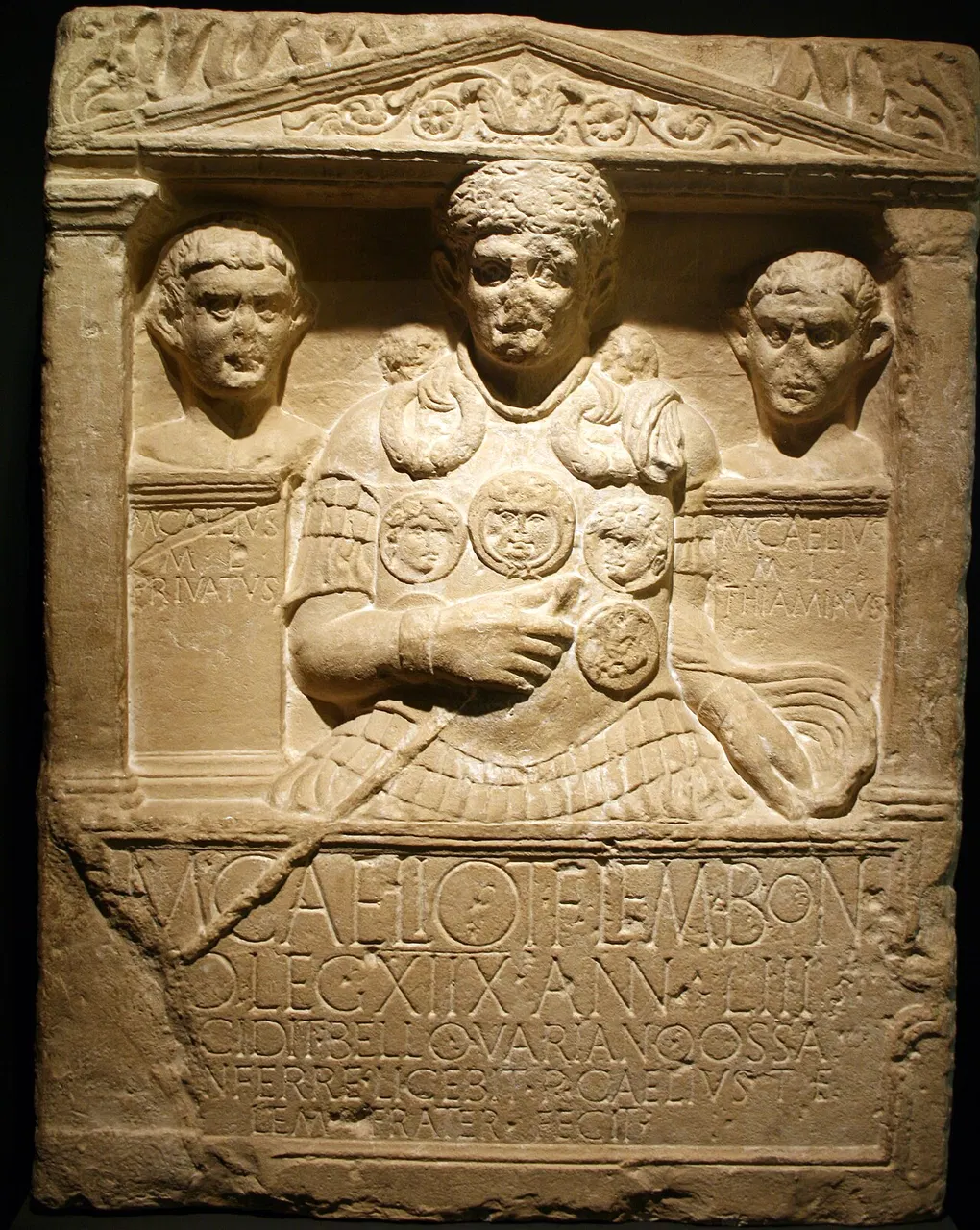
One fort, Aliso, most likely located in today's Haltern am See, fended off the Germanic alliance for many weeks, perhaps even a few months. After the situation became untenable, the garrison under Lucius Caedicius, accompanied by survivors of Teutoburg Forest, broke through the siege and reached the Rhine. The defense of Aliso demonstrated that Romans could still fight effectively when properly prepared and positioned, but isolated garrisons could not hold against sustained Germanic attacks.
Arminius attempted to cross the Rhine and invade Gaul, but the remaining Roman legions and Tiberius's reinforcements prevented this. They had resisted long enough for Nonius Asprenas to organize the Roman defense on the Rhine with two legions and for Tiberius to arrive with a new army, together preventing Arminius from crossing the Rhine and invading Gaul. The Rhine became the new Roman frontier, and it would remain so for centuries.
Germanicus's Revenge Campaigns
Rome could not leave the disaster unavenged. Between 14 and 16 CE, Germanicus (Tiberius's adopted son and nephew of Augustus) led major military expeditions into Germania aimed at recovering the lost eagles, punishing the tribes, and restoring Roman prestige.
Seven years after the battle, the Romans sent Germanicus to avenge their fallen comrades by devastating the countryside. These campaigns achieved some success — Germanicus recovered two of the three lost eagles, defeated Germanic forces in several battles, and visited the Teutoburg battlefield, where he found and buried the remains of Varus's legions.
The burial expedition revealed the horror of the massacre. Tacitus describes scattered bones, skulls nailed to trees as offerings to Germanic gods, and the ruins of Roman fortifications hastily built and quickly overrun. The scene haunted Roman soldiers and reinforced determination never to allow such a disaster again.
However, Germanicus's campaigns did not reconquer Germania. They proved that Rome could still project power across the Rhine and inflict significant damage on Germanic tribes, but they also demonstrated the enormous cost and difficulty of controlling the territory. After three years of campaigning, Tiberius (now emperor after Augustus's death) recalled Germanicus and ended offensive operations. Nevertheless, the battle had a decisive impact in the long run; the Romans never consolidated their hold on Germania Interior, the land east of the Rhine. Rome's strategy shifted permanently from conquest to defense, accepting the Rhine-Danube line as the empire's natural limit.
Arminius's Later Years
Arminius survived his greatest triumph by only twelve years. He continued to fight against the Romans, but the conflict remained a stalemate. He was poisoned by his fellow Germans in 21 CE, possibly by his own family, who feared his increasing autocracy.
Victory brought Arminius prestige but also problems. His success in uniting tribes to defeat Rome made him powerful and influential, but many Germanic leaders resented his attempts to maintain this unity in peacetime. The coalition that had functioned so well with a common enemy began fracturing as tribes reasserted their traditional independence.
Arminius's vision of a united Germania under strong central leadership clashed with traditional Germanic political culture that emphasized tribal autonomy and resisted permanent concentrations of power. His own relatives, fearing he might establish a kingship and permanent rule, conspired against him. The poisoning of Arminius exemplified the paradox of his achievement: he could unite tribes against Rome but could not create lasting political structures to preserve that unity. Germanic independence, which he fought to preserve, also prevented the emergence of the kind of state power that might have consolidated his victories into permanent changes.
Archaeological Discoveries at Kalkriese
For centuries, the Battle of Teutoburg Forest existed primarily in literary sources. Modern archaeology has transformed our understanding by revealing the physical evidence of Rome's disaster.
Locating the Battlefield
Only Tacitus casually mentioned that these battles were said to have taken place near the Teutoburg Forest, but no geographical map indicated this mountain range — until the 17th century, when the Osning was renamed the Teutoburg Forest. For centuries, historians debated where exactly the battle occurred. Dozens of locations across northwestern Germany were proposed, each with advocates arguing for their site based on interpretation of ancient sources and local tradition. Without physical evidence, the debate remained unresolved.
The breakthrough came in 1987 when Major Tony Clunn, a British army officer and amateur archaeologist stationed in Germany, was metal-detecting near the village of Kalkriese in Lower Saxony. He discovered numerous Roman coins, many stamped with "VAR" — indicating they had been distributed by Varus's army. This discovery prompted professional archaeological excavations beginning in 1989 that have continued intermittently ever since. The findings conclusively identified Kalkriese as a major battle site from the correct time period and provided dramatic evidence of the massacre.
Physical Evidence of the Massacre
Key archaeological discoveries include:
- Thousands of artifacts: Roman military equipment including swords, spearheads, armor fragments, helmets, tools, coins, and personal items scattered across the site
- Germanic earthwork fortifications: A defensive wall and ditch system constructed by Germanic forces to channel Roman troops into kill zones
- Scattered human remains: Bones showing evidence of violent death, consistent with Tacitus's description of unburied Roman dead
- Concentration patterns: Artifacts clustered in areas suggesting where Roman forces made final stands or attempted to break through Germanic positions
- Coins with countermark VAR: Proving the site's connection to Varus's army specifically
After the carnage, Arminius and the Germanic tribes meticulously combed the battlefield, seizing anything valuable, such as Roman armor, helmets, gold and silver, utensils, and weapons. The archaeological discoveries primarily comprise items overlooked or dropped by the victors during their looting. The earthwork fortifications proved particularly revealing — this defensive structure, coupled with concentrations of battle debris, reflected the Romans' inability to breach the strong defense of the Germanic tribes. Germanic warriors had prepared the battlefield carefully, constructing positions that forced Roman troops into constrained spaces where they could not employ their superior tactics.
Today, the Museum und Park Kalkriese occupies the battle site, providing visitors with comprehensive exhibits about the battle, its context, and its consequences. The museum includes an expansive outdoor area with trails leading to a recreated part of the earthen wall from the battle and other outdoor exhibits. An observation tower, housing most indoor exhibits, offers visitors a comprehensive view of the battle site. The museum displays thousands of artifacts recovered from the site, including fragments of legionaries' studded sandals, spearheads, a silver-plated Roman officer's ceremonial face-mask, and numerous personal items that humanize the soldiers who died there. Interactive exhibits explain Roman and Germanic military tactics, the political context, and the battle's long-term significance.
Cultural Legacy and Historical Memory

The Battle of Teutoburg Forest transcended its immediate military and political significance to become a powerful symbol exploited by various movements across centuries.
Ancient and Medieval Traditions
In Roman memory, Teutoburg Forest represented both humiliating defeat and cautionary lesson. Roman historians like Tacitus used the battle to critique overconfident expansion policies and incompetent leadership. The disaster provided a convenient explanation for why Rome's borders stopped at the Rhine — not because Romans could not conquer further, but because the cost of controlling such difficult territory exceeded its value.
For Germanic tribes, the victory became legendary but did not create lasting unity. Arminius's memory survived in oral traditions, but without writing or centralized institutions, the details became mythologized and fragmented. Medieval Germanic peoples knew vaguely of ancestors who had defeated Rome but lacked historical documentation.
The Hermann Myth and Nationalism
The legacy of the Germanic victory was resurrected with the recovery of the histories of Tacitus in the 15th century, when the figure of Arminius, now known as "Hermann" (a mistranslation of the name "Armin"), was rediscovered by German scholars. The Renaissance recovery of classical texts coincided with growing German national consciousness. Humanist scholars searching for German origins found Arminius's story in Tacitus and transformed him into "Hermann" — a proto-German national hero who had preserved Germanic independence against Latin imperialism.
The story gained particular resonance during the Napoleonic era. In 1806, the French army of Napoleon Bonaparte decisively beat the armies of the German states. The humiliation was too great for the Germans, who started to look to the battle in the Teutoburg Forest as their finest hour. As Napoleon spoke a Romance language and presented himself as a Roman emperor, it was easy for the Germans to remind each other that they had once before defeated the welschen Erbfeind — the Latin-speaking arch-enemy.
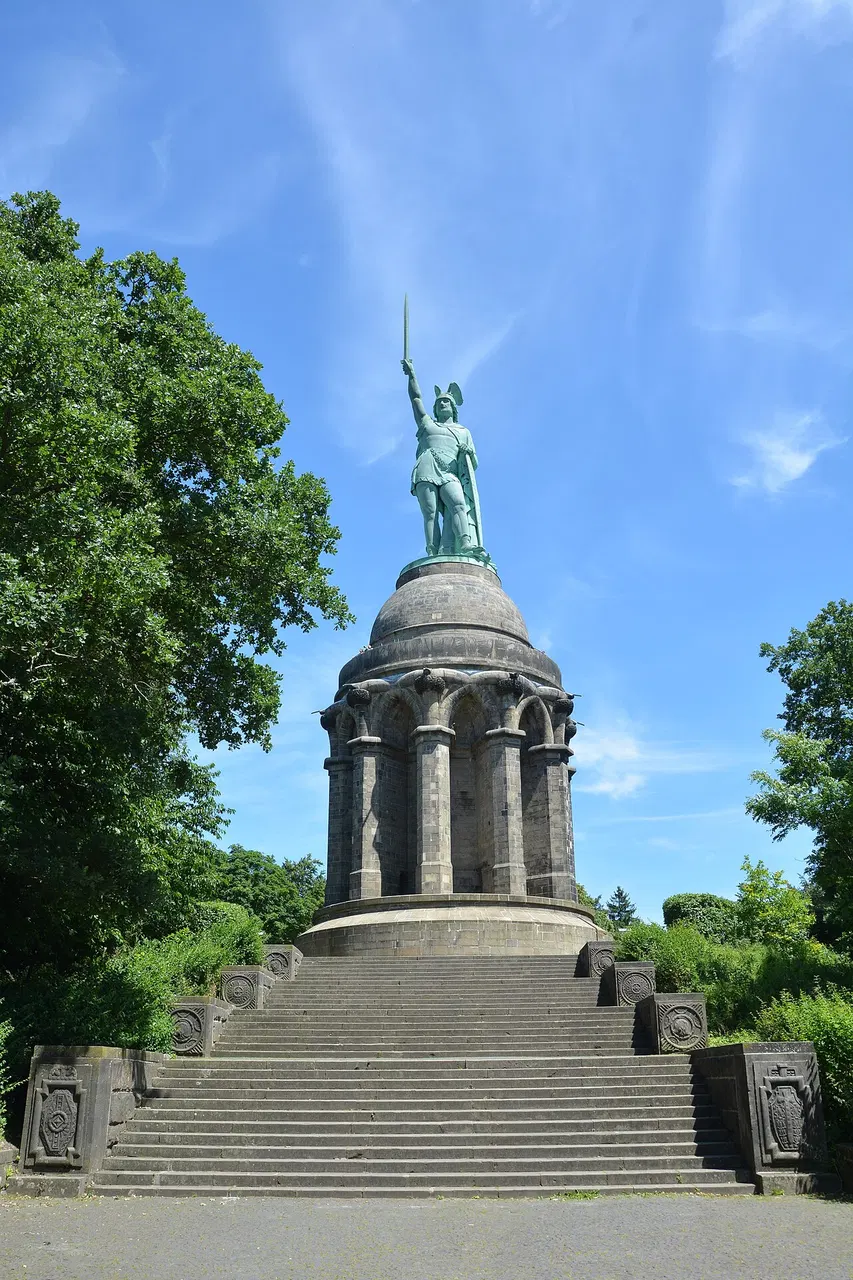
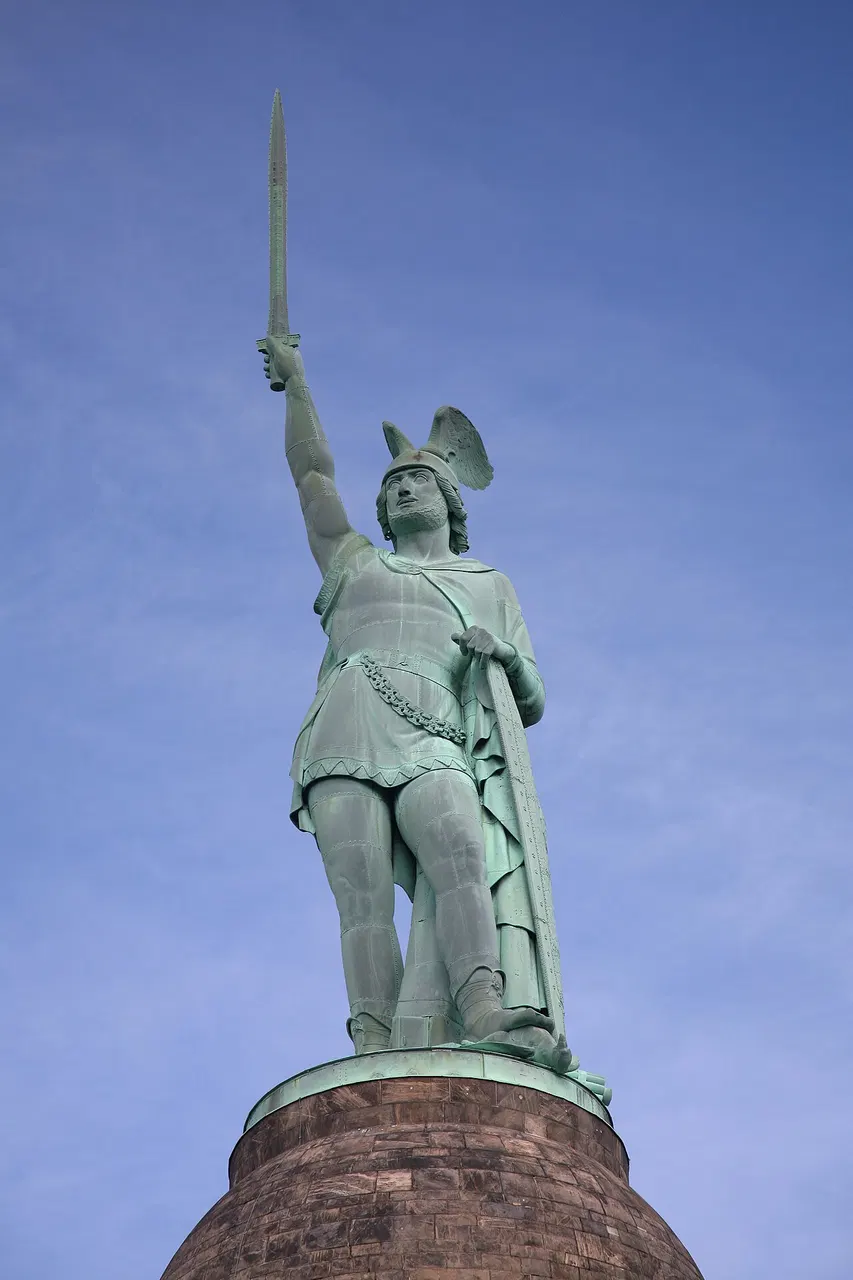
During the 19th century, German nationalists embraced Hermann/Arminius as a symbol of German unity and resistance to foreign domination. It was not until 1875 CE that the Hermannsdenkmal was erected: 57.4 meters high, the monument raises its sword pointing westward. The Hermann Monument remains a controversial symbol of German nationalism, reflecting the complex interplay between historical fact and national mythology.
Modern Scholarship and Responsibility
The Nazi regime exploited Hermann/Arminius imagery extensively, presenting the battle as evidence of eternal Germanic racial superiority and hostility toward Rome (symbolically, Western civilization). This appropriation poisoned the historical memory and made objective discussion difficult. Post-World War II, German historians worked to reclaim Teutoburg's history from nationalist mythology.
Modern scholarship emphasizes the battle's genuine historical importance — it did establish the Rhine frontier and prevent Germanic Romanization — while rejecting nationalist interpretations that read modern ethnic conflicts into ancient events. The battle involved specific tribes and Roman forces at a particular historical moment, not eternal racial antagonisms. The archaeological work at Kalkriese has been instrumental in grounding the story in verifiable fact rather than ideological fantasy.
Strategic and Historical Significance
The Battle of Teutoburg Forest stands among history's most consequential military encounters, not because it destroyed an empire — Rome survived and indeed thrived for centuries afterward — but because it established limits to that empire that shaped European development fundamentally.
Had Varus defeated Arminius's ambush, or had Germanic resistance collapsed after the massacre, Rome might have consolidated control over Germania east to the Elbe. This alternative history would have produced a radically different Europe: Germanic peoples Romanized like Gauls; Latin languages potentially spreading across modern Germany; Roman cities, roads, and institutions transforming the region's culture; Christianity arriving earlier through Roman rather than medieval missionary efforts.
Instead, Germania remained independent, preserving tribal cultures and languages that eventually evolved into the Germanic nations of medieval and modern Europe. The Rhine-Danube frontier became one of history's most significant political boundaries, dividing Romanized Mediterranean civilization from Germanic northern Europe for centuries.
Arminius achieved what few resistance leaders accomplish: a decisive military victory that permanently altered imperial strategy. Unlike Vercingetorix, Boudicca, or other celebrated resisters, Arminius actually stopped Rome's expansion and secured lasting independence for his people. This makes him genuinely exceptional in Roman military history.
Yet his personal fate — poisoned by his own people just twelve years after his greatest triumph — illustrates the limitations of his achievement. He could destroy Roman legions but could not create the political unity necessary to preserve Germanic independence permanently. His death demonstrated that defeating an external enemy did not automatically solve internal political challenges.
Conclusion
The Battle of Teutoburg Forest remains permanently relevant not just as military history but as a case study in how intelligence, deception, and terrain can overcome seemingly insurmountable advantages; how cultural misunderstanding contributes to political and military disasters; and how individual leaders' decisions in specific moments can have consequences echoing across millennia. Modern archaeology has grounded centuries of mythologies in physical reality, revealing the brutal truth of the three-day massacre through scattered bones, corroded weapons, and personal effects of soldiers who died far from home. The Kalkriese excavations remind us that beneath the symbols and narratives lie real human experiences — legionaries who trusted their commander and died terrified in dark forests; Germanic warriors fighting desperately to preserve their freedom; and a leader whose tactical brilliance and strategic vision changed the course of Western civilization.
Additional Resources
To deepen your understanding of Arminius and the Battle of Teutoburg Forest, explore these authoritative sources:
- Britannica's comprehensive article on the Battle of Teutoburg Forest provides detailed analysis of the battle and its significance
- World History Encyclopedia's detailed treatment offers extensive information on military aspects and historical context
- Museum und Park Kalkriese official site provides information about archaeological discoveries and visiting the battle site
- Livius.org's scholarly treatment of the battle offers additional analysis from ancient sources