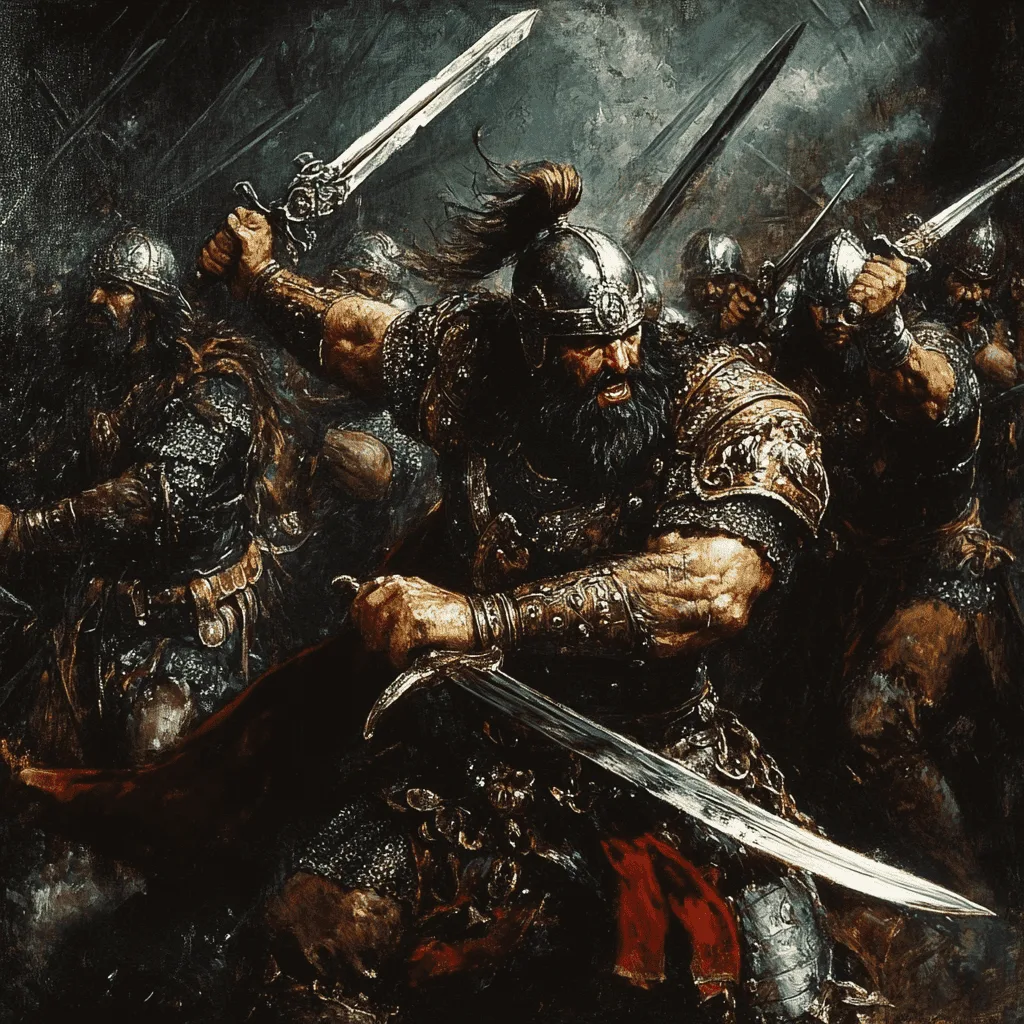
Baybars Study Guide: The Mamluk Sultan Who Defended the Middle East in the 13th Century
Introduction: The Slave Sultan Who Saved the Islamic World
The story of Baybars al-Bunduqdari reads like fiction, yet every word is anchored in historical fact. Born a slave on the Eurasian steppes, sold in a Damascus market, trained as a Mamluk warrior, and eventually crowned the fourth Sultan of the Mamluk Sultanate (r. 1260–1277), Baybars accomplished what no other leader of his era could: he halted the Mongol juggernaut at Ain Jalut, dismantled the Crusader states, and rebuilt a shattered Islamic political order from the ashes of the Abbasid Caliphate.
What elevates Baybars beyond mere conqueror is the historical crucible in which he operated. By 1260, the Islamic world faced annihilation from two directions. The Mongol Empire had already crushed Baghdad, murdered the Caliph, and swept through Syria. Simultaneously, European Crusader kingdoms still held strategic ports and fortresses along the Levantine coast. Egypt stood as the last independent Islamic power in the region, and its survival was anything but certain.
Baybars not only preserved that survival—he transformed it into dominance. His victory at the Battle of Ain Jalut in 1260 marked the first major defeat of a Mongol army in open combat, shattering their aura of invincibility. Over the next seventeen years, he captured Crusader stronghold after stronghold, including the legendary fortress of Antioch, one of Christianity's most ancient and revered cities in the East.
Yet Baybars was far more than a warrior. He was a sophisticated administrator who reformed the Mamluk state, established the most advanced postal and intelligence system of the medieval world, restored the Abbasid Caliphate in Cairo, and created a stable, prosperous empire that would dominate the Middle East for more than 250 years. This article examines Baybars' extraordinary rise, his revolutionary military campaigns, his administrative and diplomatic achievements, and his lasting impact on the Middle East.
The World Baybars Inherited: A Region on the Brink
The Mongol Catastrophe
To understand the magnitude of Baybars' achievements, one must first grasp the existential crisis that gripped the Islamic world in the mid-13th century. The Mongol invasions under Genghis Khan and his successors represented an apocalyptic threat unlike any the region had faced. Their armies—highly mobile, disciplined, and ruthless—had conquered most of Eurasia, building the largest contiguous land empire in history.
The symbolic and psychological heart of the Islamic world was Baghdad, capital of the Abbasid Caliphate that had ruled (at least nominally) since 750 CE. Baghdad represented Islamic learning, culture, and religious authority—a metropolis of perhaps one million people, home to the House of Wisdom, and the center of Sunni Islam.
In 1258, the Mongol commander Hulagu Khan laid siege to Baghdad. The Abbasid Caliph al-Musta'sim, weak and indecisive, failed to mount an effective defense. When the city fell, the Mongols unleashed one of history's most devastating massacres. Contemporary sources claimed between 200,000 and one million people were killed in systematic slaughter that lasted days. The Caliph was executed—according to legend, wrapped in a carpet and trampled to death by horses, as Mongols believed spilling royal blood directly was inauspicious. The House of Wisdom and Baghdad's legendary libraries were destroyed, with countless manuscripts thrown into the Tigris River. Accounts claimed the river ran black with ink for months. Mosques, palaces, hospitals, and schools were demolished. The irrigation systems that had sustained Mesopotamian agriculture for millennia were destroyed, beginning an environmental decline that persisted for centuries.
The psychological impact was shattering. If Baghdad could fall, if the Caliph could be murdered, then nothing was safe. The Mongols appeared to be an unstoppable divine punishment. After Baghdad's fall, Hulagu Khan continued westward into Syria, conquering Aleppo and Damascus with relative ease. By 1260, Mongol forces stood at the borders of Egypt, the last major independent Islamic state in the region. If Egypt fell, the entire Islamic heartland—from Central Asia to North Africa—would be under Mongol control. Into this desperate situation stepped Baybars, whose military genius would halt the Mongol advance and begin the Islamic world's recovery from catastrophe.
The Crusader States: A Persistent Challenge
While the Mongol threat was immediate and apocalyptic, the Crusader presence in the Levant represented a chronic challenge that had persisted since 1099, when the First Crusade captured Jerusalem and established European Christian kingdoms in the heart of the Islamic world.
By the mid-13th century, the Crusader states had been significantly reduced from their early 12th-century peak:
- The Kingdom of Jerusalem had lost the holy city itself to Saladin in 1187 and now consisted of a coastal strip centered on Acre.
- The County of Tripoli controlled a portion of the Lebanese coast.
- The Principality of Antioch remained under Crusader control in northern Syria.
- Numerous Crusader fortresses dotted the landscape, many controlled by powerful military orders like the Knights Hospitaller and Knights Templar.
While weakened, the Crusader states remained formidable. They controlled important ports connected to Europe, ensuring fresh supplies and reinforcements. The military orders maintained elite warrior-monks who were among the finest heavy cavalry of the medieval period. Their fortifications were among the most advanced in the world, with castles like Krak des Chevaliers representing the pinnacle of medieval military architecture. The Crusader presence was more than a military threat—it represented an ongoing humiliation for the Islamic world, a constant reminder that Christians controlled lands that Muslims considered rightfully theirs.
The Mamluk System: Slavery as a Path to Power
The force that would stop both Mongols and Crusaders was the Mamluk Sultanate—one of history's most unusual political systems. "Mamluk" literally means "owned" or "slave" in Arabic, and the Mamluk military-political elite consisted of men who had been purchased as slaves, trained as warriors, and then freed to form a ruling military caste.
The Mamluk system originated in the 9th century but reached its full development under the Ayyubid Dynasty in Egypt and Syria. Ayyubid rulers purchased young boys, typically from Turkic and Circassian peoples of the Eurasian steppes and Caucasus region, and subjected them to intensive military training.
The logic of this system was sophisticated: Mamluks had no local ties or tribal affiliations, making them loyal primarily to whoever purchased and trained them. Purchased as boys, they were socialized entirely within the military system, creating a warrior caste with shared identity. They were trained from youth in cavalry warfare, becoming elite mounted warriors. After completing training and demonstrating competence, they were freed but remained part of the military caste, often rising to high rank based on merit.
In 1250, the Mamluks seized power in Egypt, overthrowing the last Ayyubid ruler and establishing their own sultanate. This system produced extraordinary military effectiveness but also chronic political instability, as Mamluk commanders frequently competed for power through assassination and coup. Into this system of meritocratic violence emerged Baybars, perhaps the most capable of all Mamluk commanders.
From the Steppes to the Throne: Baybars' Rise
Origins and Enslavement
Baybars was born around 1223 CE in the Kipchak-Dasht region, part of the Kipchak Confederation located in modern-day southern Russia, Ukraine, or Kazakhstan. He belonged to a Turkic tribal people who inhabited the vast Eurasian steppes. His full name was Rukn al-Din Baybars al-Bunduqdari—the last part meaning "Baybars the Crossbowman," apparently because he was sold to a crossbow unit commander. He was described as tall and powerfully built, with fair skin and blue eyes. One eye had a cataract or some form of opacity, described in Arabic sources as a white spot. This physical characteristic became one of his identifying features. He was captured as a child, likely during a Mongol raid or during one of the frequent conflicts that swept the steppes in the early 13th century. The irony is profound—the Mongols' own slave raids would produce the commander who would stop Mongol expansion.
The Mamluk Training System
Young Baybars was sold in a slave market, eventually ending up in the hands of a Mamluk unit commander in Egypt who recognized the boy's potential. The slave markets of the medieval Islamic world were sophisticated commercial operations where young captives were evaluated for various purposes. Boys who appeared strong, intelligent, and potentially trainable as warriors commanded premium prices.
Baybars entered the Mamluk training system, which was rigorous and comprehensive. Military training included horsemanship, archery (both from horseback and on foot), sword fighting, lance work, and tactics. Physical conditioning built endurance and strength. Islamic education taught Arabic, the Quran, and Islamic law and culture, transforming foreign captives into Muslims loyal to the Islamic world. Discipline and unit cohesion were instilled through shared hardship and training.
Baybars excelled in this system, demonstrating the physical prowess, tactical intelligence, and aggressive personality that would characterize his entire career. He was apparently fearless in combat, personally brave to the point of recklessness, and possessed natural leadership abilities that other Mamluks respected.
Rising Through the Ranks
By the 1240s, Baybars had been freed and had risen to command positions within the Mamluk forces. The turning point came during the Seventh Crusade (1248–1254). King Louis IX of France launched an ambitious crusade aimed at conquering Egypt. The Crusaders initially succeeded, capturing the port of Damietta in 1249. However, as they advanced toward Cairo, they were stopped at the Battle of al-Mansurah in 1250, where Mamluk forces inflicted a devastating defeat on the Crusaders. Baybars fought with distinction in this battle, demonstrating the tactical skills and personal courage that would define his career. The Crusaders were eventually forced to surrender, with King Louis IX himself captured and later ransomed. During this period, the Mamluks seized power in Egypt from the Ayyubid Dynasty, and Baybars became one of the prominent commanders in the new Mamluk Sultanate.
Preparing for the Mongol Storm
By 1260, Baybars was one of the most respected Mamluk commanders, known for his tactical brilliance and personal bravery. When news arrived of the Mongol advance through Syria and the fall of Damascus, the question facing the Mamluks was whether to resist or submit. Sultan Qutuz decided to fight, recognizing that submission to the Mongols would mean the end of Mamluk power and likely their execution. Baybars played a crucial role in preparations. He advocated for aggressive resistance rather than defensive strategy, helped organize the Mamluk army, and served as the vanguard commander, leading the advance forces that would make first contact with the Mongols. His tactical advice proved crucial in the battle that would change history.
The Battle of Ain Jalut (1260): History's Pivot Point
The Mongol Ultimatum
After conquering Syria, Hulagu Khan sent ambassadors to Egypt with the standard Mongol ultimatum demanding submission. The message was characteristically direct and threatening: resistance was futile, the Mongols had conquered everyone who opposed them, and Egypt should submit or face annihilation.
Sultan Qutuz's response was defiant—he executed the Mongol ambassadors, a deliberate insult that made war inevitable. In Mongol culture, ambassadors were sacrosanct, and killing them was considered among the gravest offenses. Qutuz was signaling that Egypt would fight rather than submit.
However, the strategic situation had shifted in Egypt's favor. Hulagu Khan had withdrawn most of his army back to Mongolia due to a succession crisis following the death of the Great Khan Möngke. He left only a reduced force under General Kitbuqa to secure Syria. This gave the Mamluks a window of opportunity—they would face perhaps 10,000–20,000 Mongols rather than Hulagu's full army of over 100,000. Even with reduced numbers, the Mongols were formidable, and their aura of invincibility was a psychological weapon as powerful as their actual forces.
The Battle: September 3, 1260
The Mamluk army of approximately 20,000 warriors marched north from Egypt, crossing into Palestine. Baybars commanded the vanguard, the advance force that would make first contact with the enemy. The location chosen for battle was Ain Jalut (Spring of Goliath) in the Jezreel Valley in northern Palestine. The choice of battlefield was strategic—relatively open terrain suitable for cavalry warfare, but with surrounding hills where forces could be concealed.
Baybars' tactical role was crucial. His vanguard unit deliberately engaged the Mongol forces, then executed a feigned retreat—a tactic the Mongols themselves had used successfully countless times. The Mongols, seeing what appeared to be a defeated force fleeing, pursued aggressively, believing they were exploiting a rout. Baybars led the Mongols into a trap, drawing them into the valley where the main Mamluk army was positioned. When the Mongols were fully committed, the concealed Mamluk forces emerged from the surrounding hills, enveloping the Mongol army.
The battle became a fierce cavalry melee. Both sides were expert mounted archers and cavalry fighters, making this a clash of the world's two most effective cavalry traditions. The Mamluks fought with desperate determination, knowing that defeat meant not just military loss but the likely extinction of their state and possibly the end of Islamic independence. Sultan Qutuz personally rallied wavering units, reportedly throwing his helmet to the ground and shouting "O Islam!" to inspire his troops. Baybars' forces fought with particular distinction, repeatedly charging the Mongol lines and disrupting their formations. After hours of intense combat, the Mongol forces broke and fled, with Kitbuqa captured and executed. The Mongols had been decisively defeated—their first major loss since the beginning of their conquests decades earlier.
The Significance of Ain Jalut
The Battle of Ain Jalut ranks among the most consequential battles in world history. It halted Mongol westward expansion permanently, establishing the effective limit of Mongol conquest. The Mongols never again seriously threatened Egypt or North Africa. It preserved the independence of the Islamic heartland and ensured the survival of Islamic political power. It shattered the myth of Mongol invincibility, demonstrating that they could be beaten in open battle by a well-led, determined force. It established the Mamluks as the dominant power in the Middle East, a position they would maintain for over 250 years. For Baybars personally, the victory at Ain Jalut established his reputation as one of the age's greatest military commanders and positioned him for supreme power.
Seizing Power: The Assassination of Qutuz
In the aftermath of Ain Jalut, the Mamluk army marched back toward Egypt, liberating Damascus and other Syrian cities from Mongol control along the way. However, tension grew between Sultan Qutuz and his commanders, particularly Baybars. Qutuz had promised to reward commanders who distinguished themselves at Ain Jalut with governorships and land grants. Baybars expected to be appointed governor of Aleppo. Qutuz refused or delayed granting the promised reward, possibly because he feared Baybars' growing power and popularity.
On October 24, 1260, while returning from campaign, Baybars and co-conspirators assassinated Qutuz during a hunting expedition. The attack was swift and brutal, with Baybars reportedly striking the first blow. Baybars immediately claimed the sultanate and secured the support of enough Mamluk commanders to make his seizure of power effective. This pattern—successful military commander assassinating the sultan and seizing power—was disturbingly common in Mamluk politics, reflecting both the meritocratic violence of the system and its chronic instability. However, Baybars would prove more capable of consolidating power than most who seized the throne through murder.
Military Campaigns: Crushing the Crusaders
Strategic Vision
Upon becoming sultan, Baybars faced a complex strategic situation. The Mongol threat remained, but equally pressing was the Crusader presence in coastal cities and fortresses. Rather than merely containing these threats, Baybars developed a comprehensive strategy to eliminate them entirely.
His approach was methodical and ruthless:
- Systematic reduction of Crusader strongholds through siege warfare, starting with weaker positions and gradually isolating stronger fortresses.
- Preventing European reinforcement by conducting campaigns during seasons when Mediterranean sailing was difficult.
- Divide and conquer tactics, negotiating with some Crusader states while attacking others.
- Economic warfare, destroying agricultural lands and interrupting trade.
- Psychological warfare, sometimes offering generous surrender terms, other times conducting massacres to terrorize garrisons into surrender.
Over seventeen years, Baybars conducted over 38 military campaigns—an average of more than two major operations per year.
The Siege of Arsuf (1265)
Arsuf was a coastal fortress south of modern Tel Aviv, controlled by the Knights Hospitaller. Its capture would begin Baybars' systematic destruction of Crusader power. Baybars brought siege engines and a large army, surrounding the fortress and cutting off supply routes. The Knights Hospitaller defended stubbornly, but after 40 days of siege, the fortress fell when Baybars' forces breached the walls through a combination of mining and assault. The defenders were killed or enslaved, and the fortress was destroyed to prevent reoccupation.
The Fall of Caesarea (1265)
Shortly after Arsuf, Baybars moved against Caesarea. The siege lasted less than two weeks, with Mamluk forces overwhelming the defenders through siege engines, mining operations, and direct assaults. The city was systematically destroyed, its fortifications demolished, and its population killed or enslaved.
The Conquest of Antioch (1268): The Crusaders' Greatest Disaster
Antioch represented one of Christianity's most important cities, both historically and symbolically. It was where Jesus's followers were first called "Christians," one of the five patriarchal sees of early Christianity, and had been a Crusader principality since 1098. Antioch was strongly fortified, with massive walls, a large garrison, and a population that believed the city impregnable.
Baybars used intelligence and diplomacy to isolate Antioch from potential allies before attacking. He negotiated truces with other Crusader states and the Armenian Kingdom of Cilicia, ensuring they wouldn't intervene. He assembled a large army and sophisticated siege equipment. His army arrived at Antioch in May 1268 and immediately began siege operations. However, what was expected to be a prolonged siege became a shockingly swift assault. Using intelligence about weak points in the walls and possibly aided by betrayal from within, Mamluk forces breached the fortifications in just days. Contemporary accounts described massive slaughter of the city's population. Baybars reportedly sent a letter to the Prince of Antioch describing the destruction in gloating, graphic detail—a psychological warfare tactic designed to demoralize other Crusader leaders. The city's fortifications were systematically destroyed, ensuring Antioch couldn't be reoccupied as a Crusader stronghold. The fall of Antioch sent shockwaves through the Crusader states and Europe, representing an irreversible loss of one of the Crusades' greatest prizes.
Krak des Chevaliers (1271): Conquering the Unconquerable
Krak des Chevaliers was considered perhaps the most formidable fortress in the world—a massive Hospitaller stronghold that had resisted Muslim attacks for over a century. Its strengths were legendary: concentric walls, massive towers, sophisticated water storage systems, and a strategic hilltop position controlling key routes through Syria.
Baybars' campaign demonstrated his evolved siege warfare tactics. He combined military pressure with psychological warfare and possible deception. His siege engines pounded the walls while mining operations targeted foundations. After less than a month of siege, the defenders negotiated surrender, reportedly after receiving a forged letter supposedly from the Grand Master of the Hospitallers ordering them to yield. The Hospitallers were allowed to depart with their lives, though Baybars then occupied and garrisoned the fortress. The fall of Krak des Chevaliers demonstrated that no Crusader fortress, regardless of strength, was safe from Baybars' determined siege operations.
Later Campaigns and Military Innovation
Throughout the remainder of his reign, Baybars continued reducing Crusader holdings. The County of Tripoli was partially conquered. Numerous smaller castles and fortresses fell. By the time of Baybars' death in 1277, the Crusader presence had been reduced to a few coastal cities, and their ultimate expulsion was only a matter of time—completed by his successors in 1291.
Baybars' military success reflected tactical and organizational innovation:
- Sophisticated siege warfare utilizing mining, siege towers, trebuchets, and psychological warfare.
- Intelligence gathering through spy networks.
- Logistics organized to sustain large armies on extended campaigns.
- Combined arms tactics integrating cavalry, infantry, siege engineers, and support units.
- Strategic patience—conducting campaigns systematically rather than recklessly.
- Diplomatic manipulation dividing enemies through negotiation and deception.
Administrative Reforms and State-Building
The Barid: A Revolutionary Communications System
One of Baybars' most innovative and lasting contributions was the barid—an extensive postal and intelligence system that was arguably the most sophisticated in the medieval world. The system consisted of postal stations established every 12–20 miles along major routes throughout Egypt and Syria, mounted couriers who could rapidly carry messages between stations with fresh horses available at each, pigeon posts for urgent messages, and intelligence networks integrated into the system.
The barid allowed Baybars to communicate orders rapidly to provincial governors and military commanders, receive intelligence quickly about threats and opportunities, coordinate military operations over vast distances, and exercise centralized control over the sultanate. Contemporary sources marveled at the system's effectiveness—messages could travel from Damascus to Cairo in just days, extraordinary speed for the 13th century.
Infrastructure and Public Works
Baybars invested heavily in infrastructure throughout his territories. Roads and bridges were constructed or repaired, facilitating trade, military movement, and communications. Caravanserais were built along trade routes, supporting commercial activity. Irrigation projects in Egypt improved agricultural productivity. Urban development in Cairo included public buildings, mosques, and facilities. Fortifications throughout Syria and Egypt were strengthened or rebuilt.
Military Organization
Baybars reformed and expanded the Mamluk military system. Regular purchase and training of new Mamluks ensured a steady supply of elite warriors. Standardized training programs created consistently high-quality soldiers. Merit-based promotion allowed talented commanders to rise. The Royal Mamluks provided a reliable core force personally loyal to the sultan.
Restoring the Abbasid Caliphate
One of Baybars' most politically astute moves was restoring the Abbasid Caliphate in Cairo. After the Mongols destroyed Baghdad and executed the Caliph in 1258, the caliphate had been extinguished. In 1261, Baybars located a survivor of the Abbasid family and installed him as Caliph in Cairo. This restoration served multiple purposes. It provided legitimacy for Baybars' rule, as he could now claim to rule in the Caliph's name. It offered a propaganda advantage, positioning Baybars as the protector and restorer of the caliphate. It represented a symbolic victory over the Mongols by restoring what they had destroyed. In practice, the restored Abbasid caliphs had no real political power—they were puppets of the Mamluk sultans. But symbolically, the restoration was significant and contributed to Cairo's emergence as a major center of Islamic civilization.
Diplomatic Achievements and International Relations
Managing the Mongol Threat
Despite the victory at Ain Jalut, the Mongol threat didn't disappear. The Ilkhanate remained a powerful neighbor that periodically threatened Syria. Baybars' policy combined military preparedness, fortification, diplomacy with Mongol rivals, intelligence gathering, and preemptive strikes. He corresponded with the Golden Horde, creating a two-front threat that constrained Ilkhanate actions. This multifaceted approach successfully prevented major Mongol invasions during his reign.
Relations with European Powers
Baybars' relationship with European kingdoms was complex. He corresponded with King James I of Aragon, King Alfonso X of Castile, and various Italian city-states. These diplomatic contacts served intelligence gathering, prevented coordinated Crusader efforts, and provided economic benefit through trade.
Death and Legacy
The Mysterious Death of 1277
Baybars died on July 1, 1277, at age 54, in Damascus. The most common account claims he was poisoned, though whether accidentally or deliberately is debated. According to various sources, Baybars drank kumis (fermented mare's milk) that was poisoned. Some accounts suggest the poison was intended for someone else and Baybars drank it by mistake. He died within days, with symptoms consistent with poisoning.
Immediate Aftermath
Baybars was succeeded by his son Said Barakah, who ruled for only two years before being overthrown. Eventually, Qalawun seized power, establishing a dynasty that would rule for several generations. Despite the succession troubles, Baybars' legacy of Mamluk dominance and Crusader weakness persisted—his successors completed the expulsion of Crusaders from the Holy Land by 1291.
Enduring Impact
Baybars' military achievements had lasting historical significance. He stopped Mongol expansion, saving Egypt and North Africa from devastation. He effectively ended the Crusader presence in the Levant. He established the Mamluk Sultanate as the dominant military power in the Middle East for over 250 years. In Islamic historical memory, Baybars ranks alongside Saladin as one of the great defenders of Islam.
His administrative reforms had long-term impact. The barid postal system continued operating throughout the Mamluk period and influenced later Ottoman administrative systems. The restored Abbasid Caliphate in Cairo provided religious legitimacy for Mamluk rule until the Ottoman conquest in 1517.
The Middle East after Baybars was fundamentally different. Christian political power in the Levant was effectively ended, not to return until European colonialism. Cairo became the premier city of the Islamic world, surpassing Baghdad in importance—a shift that still affects the region today.
Baybars became a legendary figure in Arab and Turkish folklore. The Sirat al-Zahir Baybars, an epic folk romance, transformed him into a romantic hero comparable to King Arthur in European tradition. In modern Arab nationalism, Baybars has been invoked as a historical symbol of resistance to foreign domination.
Conclusion: The Slave Who Saved an Empire
Baybars' life trajectory—from enslaved child to Sultan of Egypt and Syria, from anonymous captive to the man who stopped the Mongols and crushed the Crusaders—represents one of history's most extraordinary personal journeys. His story demonstrates the meritocratic potential of the Mamluk system while also revealing its violence and instability.
His military genius halted the Mongol advance at Ain Jalut, one of history's most consequential battles, and systematically eliminated Crusader political power in the Levant through brilliant siege warfare and strategic planning. His administrative innovations, particularly the barid postal system, modernized Mamluk governance and gave the sultanate significant advantages in intelligence and communications. His state-building efforts transformed the Mamluk Sultanate from a military dictatorship into a stable, prosperous state that dominated the Middle East for over 250 years.
Most fundamentally, Baybars preserved Islamic political independence in the Middle East during its darkest hour. When the Mongols had destroyed Baghdad and the Abbasid Caliphate, when the Islamic world seemed on the verge of complete subjugation, Baybars emerged as the defender who stopped the seemingly unstoppable. The slave boy from the steppes became the sultan who defended an empire and changed the course of history.
Additional Resources
For those interested in learning more about Baybars and the Mamluk Sultanate, the Encyclopaedia Britannica entry on Baybars I provides a comprehensive overview of his life. The World History Encyclopedia entry on the Battle of Ain Jalut offers detailed analysis of the famous battle. The Metropolitan Museum of Art's guide to Mamluk Art provides historical and cultural context for the era. Finally, the Oxford Bibliographies entry on the Mamluk Sultanate offers scholarly resources for deeper academic research.