Table of Contents
Introduction: The Revolt That Shook Roman Britain
In the spring or early summer of AD 60 or 61, a devastating uprising erupted across Roman Britain, becoming one of the most dramatic acts of resistance in the ancient world. Led by Boudica—also spelled Boudicca or Boadicea—queen of the Iceni tribe, this revolt nearly drove Rome from Britain entirely. It destroyed three major Roman settlements and resulted in casualties estimated by ancient sources at 70,000–80,000 people, though these figures are almost certainly exaggerated for rhetorical effect.
Boudica’s rebellion was born from a toxic combination of Roman brutality, cultural arrogance, and administrative incompetence. When Roman officials seized Iceni lands following the death of her husband, King Prasutagus, they compounded the offense by publicly flogging Boudica and sexually assaulting her daughters. These personal violations—which also represented broader Roman contempt for British dignity and autonomy—ignited a firestorm of rage that united multiple tribes in coordinated resistance. The revolt was not a spontaneous outburst but a carefully planned military campaign that exploited Roman vulnerabilities.
The revolt’s military campaigns were initially devastating. Boudica’s forces sacked Camulodunum (Colchester), Londinium (London), and Verulamium (St. Albans), burning these settlements to the ground and massacring their inhabitants. Archaeological evidence confirms the destruction’s scale—layers of burnt debris and human remains testify to the rebellion’s violence and the desperation it produced. The concerted nature of the attacks suggests sophisticated coordination among the British tribes, a level of organization that Roman sources downplayed to minimize the humiliation.
Yet despite early successes, the revolt ultimately failed when Roman military discipline and tactical superiority prevailed at the Battle of Watling Street. The defeat was catastrophic for the Britons, effectively ending organized resistance and leading to Boudica’s death—whether through suicide, illness, or battle wounds remains uncertain, as ancient sources disagree. Tacitus reports that she took poison, while Cassius Dio claims she died of illness; no one knows for certain.
Understanding Boudica’s revolt means grappling with questions that extend far beyond military history. How did Roman imperialism function at ground level, and what tensions did it create? What enabled a relatively decentralized tribal society to mount such an effective (if temporary) coordinated resistance? How have different eras reimagined Boudica to serve their own cultural and political purposes? And what can this ancient rebellion teach us about resistance, power, gender, and historical memory?
This comprehensive guide explores the historical context of Roman Britain, examines the causes and course of Boudica’s revolt, analyzes the military campaigns and their outcomes, and traces how Boudica’s story has been remembered and reinterpreted across nearly two millennia. Whether studying ancient history, exploring themes of empire and resistance, or simply curious about how figures become symbols, Boudica’s revolt offers profound insights into the complexities of conquest, rebellion, and collective memory.
Roman Britain Before the Revolt: Conquest and Control
The Claudian Invasion (AD 43)
Roman interest in Britain dated back to Julius Caesar’s expeditions in 55 and 54 BCE, but these were brief incursions that established no permanent presence. Nearly a century passed before Rome returned in force. In AD 43, Emperor Claudius launched a full-scale invasion, partly seeking military glory to legitimize his unexpected rise to power after the assassination of Caligula, and partly pursuing strategic and economic objectives. Britain offered valuable resources—metals, grain, slaves, and hunting dogs—and controlling it would prevent the island from serving as a refuge for Rome’s Gallic enemies.
General Aulus Plautius commanded the invasion force of four legions plus auxiliaries—about 40,000–50,000 soldiers. They landed in Kent, defeated the Catuvellauni at the River Medway and Thames, and captured their capital, Camulodunum. Claudius himself arrived to accept the surrender of numerous British tribes, returning to Rome after just sixteen days to celebrate a triumph. The propaganda value of “conquering” exotic Britain justified the campaign’s costs and helped shore up Claudius’s shaky political position.
Patterns of Roman Control
Roman conquest of Britain proceeded gradually. Unlike provinces where control extended rapidly, Britain presented unique challenges: geography (forests, marshes, hills favored defenders), tribal diversity (dozens of distinct tribes with varying organization and military capability), and distance from Rome (making reinforcement and oversight difficult). The Romans employed a flexible mix of direct military rule and client kingdoms.
Roman strategy combined several approaches: military conquest of resisting tribes, establishment of client kingdoms where local rulers maintained nominal independence while accepting Roman suzerainty, urbanization through towns (civitates) serving as administrative centers, infrastructure such as roads connecting settlements, and economic exploitation through taxation and resource extraction. This system—standard across the empire—was designed to integrate local elites into Roman structures while extracting maximum profit.
The Iceni and Client Kingdom Status
The Iceni inhabited what is now Norfolk and northern Suffolk. Archaeological evidence reveals them as a wealthy tribe with sophisticated metalworking, extensive agriculture, and participation in trade with the continent. They minted their own coins and maintained diplomatic relations with Rome. Following the invasion, the Iceni accepted client kingdom status under King Prasutagus, who ruled from approximately AD 47 to 60. The arrangement benefited both sides: the Iceni maintained internal autonomy and kept their lands, while Rome secured a peaceful buffer region and gained an ally.
But client relationships were inherently unstable. Roman expectations increased over time—demands for greater tribute, military assistance, and deeper integration into Roman administration. Local rulers faced competing pressures to maintain legitimacy with their own people while satisfying Roman demands. For the Iceni, this balancing act collapsed with catastrophic consequences after Prasutagus’s death. The Roman historian Tacitus notes that Prasutagus had been a loyal ally, but that counted for nothing when the empire saw an opportunity for direct control.
Roman Administration and Its Discontents
Roman provincial government in Britain followed standard imperial patterns. The governor commanded military forces and exercised supreme civilian authority—at the time, Gaius Suetonius Paulinus, a capable general who had been campaigning successfully against the Druids on Anglesey. The procurator handled financial administration—Catus Decianus held this post and would trigger the revolt through aggressive financial demands. Below them, military commanders led legions and auxiliary units, while local administration functioned through civitates where Romanized local elites governed under Roman oversight.
This structure created multiple tensions: economic exploitation through heavy taxation requiring conversion of goods to cash, often at punitive interest; cultural conflict as Romans treated British culture with contempt; land seizures for veteran colonies and military installations; slavery and forced labor; and humiliation and abuse by Roman officials and soldiers. By AD 60, accumulated grievances made the province a powder keg. The presence of the Temple of Claudius at Camulodunum, paid for by forced local contributions, was a particularly galling symbol of subjugation.
The Spark: Prasutagus’s Death and Roman Atrocities
King Prasutagus’s Will
When Prasutagus died, he attempted to protect his kingdom by dividing his estate between his two daughters and Emperor Nero. This unusual arrangement reflected his hope that including Nero as co-heir would satisfy Roman expectations while preserving something for his family. But it was naive: client kingdoms were personal arrangements—they did not automatically pass to heirs. When client kings died, Rome typically annexed their territories outright. Prasutagus’s will may have actually given Roman officials legal pretext to seize everything, as it acknowledged Nero as co-heir and thus implied the kingdom was disposable property.
The Roman Response: Seizure and Violence
Procurator Catus Decianus moved immediately to annex the Iceni kingdom and confiscate its wealth. According to Tacitus (whose father-in-law Agricola served in Britain and provided eyewitness accounts), the Romans seized the kingdom as if captured in war, enslaved members of the royal family, publicly flogged Queen Boudica, and raped her daughters. These were not random acts but calculated assertions of Roman dominance—demonstrations of power designed to humiliate the tribe and break their spirit. In Celtic culture, the flogging of a queen and the rape of royal women were not only personal crimes but public insults that demanded vengeance.
Such actions reflected Roman contempt for “barbarian” peoples, pressure on the procurator to maximize revenues, administrative convenience in direct control, and deep-seated patriarchal disdain for female authority. Attacking Boudica and her daughters specifically violated British customs that allowed female leadership while enforcing Roman gender ideology. The procurator may have believed that crushing the Iceni royal family would prevent resistance, but instead it ensured the opposite.
Immediate Consequences
The Roman actions created a perfect storm: personal violation demanding vengeance according to Celtic honor codes; tribal humiliation as what happened to the royal family symbolized the tribe’s fate; material dispossession striking at aristocratic foundations; religious offense against norms for treating leaders; and broader implications—if Rome treated an allied client kingdom this way, other tribes had no guarantee of safety. Boudica’s response was not emotional overreaction but a rational calculation that submission offered no safety or dignity. The Iceni, joined by their neighbors the Trinovantes, rose in arms within days.
Building the Rebellion: Boudica’s Leadership and Tribal Alliances
Boudica as Leader: Gender and Authority
Boudica (her name means “Victory” in Brittonic) presents one of ancient history’s most striking examples of female military and political leadership. Several factors enabled her authority: Celtic gender norms allowed more flexibility than Roman culture—women could own property, inherit titles, and in exceptional circumstances wield political and military power; legitimacy through marriage as Prasutagus’s widow and mother to his heirs; personal qualities of intelligence, charisma, and forcefulness; extraordinary circumstances where traditional gender constraints loosened in the face of outrage; and symbolic power—a woman commanding armies challenged Roman assumptions about civilization and barbarism.
Ancient sources suggest Boudica consulted gods and omens before major decisions, claiming divine sanction. Cassius Dio describes her releasing a hare from the folds of her dress and interpreting the direction it ran as an omen. Whether this reflected genuine belief or shrewd manipulation, it enhanced her legitimacy and inspired followers’ confidence. The revolt thus had a religious dimension, framing the struggle as not only political but also sacred.
The Tribal Coalition
While the Iceni formed the rebellion’s core, Boudica’s greatest achievement was building a multi-tribal coalition. The Trinovantes became the second major component. Their motivations included decades of resentment from occupation, the colony at Camulodunum built on their confiscated lands, the hated Temple of Claudius (a symbol of domination and financial burden), and crushing debt—Roman financiers including the philosopher Seneca had lent enormous sums at extortionate rates, and had recently called in the loans in a manner that caused widespread hardship.
Other tribes joined, though details are limited: the Cornovii, Durotriges, and perhaps elements of the Brigantes (though their queen Cartimandua remained pro-Roman). Shared grievances, the opportunity created by Governor Suetonius campaigning in distant Wales, inspirational leadership, military calculation (unity offered survival), and cultural solidarity all enabled this unusual unity. The coalition demonstrated sophisticated political organization—this was not a spontaneous outburst but a coordinated military campaign requiring planning and logistics across multiple political entities. In total, Tacitus claims the rebel army numbered over 100,000, though modern historians estimate a more plausible 30,000–50,000 warriors.
The Campaign: Destruction and Devastation
The Sack of Camulodunum (Colchester)
Camulodunum was Roman Britain’s symbolic and administrative heart. The former Catuvellauni capital had been transformed into a colony for veterans, housing the massive Temple of Claudius. Remarkably, it was largely undefended—no walls, and most military forces were in Wales. The colonists grew complacent, ignoring warnings and omens that Tacitus records, such as a statue of Victory falling face-down. When news of rebellion reached them, Procurator Catus Decianus sent only 200 poorly armed men.
Panicked colonists sought refuge in the temple, but after a two-day siege, Boudica’s forces overwhelmed them.
The sack was methodical: buildings burned, inhabitants massacred, temples looted, and the hated temple demolished. Archaeological excavations confirm the “Boudican destruction layer”—burnt debris, coins dated to the early 60s AD, destroyed pottery, and human remains. The Temple of Claudius was so thoroughly destroyed that its foundations were later used by a Norman castle. The psychological impact was enormous: Camulodunum’s fall demonstrated that Rome could be defeated, and it sent a signal that no Roman settlement was safe.
The Destruction of Londinium (London)
Following Camulodunum, Boudica’s forces marched toward Londinium, a relatively young settlement that had grown into an important commercial center. Governor Suetonius, rushing back from Wales, reached Londinium ahead of Boudica’s army. He made a brutal but strategically sound decision: Londinium could not be defended and would be abandoned. The town lacked fortifications, military forces were insufficient, and defending it would risk the only army capable of suppressing the revolt. Suetonius ordered evacuation; those who could not travel were left behind.
Tacitus records that Suetonius was unmoved by the pleas of those who could not leave.
When Boudica’s forces arrived, they found Londinium defenseless. The destruction was comprehensive: the town burned so thoroughly that archaeologists identify a distinctive layer of red burnt clay; inhabitants were killed; commercial goods looted. Modern excavations have uncovered human skulls in the Walbrook stream, possibly evidence of mass executions or dehumanizing disposal of the dead. The “Boudican destruction horizon” in London’s archaeology marks this catastrophic moment, with Roman building projects only resuming several years later.
The Fall of Verulamium (St. Albans)
Verulamium was a municipium—a chartered town with significant British population and leadership, representing successful Roman-British integration. Its destruction demonstrates the revolt’s complexity: even Romanized Britons were not spared, revealing that the rebellion was not solely anti-Roman but also targeted those who had collaborated. Several interpretations exist: it was a symbol of collaboration; a strategic target on Watling Street; or a victim of momentum and rage where any Roman or Romanized settlement became a target. Whatever the reason, Verulamium was burned and its population massacred, though archaeological evidence suggests slightly less complete destruction than at Camulodunum or Londinium.
The Character of the Rebellion: Violence and Vengeance
Ancient sources emphasize exceptional brutality. Tacitus writes that rebels refused to take prisoners, focusing on killing rather than profit. Cassius Dio provides graphic details of impalement, crucifixion, and ritual sacrifices—claims that have been debated by modern historians. While Roman writers had incentives to exaggerate “barbarian” brutality for their own purposes, the extreme provocations make extreme violence psychologically plausible. The violence reflected vengeance (the lex talionis of Celtic honor), religious dimensions (Celtic warfare often included sacrifices to war gods), strategic terror (to demoralize Romans and collaborators), and cathartic release from years of humiliation.
However, it also arguably hurt the rebellion by eliminating potential supporters and horrifying those who might have considered defection.
The Final Battle: Watling Street
Roman Response and Suetonius’s Strategy
Governor Suetonius faced a desperate situation: three settlements in ruins, tens of thousands dead, and a massive British army rampaging. His available forces were limited: the XIV Gemina and parts of the XX Valeria Victrix legions, plus auxiliaries—perhaps 10,000 men. He had decisive advantages: discipline, equipment, tactical doctrine, and professional command. Suetonius decided to force a decisive battle on ground of his choosing, rather than allow the rebellion to spread further or wait for reinforcements that might never arrive.
The Battle of Watling Street
The exact location is unknown—somewhere along Watling Street in the Midlands, possibly near modern Mancetter in Warwickshire or Church Stowe in Northamptonshire. Suetonius chose terrain that negated British numerical superiority: a narrow front confined by forests, elevated position, protected rear, and open ground to the front. He deployed legionaries in the center, light infantry on flanks, and cavalry on the wings. The narrow front compressed the British advance and negated their numbers.
According to Tacitus, the British approached confidently, with Boudica driving around in a chariot with her daughters, invoking the gods and justice. She gave a rousing speech (as reconstructed by Tacitus) that emphasized the injustice of their cause and the choice between liberty or death. The British placed their supply wagons and non-combatants behind the army to watch the expected victory—a fatal decision that created a killing field. When the British charged, Romans met them with coordinated javelin volleys (pilum), then formed the classic shield wall, stabbing with short swords (gladius). The British numerical advantage became a liability as their own ranks compressed and chaotic.
Suetonius ordered a counterattack with wedge formation and cavalry sweeping flanks. The British line collapsed; those fleeing found escape blocked by their own wagons. Tacitus reports Romans killed everyone—warriors, women, children, even pack animals—in a massacre that rivaled the Roman settlements’ destruction.
Casualty Figures and Assessment
Ancient sources claim 80,000 Britons dead and 400 Romans—almost certainly exaggerated. Modern historians estimate 10,000–20,000 British dead with several thousand Roman casualties. The battle’s significance lay in shattering organized resistance, ending inspirational leadership (whether Boudica died in battle, from wounds, or by suicide), destroying hope that tribal warriors could defeat Roman legions on an open battlefield, and consuming enormous human and material capital that British tribes could not quickly replace. The battle demonstrated the superior tactical flexibility of the Roman army when properly led.
The Aftermath: Suppression, Reform, and Memory
Immediate Roman Revenge
Suetonius implemented a harsh pacification campaign: hunting and executing rebel leaders, destroying crops and burning settlements, enslaving populations from supporting tribes. Tacitus reports that Suetonius’s measures threatened to depopulate entire regions. But this extreme response proved counterproductive. Emperor Nero sent a freedman named Polyclitus to investigate, partly because the procurator Classicianus complained that Suetonius’s brutality would fuel further resentment. The new procurator Julius Classicianus argued for conciliation, and the imperial government sided with him.
Suetonius was recalled in AD 61, and his replacement received instructions to pursue reconciliation. Classicianus’s tombstone, found in London, records his role in restoring peace.
Changes in Roman Policy
The Boudican revolt shocked Roman authorities into recognizing that exploitative practices were unsustainable. While the empire never abandoned exploitation, policies changed: financial reform curtailed predatory lending and eased tax collection; administrative oversight checked procurator power; respect for local customs increased; client kingdom policy became more careful; military presence strengthened; and urban fortifications were built—Londinium’s walls, portions still surviving, testify to lessons learned. These reforms reflected pragmatic calculation, not moral improvement. Under subsequent governors, Britannia settled into a more stable provincial existence.
Long-term Impact on Roman Britain
The revolt cast a long shadow: trust and cooperation were poisoned for generations; Romanization proceeded more slowly and unevenly than in other provinces; military requirements kept Britain one of the empire’s most heavily garrisoned provinces; economic development suffered a significant setback; collective memory preserved British oral traditions that fed later nationalist narratives; and provincial identity emerged as shared experience of Roman rule and resistance created connections that previously didn’t exist. The revolt also left a notable absence: no further large-scale British revolt occurred for another century, suggesting the brutality of suppression had its intended chilling effect.
Historical Sources: Interpreting Boudica
Tacitus: The Primary Source
Our most detailed ancient account comes from Publius Cornelius Tacitus (c. AD 56–120), particularly his works Agricola (c. AD 98) and Annals (c. AD 116). His father-in-law Agricola served in Britain as a tribune during the revolt, providing Tacitus with eyewitness testimony. Tacitus was a serious historian who consulted multiple sources, but his biases include a Roman perspective that fundamentally accepted imperial ideology, a political agenda commenting on contemporary politics under bad emperors, limited understanding of Celtic culture, and selective focus on dramatic moments. His speeches put into the mouths of Boudica and Suetonius are rhetorical constructions that reflect Roman literary tradition rather than verbatim transcripts.
Cassius Dio: The Later Account
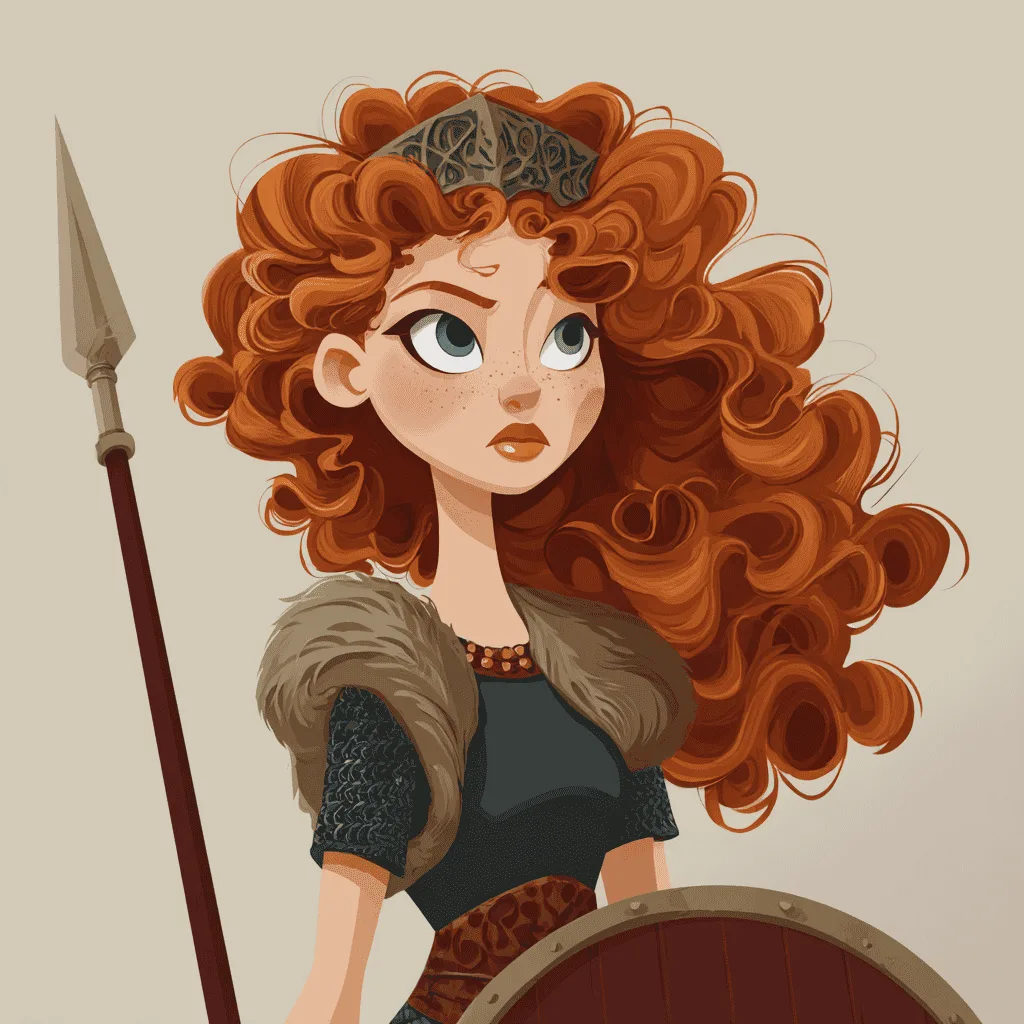
Cassius Dio (c. AD 155–235) provides our other substantial source, writing nearly 150 years later. His Roman History includes famous descriptions of Boudica’s physical appearance (tall, fierce, with long red hair and a harsh voice) and graphic atrocity details. However, his temporal distance, reliance on earlier sources (possibly including Tacitus), and rhetorical conventions of Greek historiography limit his reliability. Dio also includes an invented speech for Boudica that emphasizes themes of freedom and revenge.
Archaeological Evidence
Modern archaeology provides crucial independent evidence: destruction layers confirming widespread burning in London, Colchester, and St. Albans; dating evidence from coins that pinpoint the revolt to AD 60–61; human remains testifying to violence; material culture revealing daily life before and after the revolt; settlement pattern changes showing abandonment and reconstruction; and fortification evidence of walls built after the revolt. The British Museum's Roman Britain collection includes artifacts that illuminate the period. Archaeology confirms the revolt’s outline but remains silent on motivations and cultural meanings.
The Challenge of Interpretation
Understanding the revolt requires critical evaluation of sources with contradictory biases. Roman authors needed to explain how “barbarians” temporarily defeated Rome, requiring acknowledgment of both Roman failures and British capabilities. Modern interpreters bring their own biases: nationalist, feminist, anti-imperialist, postcolonial. The most responsible approach acknowledges that ancient sources preserve valuable information but reflect Roman biases; that archaeological evidence confirms patterns but cannot reconstruct motivations; and that multiple valid interpretations can coexist. The Historic England resources on Roman Britain provide excellent overviews of the archaeological evidence.
Boudica in Later Ages: From History to Symbol
Medieval and Early Modern Period
Boudica virtually disappeared from historical memory for over a thousand years. The lack of British literate culture after the Roman withdrawal, limited preservation of classical texts (Tacitus's works were only rediscovered in the 14th-15th centuries), and alternative heroes (King Arthur, Alfred the Great) meant she was forgotten. Rediscovery began with the Renaissance revival of classical learning, including Tacitus. The name was corrupted to “Boadicea,” which dominated until modern times. The first English translation of Tacitus in 1591 brought Boudica's story to a wider audience.
Tudor and Early Stuart Period
During the Tudor and early Stuart periods, Boudica emerged as a symbol of English independence and resistance to foreign domination. Protestant writers invoked her during conflicts with Catholic Spain. Her story gained relevance during the reigns of Mary I and Elizabeth I, when female monarchy was controversial. The paradox of celebrating resistance to empire while building the British Empire would intensify in later periods. Poets and playwrights, including Shakespeare's collaborator John Fletcher, dramatized her story.
Victorian Apotheosis
The Victorian period transformed Boudica into a major cultural icon. Victorians resolved the imperial paradox by portraying her as defending civilized British values against corrupt Roman tyranny—making her a symbol of Britain’s “civilizing mission.” Gender tensions were managed by emphasizing her role as mother defending violated daughters. The most famous monument is Thomas Thornycroft’s statue “Boadicea and Her Daughters,” erected near Westminster Bridge in 1902, projecting Victorian ideals of noble motherhood and imperial destiny. The bronze statue shows Boudica in a chariot with her daughters, scythes on the wheels, embodying both ferocity and maternal dignity.
20th Century: Feminism and Anti-imperialism
The 20th century brought new interpretations. Feminist reclamation from the suffragette movement through second-wave feminism emphasized the sexual violence and framed the revolt as resistance to patriarchal violence. Anti-colonial symbolism emerged as postcolonial criticism grew; Boudica became a figure of anti-imperial resistance for nations under colonial rule. Historical revision developed more nuanced understandings beyond Victorian hero-worship. Popular culture produced portrayals ranging from historical fiction to fantasy, including novels, films, and a famous 1978 BBC drama starring Sian Phillips.
Different political movements appropriated Boudica for contradictory purposes—British nationalists, Scottish independence advocates, feminists, anti-globalization activists all claimed her.
Contemporary Understanding
Today, multiple Boudicas coexist: the historical Boudica studied by scholars; the symbolic Boudica representing resistance, female power, or national identity; the popular Boudica in entertainment; and the mythological Boudica in neo-pagan spirituality. All serve different purposes, and historical scholarship cannot control how she is remembered. What remains constant is her representation of something powerful: the possibility of resistance against overwhelming power, the refusal to accept oppression quietly, and the willingness to fight for dignity and freedom.
Additional Resources
For deeper engagement with Boudica’s revolt, see the British Museum’s collection on Roman Britain for artifacts from the period, and Historic England’s resources on Roman Britain for archaeological site information. Also consult the Museum of London Archaeology for insights into the destruction of Londinium.
Conclusion: The Enduring Power of Resistance
Nearly two millennia after Boudica led her revolt, her story continues to resonate because it addresses fundamental questions about power, resistance, gender, and historical memory. The revolt failed militarily—Rome controlled Britain for another 350 years. Yet it succeeded in demonstrating that subject peoples retained agency and dignity under oppression, and that submission was never inevitable.
Boudica’s story forces confrontation with imperialism’s human costs. Roman achievements—roads, cities, baths, literature, law—were built through conquest, exploitation, and violence. Boudica represents those who refused to quietly accept subjugation, who fought for autonomy even knowing the price would be high. The revolt also highlights the structural weaknesses of empires that rely on client kingdoms and exploitative tax regimes.
The revolt also raises uncomfortable questions about resistance itself. The violence was not discriminate—massacres of civilians and destruction of commercial centers raise moral questions. Can we celebrate defiance while condemning methods? Or does extraordinary provocation justify extraordinary response? These questions are as relevant today as they were in antiquity, as modern resistance movements continue to grapple with the ethics of violence.
Gender adds another layer: Boudica was both victim and perpetrator, both mother and warrior queen, both symbol of female power and product of patriarchal societies. Different eras have emphasized different aspects, revealing as much about themselves as about her. Her story challenges the assumption that women in the ancient world were passive and confined to domestic spheres.
Perhaps most importantly, Boudica’s story demonstrates how historical figures become symbols that transcend their historical contexts. The “real” Boudica is largely lost. What survives is a series of representations—Roman propaganda, Victorian mythmaking, feminist reclamations, scholarly reconstructions. All are real in their own ways, not as accurate history but as meaningful cultural constructions serving the needs of communities that remember her.
The revolt failed, Boudica died, and Rome ruled for centuries more. Yet we still remember her name, still tell her story, still find meaning in her defiance. That, perhaps, is its own form of victory—not military triumph but the refusal to be forgotten, the insistence that resistance matters even when it doesn’t succeed, and the demonstration that some stories, once told, can never be completely silenced. Boudica's rebellion remains a testament to the power of the human spirit against overwhelming odds.