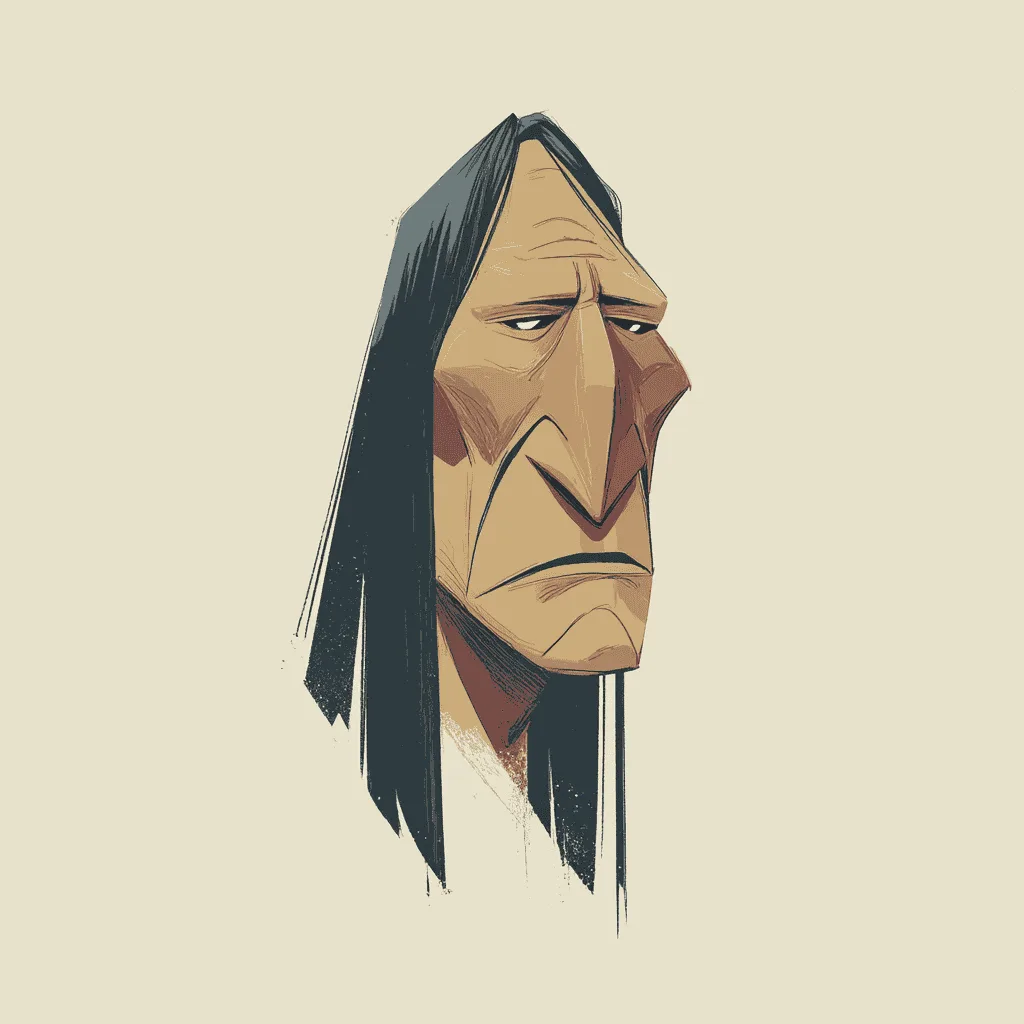
Crazy Horse and the Battle of Little Bighorn: Complete Historical Guide
The Unraveling of a Treaty: How Gold in the Black Hills Ignited War
The seeds of the Battle of the Little Bighorn were sown not on a Montana prairie in 1876, but years earlier, deep in the sacred ground of the Black Hills. The Treaty of Fort Laramie (1868) had established the Great Sioux Reservation, including the Black Hills, as land belonging to the Sioux forever. Yet, the discovery of gold during the 1874 Black Hills Expedition, led by none other than Lieutenant Colonel George Armstrong Custer, made the treaty worthless almost overnight. Prospectors flooded into the territory in open defiance of the law, and the United States government, instead of enforcing the treaty, moved to acquire the land through negotiation—and then through force.
The failure of negotiations in 1875 led to a direct ultimatum from the U.S. Commissioner of Indian Affairs: all Sioux and Northern Cheyenne bands must report to their designated reservations by January 31, 1876, or be classified as "hostile." This deadline was strategically set during the dead of winter, when travel was nearly impossible and many bands never even received word. The stage was set for a military campaign designed to force the issue, with General Philip Sheridan ordering a three-pronged expedition to corner the "hostiles" and compel their surrender.
The Plains Indian Way of Life: A Civilization Under Siege
The nomadic tribes of the Great Plains—the Lakota Sioux, the Northern Cheyenne, the Arapaho—had built a thriving culture centered on the buffalo hunt. Their society was mobile, democratic, and deeply spiritual. Leadership was earned through demonstrated courage, generosity, and wisdom, not inherited. Warriors were among the finest light cavalry in the world, capable of riding at full gallop while firing bows or rifles, and they understood the terrain of the Plains with an intimacy that no army map could capture.
This way of life was systematically dismantled by the encroachment of railroads, the extermination of the buffalo herds (a deliberate U.S. policy to starve the tribes into submission), and the confinement of peoples to reservations. For leaders like Crazy Horse, the choice was not between war and peace, but between a fight for freedom and a slow death of the spirit on a reservation. The gathering at the Little Bighorn River in June 1876 was, in many ways, a final stand for a way of life that had sustained these people for generations.
Crazy Horse: The Making of a Legendary War Leader
Crazy Horse, or Tȟašúŋke Witkó in Lakota, was not born to a position of high leadership. He earned his place through exceptional courage, tactical genius, and a deep personal commitment to his people. Born around 1840 near Bear Butte in present-day South Dakota, he was shaped by the violence he witnessed as a child. The Grattan Massacre of 1854 and the subsequent military retaliation against a peaceful village left an indelible mark, teaching him a brutal lesson about the nature of the conflict.
The Vision That Guided a Warrior
On a vision quest following these early traumas, Crazy Horse received a vision that would define his life. He saw himself riding through a storm, untouched by enemy weapons, with a red-tailed hawk flying above and a small stone tied behind his ear. The vision instructed him to never take personal spoils from battle and to always place the welfare of his people above his own. For the rest of his life, Crazy Horse adhered to this code. He went into battle without war paint, with a small stone tied behind his ear, and a single eagle feather in his hair. He was a shirt wearer, a position of immense responsibility, expected to embody the highest virtues of Lakota leadership.
Battlefield Genius: The Decoy and the Ambush
Crazy Horse’s military approach was a masterclass in adaptive warfare. He perfected the decoy and ambush tactic, a strategy that relied on the overconfidence and discipline of the U.S. Army. A small group of warriors would attack an enemy column, then feign a panicked retreat, luring the soldiers into a pre-set kill zone where the main force waited. This tactic had already proven devastating during Red Cloud’s War (1866–1868), most notably at the Fetterman Fight, where Crazy Horse played a key role in the destruction of an 81-man cavalry detachment.
Unlike traditional Plains warfare, which often prioritized individual acts of bravery (counting coup) over total destruction, Crazy Horse was ruthlessly strategic. His goal was not personal glory but the protection of his people. He brought together different bands and tribes, forging a unified fighting force out of disparate groups that had often been rivals. This ability to build consensus and focus collective effort was perhaps his greatest weapon.
The Battle of the Little Bighorn: June 25–26, 1876
The battle itself unfolded over two days, but the decisive action took place in a matter of hours on June 25. It was a clash of two radically different military doctrines: the rigid, top-down command structure of the U.S. Army versus the fluid, consensus-based, and highly adaptive warfare of the Plains tribes.
The Great Village: A Nation Gathered
The Native encampment along the Little Bighorn River was one of the largest ever assembled on the Plains. Estimates suggest a population of 7,000 to 10,000 people, with 1,500 to 2,500 warriors. They were not gathered for war; it was a traditional summer gathering, uniting bands for social ceremonies, trade, and communal hunting. The spiritual leader Sitting Bull had just performed a Sun Dance, receiving a vision of soldiers "falling into the camp," which inspired immense confidence. The village stretched for nearly three miles along the river, a testament to the strength and resilience of the allied tribes.
Custer’s Fatal Gamble: Dividing His Command
On June 25, Custer’s Crow scouts spotted the massive village. Against the advice of his scouts and in direct contradiction to his orders from General Alfred Terry to wait for reinforcements, Custer decided to attack immediately. He feared the village would scatter, and he wanted the glory of the victory for himself and the 7th Cavalry.
Custer made the critical error of dividing his already outnumbered regiment into four battalions. Major Marcus Reno was ordered to attack the southern end of the village with three companies. Captain Frederick Benteen was sent with three companies to scout the hills to the south. Captain Thomas McDougall remained with the pack train. And Custer himself, with five companies of roughly 210 men, rode north along the bluffs, intending to swing around and strike the village from the opposite end, trapping the inhabitants in a pincer movement. This division of force, in the face of a numerically superior enemy, was a catastrophic miscalculation.
Reno’s Attack and the Swift Response
Reno’s attack began around 3:00 PM. He crossed the river and advanced on the village, but instead of driving deep into the camp to create chaos, he halted his men and formed a skirmish line. This pause was fatal. The initial surprise wore off, and warriors led by Gall and Crazy Horse swarmed toward the attackers. Outflanked and overwhelmed, Reno ordered a hasty retreat back across the river to a defensive position on the bluffs. The retreat turned into a rout, leaving nearly 40 men dead and demoralizing the survivors. Reno and Benteen, who eventually arrived with the pack train, spent the next two days pinned down on the bluffs, desperately defending their position and unable to support Custer in any way.
Custer’s Last Stand: The Destruction of the 7th Cavalry
While Reno was being routed, Custer and his 210 men rode north along the bluffs. As his scouts reported the sheer size of the village, it became clear that his plan was impossible. He was facing not a scattering of lodges but a massive, well-defended city. With Reno in retreat, Crazy Horse and thousands of warriors were free to turn their attention to Custer’s column.
What followed is known as Custer’s Last Stand. No soldier in Custer’s immediate command survived, so the exact sequence of events relies on Native accounts and archaeological evidence. The picture that emerges is not of a heroic, disciplined last stand on a single hill, but of a piecemeal disintegration under overwhelming attack. Custer’s battalion fragmented as warriors under Crazy Horse executed a sweeping flanking maneuver, cutting off any escape route and attacking from the north and east.
The terrain was broken, with deep ravines and low ridges that prevented Custer’s men from forming a cohesive defense. The warriors, expert marksmen and horsemen, picked apart the isolated pockets of soldiers. The entire battle for Custer’s battalion likely lasted less than an hour. All 210 men were killed. The victory was absolute and shocking. Custer himself was found with two bullet wounds but was not mutilated, a sign that the warriors recognized him and, by their own code, showed him respect.
The Aftermath: A Victorious Defeat
For the Native coalition, the victory was bittersweet and temporary. While they had achieved a stunning military success, the immediate priority was survival. The massive village had to be broken up to find food and water, and to evade the inevitable retaliation. The warriors knew that the United States would respond with overwhelming force. The victory at the Little Bighorn, as glorious as it was, was a military anomaly that could not be repeated.
The U.S. Army’s response was swift and brutal. The defeat galvanized public opinion and Congress, which allocated more funds and troops for the campaign. The Army abandoned the summer campaign and instead pursued a relentless winter campaign, attacking villages when they were most vulnerable. The systematic destruction of the buffalo herds continued, starving the Plains people into submission.
Legacy and Cultural Memory: From Custer’s Last Stand to a Symbol of Resistance
The Battle of the Little Bighorn has been a contested symbol from the moment it ended. For decades, the narrative was dominated by the myth of Custer’s Last Stand, a heroic tale of white sacrifice against a savage foe. Custer became a martyr for westward expansion, and the battle was used to justify further military action against Native peoples.
Shifting Perspectives in the 20th and 21st Centuries
In the later 20th century, this narrative began to shift dramatically. The American Indian Movement (AIM) and a growing body of scholarship from Native and non-Native historians reclaimed the story from a Native perspective. The 1991 renaming of the battlefield to the Little Bighorn Battlefield National Monument and the 2003 dedication of the Indian Memorial, which stands as a counterpart to the obelisk marking Custer’s grave, signaled a profound change in how the event is remembered.
Today, the battle is understood as a complex historical moment. It is recognized as a remarkable feat of indigenous military leadership and a desperate, heroic act of self-defense. It is no longer a story of heroic last stands, but a story of resistance, survival, and the tragic cost of cultural erasure. The "Battle of the Greasy Grass," as it is known to the Lakota and Cheyenne, represents a moment of profound hope and unity that, despite its ultimate context of loss, remains a source of immense pride.
Visiting the Battlefield Today
The Little Bighorn Battlefield National Monument is a place of haunting beauty and profound reflection. Visitors can drive the tour road, walk the bluffs, and stand at the markers where soldiers fell. The monument is unique in that it offers multiple interpretive perspectives, allowing visitors to understand the battle from both the U.S. Army’s and the Native coalition’s viewpoints. It is a place that encourages deep thinking about history, memory, and the ongoing legacy of the American West. It is a place where the spirits of the warriors and the soldiers alike seem to linger on the wind.
Conclusion: The Enduring Significance of Crazy Horse and Little Bighorn
The story of Crazy Horse and the Battle of the Little Bighorn is not a simple tale of victory or defeat. It is a story of courage, sacrifice, and the collision of two irreconcilable worlds. Crazy Horse remains an icon of freedom, a leader who chose to fight rather than submit, and whose tactical genius achieved the impossible. The battle itself stands as the high-water mark of Native American military resistance, a moment that forever altered the course of American history.
While the victory could not stem the tide of westward expansion, it ensured that the story of the Plains peoples would not be forgotten. The battle is a reminder that history is never simple, that there are always multiple sides to a story, and that the fight for cultural survival is one of the most profound struggles humans can face. Crazy Horse’s legacy, and the legacy of all those who fought at the Little Bighorn, is one of dignity, resilience, and an unbreakable connection to the land and to their people.
Explore Further
- Little Bighorn Battlefield National Monument (National Park Service) — An essential resource for planning a visit, exploring the history, and understanding the multiple perspectives of the battle.
- Britannica’s Comprehensive Entry on Crazy Horse — A detailed biographical overview of his life, leadership, and legacy.
- Smithsonian Magazine: Crazy Horse — A Life of Mystery and Myth — A well-researched article that separates the man from the legend.
- History.com: Battle of the Little Bighorn — A thorough overview of the battle, its causes, and its consequences.