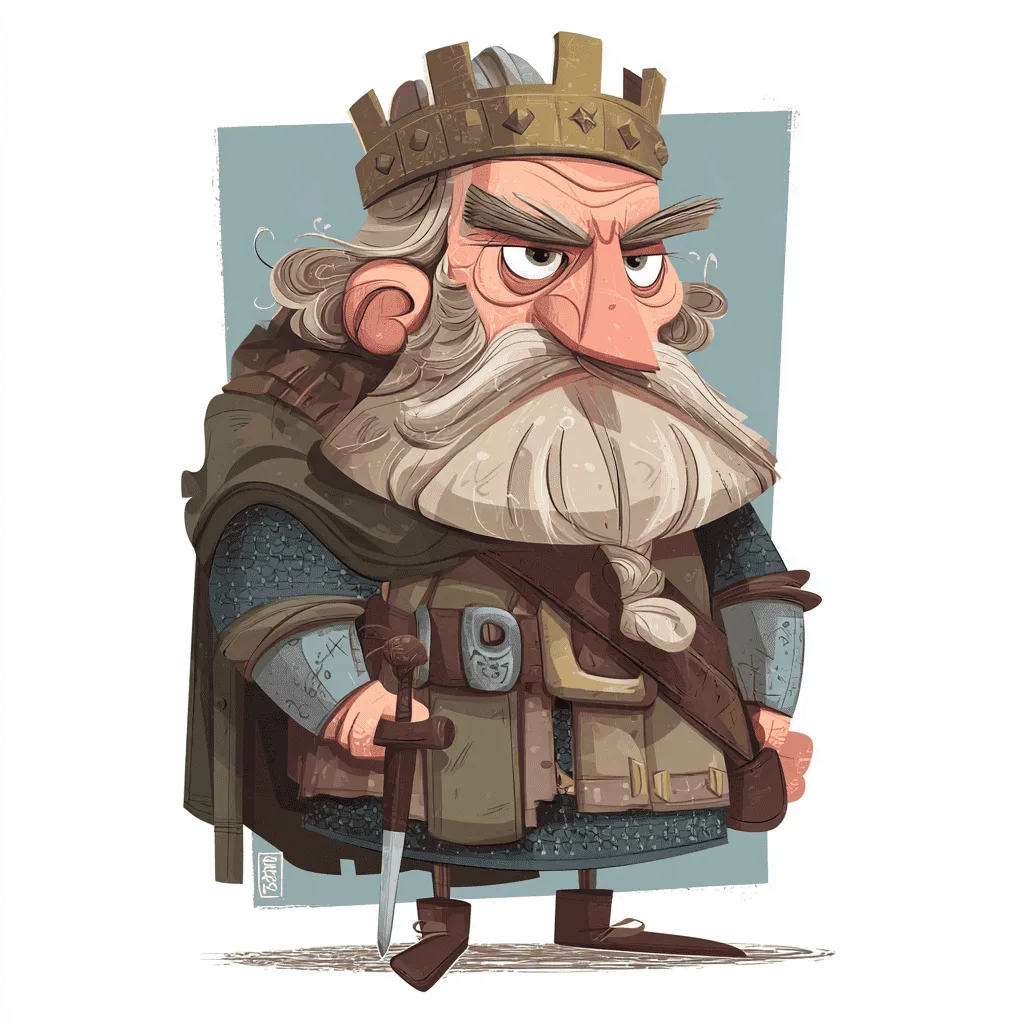
Ivar the Boneless and the Great Heathen Army: Comprehensive Study Guide for History Students
Introduction: Ivar the Boneless and the Great Invasion
Few figures from the Viking Age command the scholarly attention of Ivar the Boneless. Unlike his semi-legendary father, Ragnar Lothbrok, Ivar is one of the few Viking leaders named in multiple, independent 9th-century sources, including the Anglo-Saxon Chronicle and the Annals of Ulster. His name is synonymous with the Great Heathen Army, a unified military force that landed on the shores of East Anglia in 865 CE. This army represented a decisive departure from the hit-and-run raids that had plagued England for decades. It was a massive, well-organized invasion force aimed at permanent territorial conquest and settlement. The study of Ivar and the Great Heathen Army is essential for understanding not only the Viking Age but also the very formation of England as a unified nation. The invasion destroyed the old political order, established the Danelaw, and ultimately forced the emergence of a consolidated English resistance under Alfred the Great.
The scale of the Great Army was unprecedented. While earlier Viking raids involved small warbands striking coastal monasteries and trading centers, the force that arrived in 865 numbered in the thousands, with a clear command hierarchy and strategic objectives. It included warriors from Denmark, Norway, and possibly Sweden, operating in a coordinated campaign that would last more than a decade. The army’s ability to overwinter in England, maintain supply lines, and adapt to local political conditions marked a new phase in Viking warfare. Ivar’s leadership, combined with the internal disunity of the Anglo-Saxon kingdoms, set the stage for one of the most transformative conflicts in British history.
The Historical Reality of Ivar the Boneless
Contemporary Sources and Historical Certainty
Ivar’s historical existence is well-documented. He is recorded as Ímar in the Annals of Ulster and appears as one of the leaders of the mycel hæþen here (great heathen army) in the Anglo-Saxon Chronicle. The Chronicle provides a year-by-year account of the army’s movements, offering high reliability for major events, names, and dates. The Irish annals corroborate his activities across the Irish Sea, noting his involvement in the kingdom of Dublin between 857 and 873. The Annals of Ulster record Ivar as “king of the Northmen of all Ireland and Britain,” a title that reflects his extraordinary influence. Later Norse sagas, written centuries after his death, provide cultural context and legendary narratives but are considered low reliability for biographical facts. These sagas connect him to Ragnar Lothbrok and frame the invasion as a revenge mission, a narrative that likely simplified a more politically motivated campaign. The core historical evidence, however, leaves no doubt that Ivar was a real and formidable figure.
Decoding the “Boneless” Enigma
The meaning of Ivar’s nickname, inn beinlausi, remains a central mystery. Several theories have been proposed by historians:
- Physical Disability: The most popular theory in modern media suggests Ivar suffered from a condition like osteogenesis imperfecta (brittle bone disease). While possible, there is no contemporary evidence to support this, and it would have been a remarkable impediment to leading a decade-long military campaign. Some scholars argue that the nickname may have described a different disability, such as a congenital joint disorder, but this remains speculative.
- Metaphorical Interpretation: The term may have described his exceptional flexibility or suppleness as a commander. In Old Norse, being “boneless” could refer to a person who was incredibly adaptable, cunning, and hard to defeat—a fitting description for a master strategist. This interpretation aligns with Ivar’s reputation for political manipulation and tactical brilliance.
- Poetic or Sexual Meaning: Some interpretations suggest it referred to impotence, as no heirs of Ivar are recorded. Others connect it to the supernatural flexibility of a berserker in battle, or to a snake-like quality (serpents being “boneless” in medieval lore). The nickname might also have been a kennning or poetic device within skaldic verse.
The scholarly consensus leans toward a metaphorical or poetic meaning, highlighting his strategic rather than physical attributes. Regardless of its origin, the nickname has ensured Ivar’s place in popular imagination.
Ivar in Ireland and the Kingdom of Dublin
Before leading the Great Heathen Army in England, Ivar was already active in Ireland. The Annals of Ulster record that in 857, Ivar and his kinsman Olaf the White led a coalition of Norse warriors against the Irish kingdom of Ossory. By 863, Ivar was described as “king of the Northmen” in Dublin, a title that suggests he controlled the Viking enclave there. His involvement in Ireland provides important context for the English campaigns. The experience of ruling a hybrid Norse-Irish kingdom gave Ivar the political skills necessary to manipulate the Anglo-Saxon kingdoms. It also explains why after the conquest of Northumbria and East Anglia, Ivar returned to Ireland around 870, leaving his brother Halfdan to continue the campaign. The Annals of Ulster record his death in 873, likely in Dublin, describing him as “king of the Northmen of all Ireland and Britain.” His burial site remains unknown, but some traditions place his grave on the Isle of Arran.
The Great Heathen Army: Organization and Strategy
Composition and Leadership
The Great Heathen Army was unprecedented in its scale and organization. It was not a single warband but a coalition of forces from across Scandinavia, unified under a central command structure led by Ivar and his brothers, Halfdan and Ubbe. Modern estimates place the fighting force at 2,000 to 5,000 warriors, with support personnel swelling the total expeditionary force to many thousands more. The army included not only Danish Vikings but also Norse from Norway and possibly Swedish adventurers. The leadership structure appears to have been a council of war leaders, with Ivar as the chief strategist. After Ivar’s death, the army fragmented into separate commands, with Halfdan controlling Northumbria and Guthrum leading the forces that would eventually invade Wessex.
Winter Camps and Fortifications
This army operated year-round, utilizing fortified winter camps to maintain its presence and pressure on Anglo-Saxon kingdoms. The most famous camps have been excavated at Repton in Derbyshire, where a D-shaped enclosure protected a Viking camp containing a mass grave of at least 264 individuals. The camp at Repton served as a base for the conquest of Mercia. Other camps have been identified at Torksey in Lincolnshire and at York. These winter settlements included workshops for repairing weapons, smithies, and quarters for the warriors. The ability to overwinter in enemy territory gave the Vikings a strategic advantage: they did not have to return to Scandinavia each year, and they could maintain constant pressure on their enemies.
Political Strategy: Puppet Kings and Danegeld
Ivar’s strategy was deeply political. He exploited the divisions between the rival Anglo-Saxon kingdoms of Northumbria, Mercia, East Anglia, and Wessex. Rather than simply burning and looting, the army installed puppet kings, extracted tribute (Danegeld) to fund its operations, and systematically isolated its enemies. In Northumbria, after killing the rival kings Osberht and Aelle, the Vikings installed a puppet named Egbert to rule on their behalf while they controlled the real power. In Mercia, they forced King Burgred to pay Danegeld and eventually drove him into exile, replacing him with a collaborator, Ceolwulf II. This shift from raiding to state-building made the Great Heathen Army a uniquely formidable threat. The Vikings understood that destroying a kingdom entirely created power vacuums that could work against them; maintaining client rulers allowed them to collect tribute without the administrative burden of direct rule.
The Campaigns and Conquests (865-878)
The Fall of Northumbria and York (866-867)
The army’s first major target was the Kingdom of Northumbria, torn apart by a civil war between kings Osberht and Aelle. In November 866, the Vikings seized the city of York, the economic and political heart of the kingdom. The following March, the two rival kings united their forces to retake the city. In a decisive battle, the Vikings counterattacked and annihilated the Northumbrian army, killing both kings. The kingdom was effectively dissolved, and the Vikings installed a puppet ruler named Egbert while establishing Jorvik (York) as a major Scandinavian power center. York became the capital of a Viking kingdom that would last for nearly a century, controlling trade routes across the North Sea and into the Irish Sea.
The Martyrdom of East Anglia (869-870)
The army turned south to East Anglia, where King Edmund refused to submit or become a client ruler. Edmund was defeated in battle, captured, and executed—later to be remembered as St. Edmund the Martyr. According to later tradition, Edmund was tied to a tree and shot with arrows before being beheaded. The cult of St. Edmund quickly spread across England, and the monastery of Bury St. Edmunds became a major pilgrimage site. His death and the subsequent annexation of East Anglia provided the Vikings with a secure eastern base and their first fully conquered kingdom. East Anglia’s fertile lands and coastal access made it an ideal hub for resupply and settlement.
The Wessex Wars and the Rise of Alfred (870-878)
The invasion of Wessex proved to be the most difficult campaign. King Æthelred and his younger brother Alfred fought a series of desperate battles in 871, achieving a major victory at Ashdown but ultimately being forced to sue for peace. The West Saxons paid Danegeld and the army withdrew for a time. The army then turned its attention to the conquest of Mercia, completing its subjugation by 874. With the death of Ivar around 873, the leadership of the army fractured. Halfdan took forces north to consolidate control of Northumbria, while a new leader, Guthrum, led the remaining forces against Wessex.
Guthrum’s campaign nearly succeeded. A surprise attack on Alfred’s court at Chippenham in January 878 forced the West Saxon king to flee into the marshes of Athelney. Yet Alfred rallied his forces, and in May 878, he met Guthrum’s army at the Battle of Edington. Alfred’s decisive victory forced Guthrum to surrender, accept baptism, and sign the Treaty of Wedmore. This treaty established the boundary between Saxon Wessex and the Viking-controlled Danelaw. The battle marked a turning point: for the first time, a Viking army had been soundly defeated in pitched battle, and the momentum swung in favor of the English.
The Death of Ivar and the Fragmentation of the Army
Ivar’s death, recorded in the Annals of Ulster in 873, removed the unifying figure of the Great Heathen Army. His brother Halfdan took control of the forces in Northumbria, but he faced challenges from both the native population and rival Viking groups. The army that had conquered four kingdoms now split into independent warbands. Halfdan focused on consolidating York and expanding into the northern lands of the Picts and Strathclyde Britons. Meanwhile, a new leader, Guthrum, emerged to lead the southern forces against Wessex. This fragmentation ultimately weakened the Viking position and allowed Alfred to seize the initiative. Ivar’s death marked the end of the first phase of the Viking conquest of England.
The Danelaw: A Legacy in Land and Language
The Treaty of Wedmore and the Boundary
The Treaty of Wedmore redefined the political map of Britain. The Danelaw comprised the conquered territories of Northumbria, East Anglia, and eastern Mercia, including the Five Boroughs of Derby, Leicester, Lincoln, Nottingham, and Stamford. The boundary ran roughly along Watling Street, the ancient Roman road from London to Chester. This region was not merely occupied; it was settled. Thousands of Norse farmers, traders, and warriors moved into these lands, creating a unique hybrid culture that blended Anglo-Saxon and Scandinavian traditions.
The Five Boroughs and Scandinavian Settlement
The Five Boroughs formed a defensive and administrative network within the Danelaw. Each borough was a fortified town with its own local assembly or þing. Archaeological evidence from these sites reveals a mixture of Anglo-Saxon and Scandinavian material culture, including distinctive jewelry, weapons, and burial customs. Place names in the Danelaw reflect the extent of settlement: towns ending in -by (meaning farm or town) include Derby, Whitby, and Grimsby. Names ending in -thorpe (village) include Scunthorpe and Althorpe. The suffix -thwaite (clearing) is common in the Lake District and Yorkshire. Over 1,500 place names in England have Scandinavian origins, concentrated in the areas of heaviest settlement.
Linguistic and Legal Legacy
Old Norse integrated itself into the English language, contributing everyday words like sky, window, egg, leg, husband, law, and anger. The very structure of English grammar was simplified in the Danelaw, as speakers of Anglo-Saxon and Old Norse needed a common tongue. Legal concepts such as bylaw (from by + lagu) and outlaw are direct imports from this period. The Danelaw had its own legal customs, such as the use of juries and the wergild system, which influenced later English common law. These linguistic and legal scars remain etched into the English language and legal tradition.
Archaeological Evidence of the Danelaw
Excavations in York (Jorvik) have revealed the most detailed picture of daily life under Viking rule. The Coppergate dig uncovered houses, workshops, and artifacts that show a thriving trading community with connections to Byzantium, the Middle East, and Scandinavia. Coins minted in York under Viking rulers show a blend of Christian and pagan symbols. In the countryside, distribution of burial mounds furnished with weapons and tools indicates a significant Scandinavian population. The mass grave at Repton and the winter camp at Torksey provide further evidence of the scale of the invasion and settlement. English Heritage maintains several sites where these finds can be explored.
The Paradox of Conquest: Forging a Unified England
The most significant consequence of Ivar the Boneless’s campaign was the political unification of England. By destroying the kingdoms of Northumbria, Mercia, and East Anglia, the Great Heathen Army eliminated the rivals of Wessex. Alfred’s successful defense, and the reforms that followed, left Wessex as the only surviving native English kingdom, the standard-bearer of Saxon identity and political ambition. Within a generation, Alfred’s son, Edward the Elder, and his daughter, Æthelflæd, Lady of the Mercians, began the systematic reconquest of the Danelaw. They built a network of fortified towns (burhs) and trained armies that could respond quickly to Viking attacks. By 954, with the expulsion of the last Viking king of York, Erik Bloodaxe, the first unified Kingdom of England was a reality.
This outcome was the profound irony of Ivar’s success. His strategic brilliance brought the Norse to the peak of their power in England, yet it simultaneously sowed the seeds of their political absorption. The English identity, forged in resistance to the “heathen” invaders, absorbed the settlers of the Danelaw to create a new, more complex nation. The Viking invaders eventually integrated into English society, becoming farmers, traders, and even kings. The line between “Saxon” and “Dane” blurred within a few generations. Alfred’s reforms, driven by the need to respond to the Great Army, created the administrative and military framework that made the unified English state possible.
Conclusion: The Enduring Significance of the Great Army
Ivar the Boneless and the Great Heathen Army represent a pivotal chapter in world history. The invasion transformed England from a collection of competing kingdoms into a single, unified state capable of projecting power. The cultural and linguistic legacies of the Danelaw remain etched into the English landscape and language. For history students, this period offers a masterclass in military strategy, political adaptation, and the unintended consequences of conquest. Understanding Ivar’s campaign is understanding how England was made. The Great Heathen Army was not simply a Viking invasion; it was the catalyst for the birth of a nation.