Table of Contents
Introduction: The Warrior Emperor Behind the World's Greatest Fortune
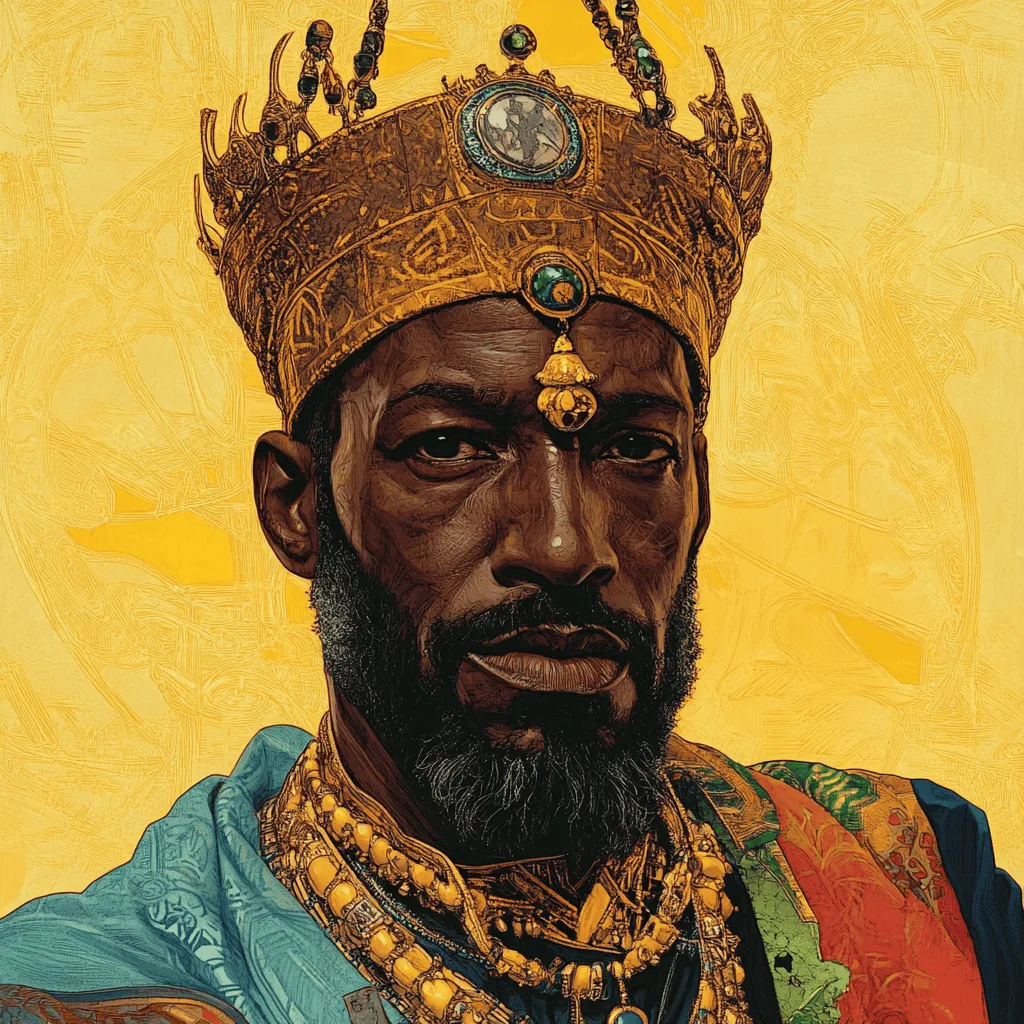
Mansa Musa, the tenth ruler of the Mali Empire who reigned from 1312 to 1337, remains one of the most extraordinary figures in world history. He is frequently described as "the richest person who ever lived," a label that modern economists support with estimates placing his net worth between $400 billion and $600 billion in today's currency. Some scholars argue that his wealth was simply beyond calculation, as he controlled access to roughly half of the world's gold supply during his reign. At its zenith, the Mali Empire under his rule generated an economy that dwarfed most European kingdoms of the era.
Yet reducing Mansa Musa to a ledger of gold and silver misses the full measure of the man. He was a battle-hardened military commander who expanded Mali's borders farther than any predecessor, a visionary patron who elevated Timbuktu into one of the medieval world's premier centers of scholarship, and a diplomatic architect whose pilgrimage to Mecca in 1324 reshaped how the Islamic world and Europe perceived Africa. His reign represented the pinnacle of West African civilization during the medieval period, demonstrating that sophisticated empires with advanced governance, extensive trade networks, and world-class educational institutions flourished south of the Sahara. The Mali Empire under his command stretched across territory larger than Western Europe, maintained commercial connections spanning three continents, and supported universities and libraries that preserved and advanced human knowledge at a time when much of Europe was still emerging from the Middle Ages.
This study guide examines Mansa Musa's path to power, his military campaigns and territorial expansion, his unprecedented economic influence, his cultural and educational investments, and the enduring legacy that continues to challenge misconceptions about African history. His story forces a fundamental reconsideration of what medieval Africa was, revealing a civilization of grandeur, complexity, and global significance.
The World That Shaped Mansa Musa: West Africa Before His Reign
The Geography of Wealth: Gold, Salt, and the Trans-Saharan Trade Network
To comprehend the scale of Mansa Musa's wealth and authority, one must first understand the economic landscape of medieval West Africa. This region functioned as the engine room of the medieval global economy in ways that are still underappreciated. West Africa possessed a commodity that the medieval world craved above nearly all others: gold. While Europe endured chronic gold shortages that constrained its monetary systems, West Africa's goldfields in Bambuk, Bure, and Galam produced vast quantities of the precious metal. This gold traveled northward across the Sahara Desert via camel caravans, reaching North Africa, the Middle East, and ultimately Europe, where it lubricated trade and financed kingdoms.
The trans-Saharan trade operated on a remarkable logic of complementary scarcity. Gold moved north from the forests and savannas of West Africa. Salt moved south from the Saharan mines at Taghaza and Taoudenni. In the gold-rich but salt-deficient regions of West Africa, salt could be exchanged for its weight in gold. Beyond these two cornerstone commodities, the caravans carried enslaved people, ivory, ostrich feathers, leather goods, fine textiles, kola nuts, copper, and luxury items from distant lands.
The cities where these goods changed hands—places like Timbuktu, Gao, Djenné, and Walata—became nodes of immense commercial and political power. Whoever controlled these trade routes and urban centers held the keys to wealth and dominion.
The Foundations of Empire: Sundiata Keita and the Birth of Mali
The Mali Empire that Mansa Musa inherited had been forged in the 13th century by Sundiata Keita, a figure of epic proportions whose exploits are preserved in West African oral tradition. According to the griots who have maintained this history for centuries, Sundiata was a crippled prince who overcame physical disability to defeat the sorcerer-king Sumanguru Kanté at the Battle of Kirina around 1235. Victory allowed him to unite the Mandinka peoples under a single rule and establish the Mali Empire. Sundiata also created the Kouroukan Fouga, an oral constitution that codified principles of governance, social organization, and law that would guide the empire for generations. By the time of Sundiata's death, Mali already controlled the gold-producing regions of Bambuk and Bure, held key trading cities along the Niger River, and commanded strategic positions on the trans-Saharan routes.
The Keita dynasty continued to build on this foundation, with each successive mansa expanding and consolidating what Sundiata had begun.
The Ascent of Mansa Musa: From Prince to Emperor
The Enigmatic Voyage of Abu Bakr II
Mansa Musa's rise to the throne is preceded by one of the most intriguing episodes in medieval African history: the apparent disappearance of his predecessor, Abu Bakr II. The Arab historian Al-Umari, writing within decades of the events, recorded that Abu Bakr II became obsessed with exploring the Atlantic Ocean. He reportedly launched two major maritime expeditions. The first, consisting of 200 vessels, returned with reports of a powerful ocean current. The second, a far larger armada of approximately 2,000 ships, never returned.
Abu Bakr II is said to have abdicated his throne to Mansa Musa and personally led this final voyage. Whether this account is literal history or metaphorical legend, it created the circumstances for Mansa Musa's assumption of power in 1312.
Securing the Throne and Building Authority
When Mansa Musa became mansa, he inherited an empire that already stretched across territories corresponding to modern-day Mali, Senegal, southern Mauritania, Guinea, Burkina Faso, Ivory Coast, and parts of Niger. His early reign focused on consolidating control. He secured the loyalty of regional governors, strengthened the military, developed administrative systems for tax collection and resource distribution, cultivated relationships with Islamic scholars and long-distance merchants, and planned strategic expansion. These preparatory years were essential. They allowed Mansa Musa to build the institutional strength and personal authority that would underwrite his legendary achievements.
Military Power and Territorial Expansion
The Mali Military Machine
Mansa Musa commanded one of the largest standing armies of the medieval world, with estimates placing its strength at approximately 100,000 soldiers. This force was organized into three primary branches. Heavy cavalry formed the elite strike arm: armored horsemen armed with long lances and swords, mounted on horses that were extraordinarily expensive to maintain in the disease-prone tropical environment. Light cavalry provided reconnaissance, harassment, and pursuit capabilities. Infantry formed the bulk of the army, consisting of spearmen, swordsmen, and archers who could hold ground and overwhelm opponents through massed formations.
West African blacksmiths produced high-quality iron weapons and armor that gave Mali's forces a qualitative edge over many opponents. The mansa served as supreme commander, while regional officials known as farbas commanded local forces and could mobilize them for imperial campaigns.
The Conquest of Gao in 1325
The most significant military achievement of Mansa Musa's reign was the conquest of Gao, a powerful city-state located on the Niger River several hundred kilometers east of Mali's core territories. Gao was a strategic prize of immense value. It controlled riverine traffic along the Niger, served as a terminus for trans-Saharan caravan routes, and was the political center of the rising Songhai people. Mansa Musa personally directed the campaign, which likely involved tens of thousands of soldiers moving by boat along the river and by land. After overcoming Gao's defenses, he captured the ruling Sonni dynasty and integrated the city into the Mali Empire through a sophisticated governance approach: local administration was largely preserved, but tribute was imposed, trade was encouraged, and cultural exchange was fostered.
This conquest extended Mali's control across the entire middle Niger region, securing the eastern approaches to the empire and bringing additional trade routes under Mali's authority.
Securing the Trade Routes Through Military Power
Beyond individual conquests, Mansa Musa's military strategy centered on protecting the commercial arteries that sustained Mali's economy. He implemented a comprehensive security system for the trans-Saharan routes. Garrison towns housing permanent forces were established at strategic intervals. Cavalry patrols regularly swept the caravan routes to deter and pursue raiders. Diplomatic arrangements with nomadic Tuareg tribes secured their cooperation or neutrality.
The punishments for attacking caravans were swift and severe. The results were dramatic: under Mansa Musa's protection, trans-Saharan trade expanded to unprecedented volumes, creating a reinforcing cycle of security, increased commerce, and growing imperial wealth.
The Pilgrimage That Changed the World: The Hajj of 1324–1325
Organizing the Greatest Caravan in Medieval History
In 1324, Mansa Musa embarked on the hajj, the Islamic pilgrimage to Mecca. But his pilgrimage was unlike any that had come before. The journey from Mali to Mecca and back covered roughly 6,000 to 7,000 kilometers across the Sahara Desert, up the Nile Valley, and across the Arabian Desert. The entire expedition took more than a year. Mansa Musa organized a caravan of staggering proportions, one of the largest and most lavish processions the medieval world had ever witnessed.
The numbers recorded by contemporary chroniclers are almost impossible to comprehend: 60,000 people including soldiers, officials, scholars, merchants, griots, and servants; 500 slaves each carrying a golden staff weighing approximately six pounds; and 100 camels each loaded with 300 pounds of gold dust—a total of roughly 15 tons of gold.
The Cairo Sojourn: Making Mali Famous
Mansa Musa arrived in Cairo in July 1324 and remained there for three months. During this time, he distributed gold with breathtaking generosity. He gave alms to the poor, made gifts to merchants, endowed religious institutions, and presented lavish offerings to Mamluk officials and scholars. He spent and gave away so much gold that the price of gold in Cairo crashed dramatically and took more than a decade to recover. This economic disruption provided concrete, quantifiable evidence of the sheer scale of his wealth.
Beyond its economic impact, Mansa Musa's time in Cairo served crucial diplomatic purposes. He met with the Mamluk Sultan al-Nasir Muhammad, establishing Mali as a recognized power within the Islamic diplomatic system. He recruited scholars and architects to return with him to Mali, most notably the Andalusian architect Abu Ishaq al-Sahili (known as es-Saheli). And he ensured that stories of his wealth and civilization spread through trade networks all the way to European courts, where they would influence perceptions of Africa for centuries.
The Holy Cities and the Return Journey
In Mecca and Medina, Mansa Musa performed the rituals of the hajj with devotion and made substantial donations to the holy sites and their custodians. His presence in the sacred cities further amplified Mali's fame throughout the Islamic world. On his return journey, he brought back with him a substantial entourage of scholars, jurists, and artisans, along with books and manuscripts that would form the foundation of Mali's great libraries. The pilgrimage had accomplished something unprecedented: it had announced to the medieval world that Mali was a power of the first rank—wealthy beyond comparison, culturally sophisticated, and deserving of respect and recognition.
Economic Mastery: The Golden Age of Mali
The Foundations of Wealth: Gold Production and Imperial Control
Mansa Musa's wealth derived from Mali's control over the richest gold-producing regions of the medieval world. The mines of Bambuk, Bure, and Galam employed sophisticated extraction methods including alluvial panning and shaft mining. Local communities managed day-to-day operations, while the imperial administration collected tribute and taxes on production. Mali employed a strategy of deliberate mystique around its gold sources. The practice of "silent trade" or dumb barter, in which producers and merchants exchanged goods without meeting face-to-face, helped maintain secrecy about the locations of the richest deposits.
This information control ensured that Mali remained the essential intermediary and that virtually all gold passed through its taxation system.
Timbuktu and Gao: The Commercial Heart of an Empire
Under Mansa Musa's patronage, Timbuktu was transformed from a seasonal trading camp into one of the great commercial metropolises of the medieval world. Its location where the trans-Saharan caravan routes met the Niger River made it an ideal hub for the exchange of goods from North Africa, the Mediterranean, and sub-Saharan Africa. The markets of Timbuktu became legendary, trading gold, salt, textiles, manuscripts, slaves, copper, and luxury goods from distant lands. Mansa Musa invested heavily in the city's infrastructure. The Djinguereber Mosque, built by es-Saheli and completed in 1327, became a landmark of Sudano-Sahelian architecture.
The Sankore Mosque and its associated university complex formed the intellectual heart of the city. Caravanserais, markets, and administrative buildings completed the urban landscape. Gao, after its conquest, was developed as Mali's eastern commercial and military center, controlling trade routes toward the Lake Chad basin and the Hausa city-states.
Taxation and Administration: The Machinery of Prosperity
Mali's wealth was not simply a matter of sitting on gold deposits. It was the product of sophisticated economic administration. The imperial treasury collected revenue through multiple channels: customs duties on goods entering and leaving the empire, market taxes on commercial transactions, tribute payments from conquered and vassal territories, royal monopolies on certain high-value goods, and agricultural taxation. Regional governors known as farbas oversaw tax collection in their jurisdictions, and record-keeping systems tracked revenue flows. This administrative machinery generated the wealth that allowed Mansa Musa to maintain his large standing army, fund ambitious public works projects, support scholars and educational institutions, and conduct diplomacy on a world stage.
The Intellectual Legacy: Timbuktu as a Center of Learning
The University of Sankore: Africa's Great Medieval Institution
Mansa Musa's most enduring legacy may be his transformation of Timbuktu into one of the world's great intellectual centers. The architect es-Saheli introduced new building techniques, including burnt brick construction and sophisticated architectural designs, that reshaped the city's physical character. But it was the intellectual infrastructure that made Timbuktu truly exceptional. The University of Sankore grew into one of the premier institutions of higher learning in the medieval world, standing alongside Al-Azhar in Cairo, the University of al-Qarawiyyin in Fez, and the great centers of learning in Baghdad and Cordoba. At its peak, Sankore enrolled an estimated 25,000 students and attracted hundreds of scholars from throughout the Islamic world.
The curriculum was comprehensive, covering Islamic jurisprudence, theology, mathematics, astronomy, medicine, logic, grammar, rhetoric, history, and law. Timbuktu's libraries housed an estimated 400,000 to 700,000 manuscripts that spanned virtually every field of knowledge. These manuscripts, many of which survive today through conservation efforts at institutions like the Ahmed Baba Institute, provide tangible evidence that medieval West Africa possessed a sophisticated literary and scholarly culture. They challenge the persistent and erroneous narrative that Africa lacked written traditions before European contact.
Islam and Cultural Synthesis
Mansa Musa's pilgrimage and his patronage of Islamic scholarship accelerated the spread of Islam in West Africa. But he promoted the faith primarily through example, patronage, and incentive rather than forced conversion. The result was a distinctive West African Islamic culture that blended Islamic governance, law, and scholarship with traditional African political systems, social structures, and artistic traditions. Under his patronage, architecture flourished in the distinctive Sudano-Sahelian style that remains iconic today. Textile production achieved high levels of artistry and technical sophistication.
Metallurgy produced fine weapons, tools, and decorative items. The griots continued their ancient role as oral historians, genealogists, and praise-singers, now incorporating Islamic elements into their repertoire. This cultural synthesis created a civilization that was simultaneously deeply African and fully participant in the broader Islamic world.
The Enduring Legacy of Mansa Musa
Immediate Aftermath and Influence on Successor States
Mansa Musa died in 1337, leaving behind an empire at its maximum territorial extent, a sophisticated administrative system, a battle-tested military, diplomatic relationships spanning Africa and the Middle East, and educational institutions that would endure for centuries. The Mali Empire remained the dominant power in West Africa for more than a century after his death. When the Songhai Empire rose to prominence under Sunni Ali and later Askia Muhammad I beginning around 1464, it built directly on the foundations that Mansa Musa had established. Askia Muhammad consciously modeled his own reign on Mansa Musa's example, undertaking his own elaborate pilgrimage to Mecca and investing heavily in scholarship and education.
Challenging Historical Misconceptions
The story of Mansa Musa's reign directly refutes several persistent myths about African history. The myth of precolonial Africa as primitive and unsophisticated crumbles before the evidence of Mali's complex governance structures, extensive bureaucracy, and managed economy. The false narrative that Africa lacked written traditions is demolished by the hundreds of thousands of manuscripts preserved in Timbuktu's libraries. The stereotype of African isolation from global networks is contradicted by Mali's extensive trade connections spanning three continents. And the assumption that precolonial Africa was poor is obviously absurd in light of Mansa Musa's wealth.
His reign provides incontrovertible evidence that medieval Africa was home to civilizations that were, in many respects, more advanced than their contemporary European counterparts. While Europe struggled through the crises of the 14th century—famine, plague, and war—West Africa experienced a golden age of prosperity, learning, and cultural achievement.
Mansa Musa in the Modern World
Mansa Musa remains a powerful symbol of African achievement and Black excellence in the contemporary world. He appears in popular culture ranging from historical documentaries to music to video games such as Civilization VI, where he is depicted as a leader of the Mali civilization. Economists regularly cite him as the richest person in history, a designation that continues to spark fascination. His physical legacy survives in the Djinguereber Mosque and the Sankore Mosque, both of which are UNESCO World Heritage sites, and in the manuscript collections of Timbuktu that are being preserved and digitized for future generations. Archaeological sites across Mali and neighboring countries continue to yield evidence that deepens our understanding of his empire.
And the oral traditions maintained by griot families preserve the memory of his reign and its significance. His story offers enduring lessons: the connection between security and prosperity, the long-term returns on investment in education, the importance of cultural sophistication in international relations, the strength that comes from diversity and synthesis, and the power of historical memory to shape identity and aspiration.
Conclusion: The Warrior King Who Redefined Africa's Place in History
Mansa Musa's reign from 1312 to 1337 represents the high point of West African civilization during the medieval period. He was a military strategist who expanded his empire to its greatest extent and secured its borders. He was a cultural patron who transformed Timbuktu into a global center of learning that rivaled the great universities of the Islamic world. He was a devout Muslim who promoted Islamic scholarship while respecting and incorporating traditional African practices. And he was a diplomatic genius whose legendary pilgrimage announced Mali's greatness to the world and established his empire as a recognized power in medieval international relations.
His military achievements protected trade and secured prosperity. His economic policies managed vast wealth with sophistication. His cultural patronage created institutions that endured for centuries. His diplomatic accomplishments placed Africa on the map of the medieval world. But perhaps his most important legacy is the challenge his story poses to our understanding of history.
Mansa Musa compels us to recognize that medieval Africa was not a dark continent awaiting external enlightenment. It was home to sophisticated civilizations that were wealthy, learned, powerful, and deeply connected to the wider world. Nearly seven centuries after his death, Mansa Musa remains a figure whose gold, empire, and vision continue to inspire, educate, and command our attention.
Further Reading and Resources
- The British Library's African Kingdoms collection features digitized manuscripts, maps, and artifacts from the Mali Empire and other West African states.
- UNESCO's World Heritage listing for Timbuktu provides historical context and updates on ongoing preservation efforts for the city's mosques and manuscript collections.
- Encyclopaedia Britannica: Mansa Musa offers a reliable overview of his life and reign with additional bibliographic references.