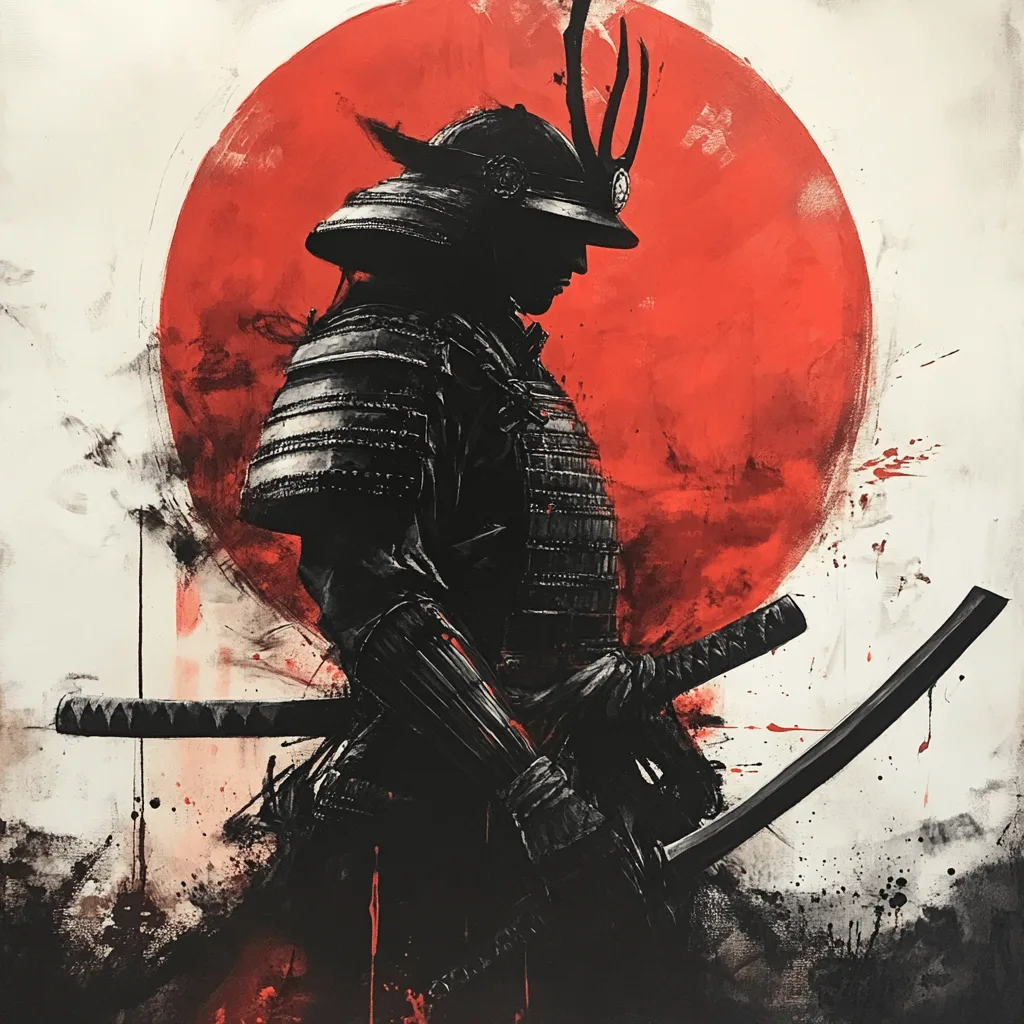
Oda Nobunaga Study Guide: The Samurai Warlord Who Unified Japan in the 16th Century
Oda Nobunaga: The Visionary Warlord Who Forged Modern Japan
Oda Nobunaga (1534–1582) remains one of Japan’s most transformative and polarizing figures—a brilliant strategist, ruthless administrator, and daring reformer whose quest to unify the warring states of the Sengoku period (1467–1615) reshaped the nation’s military, political, economic, and cultural landscape. Though his life ended in betrayal before unification was complete, his innovations paved the way for his successors to build a centralized Japan.
Nobunaga was the first of the “Three Great Unifiers”—followed by Toyotomi Hideyoshi and Tokugawa Ieyasu—who transformed a patchwork of feudal domains into a cohesive state. His willingness to adopt radical ideas, crush opposition without mercy, and defy centuries of tradition set him apart from more conservative rivals.
Rising from modest noble beginnings, Nobunaga defied expectations through military genius, political ruthlessness, and openness to foreign technology and ideas. He embraced firearms, upended feudal monopolies, appointed based on merit, and systematically destroyed rival power centers—especially militant Buddhist monasteries—using unprecedented violence to achieve unification.
His legacy extended far beyond conquest. He revolutionized samurai warfare, spurred economic growth through free trade, centralized political authority by abolishing the ineffective Ashikaga shogunate, and created administrative systems that the Tokugawa regime would refine for over 250 years of stability.
Understanding Nobunaga requires balancing his genuine achievements—military innovation, political centralization, economic modernization—against his ruthless methods, including mass killings and cultural destruction. This complex legacy continues to shape how Japan views its history and the price of unity.
Key Takeaways
- Oda Nobunaga was the first of the “Three Great Unifiers,” transforming Japan from warring states into a centralized nation during the late Sengoku period (1534–1582).
- He revolutionized Japanese warfare by integrating European firearms and developing disciplined volley-fire tactics that defeated traditional cavalry charges.
- His stunning victory at Okehazama (1560) saw 3,000 troops defeat 25,000 through surprise and terrain exploitation.
- The Battle of Nagashino (1575) proved firearms’ decisive superiority over cavalry, transforming samurai warfare.
- He implemented progressive reforms: free trade policies, standardized taxation, merit-based appointments, and comprehensive land surveys.
- He ruthlessly eliminated opponents including Buddhist warrior monasteries, rival daimyō, and the Ashikaga shogunate.
- His betrayal and death in the Honnō-ji Incident (1582) left unification incomplete but established foundations for his successors.
- Nobunaga’s legacy profoundly influenced Japanese military tactics, political centralization, economic development, and culture.
Historical Context: The Sengoku Period
To grasp Nobunaga’s impact, one must understand the Sengoku period—an era of constant warfare, social upheaval, and institutional collapse that created both the need for unification and the opportunities for ambitious warlords.
Collapse of Central Authority
The Sengoku period (1467–1615) began with the Ōnin War (1467–1477), a succession dispute within the Ashikaga shogunate that spiraled into devastating conflict, destroying much of Kyoto and fatally weakening shogunal authority. Real power devolved to regional daimyō (feudal lords) who controlled their domains independently.
By the early 16th century, Japan had fragmented into dozens of competing domains. The emperor retained symbolic significance but no real power. The shogun, theoretically Japan’s military ruler, controlled little beyond Kyoto and depended on powerful daimyō for authority.
This fragmentation created extraordinary social mobility. Military skill mattered more than birth. Talented individuals could rise, while established families fell through defeat. Traditional rigid hierarchies weakened as survival demanded adaptation and ruthlessness.
Gekokujō: The Low Overcoming the High
The Sengoku period exemplified gekokujō—ambitious subordinates overthrowing lords, commoners rising through military service, and traditional authority crumbling.
Examples beyond Nobunaga include:
- Matsunaga Hisahide—rose from obscure origins to become a powerful daimyō through cunning.
- Saitō Dōsan—the “Viper of Mino,” supposedly an oil merchant who seized control of Mino Province through ruthless elimination of rivals.
- Toyotomi Hideyoshi—the ultimate gekokujō figure: born a peasant, rose to become Nobunaga’s top general and ruler of unified Japan.
This fluidity allowed someone like Nobunaga—from minor nobility with unconventional methods—to achieve dominance.
Foreign Contact and New Technologies
The Sengoku period coincided with Japan’s first sustained European contact, beginning with Portuguese traders in 1543. This introduced transformative technologies and ideas:
- Firearms (arquebuses) arrived with the Portuguese and quickly spread.
- Christianity spread through Jesuit missionary activity from 1549.
- European knowledge of navigation, geography, military engineering, and commerce entered Japan.
This contact created opportunities for innovative leaders like Nobunaga, who embraced new technologies while more conservative rivals dismissed them as foreign contamination.
From “Fool” to Formidable Warlord
Early Life: The Fool of Owari
Oda Nobunaga was born in 1534 in Owari Province (modern Aichi Prefecture) to Oda Nobuhide, a relatively minor daimyō. The Oda clan was not among Japan’s great families, but Owari’s proximity to Kyoto gave it strategic potential.
Nobunaga’s youth was marked by shocking behavior:
- Unconventional appearance: flamboyant clothing, foreign styles violating dress codes.
- Association with commoners: socializing with merchants and peasants.
- Disregard for protocol: ignoring samurai etiquette.
- Crudeness and aggression: rough language and physical aggressiveness.
These eccentricities earned him the derisive nickname “Owari no Ōutsuke” (The Great Fool of Owari). Yet beneath the surface lay remarkable intelligence and strategic thinking—his apparent recklessness often served calculated purposes.
Consolidation of Power (1551–1559)
In 1551, when Nobunaga was 17, his father died, leaving him as clan heir. His position was insecure—the Oda clan was internally divided, with many questioning the “Fool’s” leadership. The trusted advisor Hirate Masahide committed seppuku in 1553 as a dramatic protest to shock Nobunaga into responsibility. This death marked his transition from rebellious youth to focused leader.
Between 1551 and 1559, Nobunaga systematically eliminated internal opposition:
- Defeated rival branch families.
- Executed or exiled recalcitrant retainers.
- Consolidated control over Owari by subduing independent strongholds.
- Built loyalty among capable warriors regardless of family background—establishing meritocracy.
By 1559, he had secured undisputed control of Owari.
The Battle of Okehazama (1560): Victory Against Overwhelming Odds
The Battle of Okehazama in June 1560 was the pivotal moment that launched Nobunaga to national prominence.
The Threat: Imagawa Yoshimoto’s Army
Imagawa Yoshimoto ruled one of eastern Japan’s most powerful domains, with an army reportedly numbering 25,000. In 1560, he marched toward Kyoto, intending to seize the shogunate. His route passed through Owari—Nobunaga’s territory. Imagawa viewed this as a minor obstacle.
Nobunaga faced seemingly impossible odds: approximately 3,000 troops against 25,000. Conventional options were submission, retreat, or defending fortifications. Nobunaga instead planned a surprise attack.
The Strategy: Surprise, Terrain, and Weather
Nobunaga’s plan exploited psychological warfare, terrain, and timing:
- Psychological preparation: visited Atsuta Shrine for spiritual reassurance while gathering intelligence.
- Deception: ordered war drums beaten loudly at Kiyosu Castle to suggest a larger force.
- Terrain exploitation: planned to attack through the narrow, forested gorge of Dengaku-hazama, neutralizing Imagawa’s numerical advantage.
- Weather opportunity: a sudden thunderstorm on June 12, 1560, provided perfect cover.
The Battle: Lightning Strike
As Imagawa’s army rested at Dengaku-hazama, overconfident and caught in the storm, Nobunaga led his 3,000 warriors through hidden forest paths. The attack came as a complete surprise. In the chaos, Imagawa Yoshimoto was killed. With their commander dead, the Imagawa army collapsed.
Aftermath: From Regional Player to National Power
The victory shocked Japan. The Imagawa clan disintegrated. Tokugawa Ieyasu (then Matsudaira Motoyasu) seized the opportunity, forming an alliance with Nobunaga. Nobunaga’s reputation was transformed—he was now recognized as a brilliant military mind.
Military Revolution: Firearms and Tactical Innovation
Embracing European Weapons
Portuguese traders introduced arquebuses in 1543. Nobunaga embraced firearms more thoroughly than any other major warlord. He mass-produced them, integrated them into tactical doctrine, developed volley-fire techniques, and overcame samurai prejudice against “dishonorable” weapons.
The Battle of Nagashino (1575): Firearms Triumph Over Cavalry
The Battle of Nagashino in June 1575 proved firearms’ decisive superiority over traditional cavalry.
The Takeda Threat
The Takeda clan of Kai Province was feared for its elite cavalry. In 1575, Takeda Katsuyori laid siege to Nagashino Castle, held by Tokugawa Ieyasu. Nobunaga marched to relieve it with 38,000 troops against Katsuyori’s 15,000.
Revolutionary Defensive Strategy
Nobunaga transformed the battle through:
- Wooden palisades: forced cavalry into killing zones.
- Concentrated firepower: 3,000 arquebusiers behind the palisades.
- Rotating volley fire: three ranks firing in sequence to maintain continuous fire.
The Battle: Cavalry Charges into Modern Warfare
On June 29, 1575, the Takeda cavalry charged, expecting traditional victory. Instead, they were cut down by continuous arquebus fire. Approximately 10,000 Takeda warriors died, including many elite commanders.
Strategic Consequences
Nagashino proved that disciplined firearm tactics could defeat even the finest cavalry. Firearms became central to Japanese warfare. The Takeda clan was fatally weakened and destroyed within seven years.
Political and Economic Reforms
Conquest of Kyoto and End of the Ashikaga Shogunate (1568)
In 1568, Nobunaga marched into Kyoto, installing Ashikaga Yoshiaki as shogun. But Nobunaga intended to rule through Yoshiaki as a puppet. When Yoshiaki conspired against him, Nobunaga drove him into exile in 1573, effectively ending the Ashikaga shogunate that had nominally ruled since 1336. This cleared the way for genuine centralization.
Destruction of Buddhist Warrior Monasteries
Buddhist monasteries had become powerful military and political forces. In 1571, Nobunaga destroyed Enryaku-ji on Mount Hiei, one of Japan’s most sacred sites, when it supported his opponents. His forces burned the complex and killed thousands—estimates range from 3,000 to 20,000. This sent a clear message: no institution was too sacred to challenge his authority.
He also waged a decade-long war against the Ikkō-ikki, fiercely independent Buddhist leagues that controlled provinces through a combination of religious fervor and peasant armies. The siege of Nagashima (1571–1574) saw Nobunaga surround the fortress and starve its defenders, then burn them alive when they surrendered. Such tactics earned him the epithet “Demon of the Sixth Heaven.”
Economic Reforms
Nobunaga implemented policies to stimulate commerce and undermine feudal monopolies:
- Broke trade monopolies of merchant guilds and temples.
- Eliminated toll stations that hindered trade.
- Created free trade zones under his control.
- Developed castle towns like Azuchi as commercial and administrative centers.
- Conducted comprehensive land surveys to improve taxation and resource mobilization.
- Standardized weights, measures, and coinage to facilitate commerce.
His castle at Azuchi, built 1576–1579, was a marvel of architecture featuring a seven-story keep covered in gold and black lacquer. It served as both military fortress and political symbol—a visible statement of his power and sophistication.
Meritocracy Over Aristocracy
Perhaps Nobunaga’s most revolutionary social policy was promoting based on capability rather than birth. The most famous example is Toyotomi Hideyoshi, a peasant who rose to become Nobunaga’s top general and successor. Akechi Mitsuhide and Shibata Katsuie also advanced through merit. This policy improved military effectiveness and loyalty while weakening hereditary aristocracy.
The Honnō-ji Incident: Betrayal and Death
On June 21, 1582, at the height of his power, Nobunaga was betrayed by his general Akechi Mitsuhide. Staying at Honnō-ji Temple in Kyoto with a small guard, he was surrounded by 13,000 troops. Caught by surprise, Nobunaga committed seppuku rather than be captured. His body was never recovered. His son and heir, Oda Nobutada, also died.
Why Mitsuhide Betrayed Nobunaga
Reasons remain debated: personal humiliation (Mitsuhide was reportedly insulted publicly), fear of punishment (he had recently lost territory), political ambition, or involvement in a broader conspiracy involving the emperor or the Tokugawa. Whatever the cause, Mitsuhide’s triumph was short-lived.
Thirteen Days and Vengeance
Toyotomi Hideyoshi, campaigning against the Mōri clan, immediately concluded a truce and force-marched his army back to Kyoto. At the Battle of Yamazaki on July 2, 1582, just eleven days after the incident, Hideyoshi defeated Mitsuhide, who died fleeing. Hideyoshi established himself as Nobunaga’s successor. The brevity of Mitsuhide’s rule earned him the derisive nickname “Thirteen Days Shogun.”
Legacy: Nobunaga’s Enduring Impact
Though Nobunaga died before completing unification, his innovations created the foundations for a unified Japan. Understanding his legacy helps explain the transition from medieval chaos to early modern stability.
Military Legacy
- Firearms became central to Japanese warfare for the next century.
- Disciplined formations replaced individual heroic combat.
- Combined arms tactics (infantry, cavalry, artillery working together) became standard.
- Castle architecture evolved to counter firearms: angled walls, stone foundations, and gun ports.
- His strategies influenced later samurai doctrine and even modern military think.
Political Legacy
- The Ashikaga shogunate was destroyed, removing the fiction of decentralized authority.
- Buddhist military power was broken permanently—no monasteries ever again fielded armies.
- Rival daimyō were conquered or subordinated, consolidating territory under central control.
- Administrative systems for centralization were created—land surveys, taxation, vassal management—later refined by Hideyoshi and Tokugawa Ieyasu.
Economic and Social Legacy
- Free trade policies stimulated growth that persisted into the Edo period.
- Castle towns became models for urban development, evolving into modern cities like Nagoya and Osaka.
- Land surveys provided data for centuries of administration and tax collection.
- Meritocratic principles demonstrated the possibility of social mobility, though the Tokugawa regime later froze class structures.
Cultural Legacy
Nobunaga is portrayed in history as both visionary reformer and brutal destroyer. He appears frequently in dramas, novels, films, video games, and manga as a complex figure of genius and ruthlessness. The Nobunaga's Ambition game series has introduced him to global audiences. His legacy remains contested: admired for breaking feudal structures, condemned for mass violence and cultural destruction.
He also patronized the arts. Tejima (tea ceremony) flourished under his support; he collected famous tea utensils as status symbols. He entertained missionaries and scholars, showing curiosity about Western culture even as he used its weapons.
The Three Great Unifiers
A famous Japanese saying captures their roles: “Nobunaga pounded the rice, Hideyoshi kneaded it, and Ieyasu sat down and ate it.” Nobunaga did the hardest and most violent work of breaking the old order, Hideyoshi shaped it into a unified state, and Ieyasu enjoyed the fruits of stability. This aphorism underscores how each man’s contributions were interdependent.
Conclusion
Oda Nobunaga was a revolutionary warlord who transformed Japan. His military innovations, political ruthlessness, economic reforms, and systematic destruction of traditional power structures created conditions for unification. His achievements were extraordinary; his methods were brutal. Without him, neither Hideyoshi nor Ieyasu could have succeeded.
Nobunaga represents the power of innovation, the complex relationship between individual genius and historical circumstance, and the moral ambiguities of political transformation. His story reminds us that historical change often emerges from the collision of visionary leadership, favorable circumstances, and ruthless implementation—and that figures who shape history most dramatically defy easy moral judgment.
For further reading, explore Britannica’s entry on Oda Nobunaga, Japan Guide’s overview of the Sengoku period, and academic analysis of Nobunaga’s military reforms on JSTOR. For a deeper dive into the Honnō-ji Incident, consult Samurai Archives.