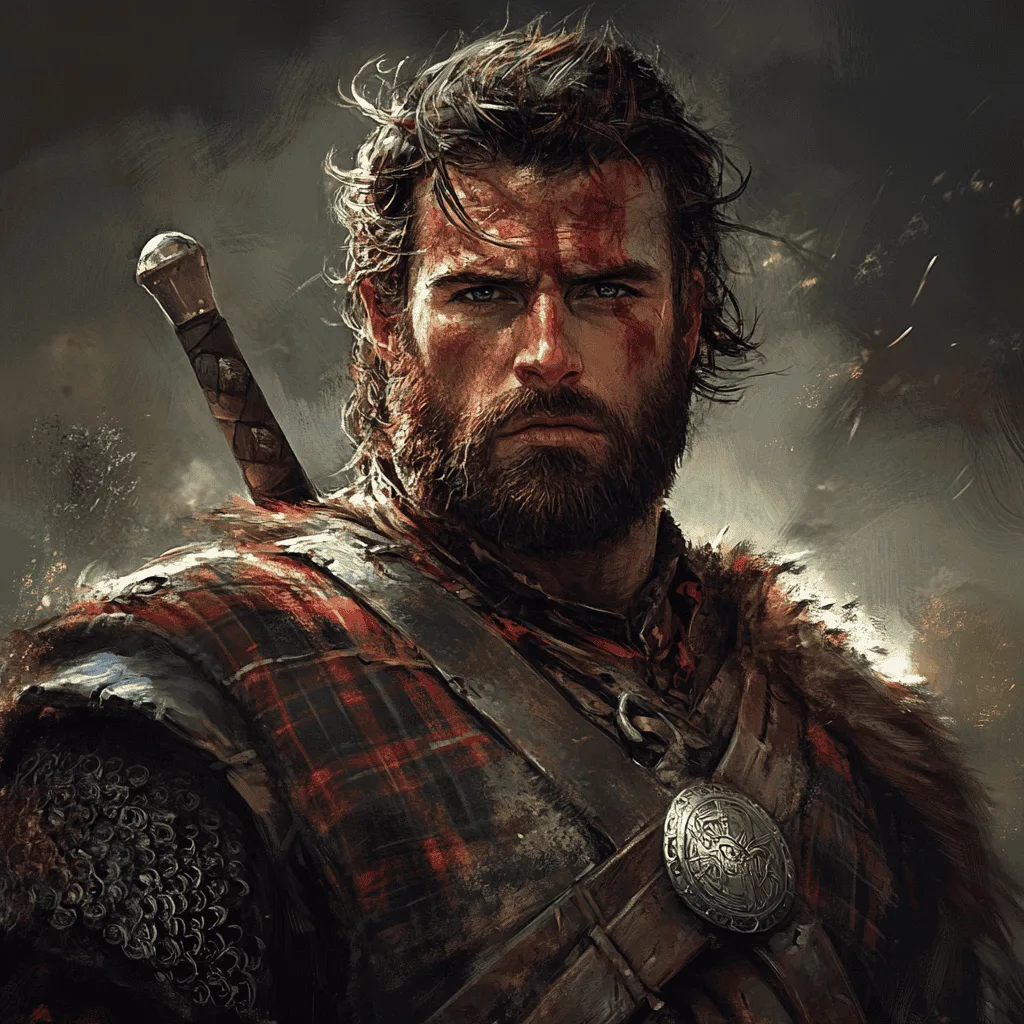
Robert the Bruce Study Guide: The Warrior King Who Freed Scotland in the 14th Century
Historical Context: Scotland Under English Domination
The story of Robert the Bruce begins with a crisis that nearly extinguished Scotland as an independent nation. In 1286, King Alexander III of Scotland died suddenly in a riding accident, leaving no clear heir. His granddaughter Margaret, the Maid of Norway, was named successor, but she died in 1290 en route to Scotland. This succession vacuum opened the door for English intervention.
Thirteen claimants emerged for the Scottish throne, including John Balliol and Robert de Brus, 5th Lord of Annandale (Bruce’s grandfather). Seeking to avoid civil war, Scottish nobles asked King Edward I of England to arbitrate. Edward I, known as “Longshanks,” saw an opportunity to assert English overlordship. He agreed to judge the claims only after all candidates acknowledged him as Scotland’s feudal superior. In 1292, Edward selected Balliol, believing he would be a compliant puppet.
Edward’s ambitions quickly surfaced. He demanded military service from Scotland and treated the kingdom as a vassal state. By 1295, the Scots rebelled, forming the “Auld Alliance” with France. Edward’s response was brutal: in 1296 he sacked Berwick, massacred thousands, defeated the Scots at Dunbar, forced Balliol to abdicate, and seized the Stone of Destiny. Scotland appeared conquered.
Resistance soon erupted. William Wallace led a guerrilla campaign, crushing the English at Stirling Bridge in 1297. But Edward returned with a massive army, defeating Wallace at Falkirk in 1298. Wallace was later captured and executed in 1305. His martyrdom, however, only inflamed Scottish defiance—and set the stage for Robert the Bruce. The interplay between these two heroes—Wallace the uncompromising guerrilla, Bruce the calculating king—defines the early Wars of Independence.
Bruce’s Rise: Nobleman, Opportunist, King
Early Life and Divided Loyalties
Robert the Bruce was born on July 11, 1274, at Turnberry Castle, into one of Scotland’s most powerful families. His father held lands in both Scotland and England; his mother, Marjorie, brought the Earldom of Carrick. This dual allegiance defined Bruce’s early career. Trained as a knight, he learned the brutal politics of medieval lordship. He spoke French, Scots, and Latin, and understood the courtly culture of both kingdoms.
During the first Wars of Independence (1296–1305), Bruce’s allegiances shifted constantly. He initially swore fealty to Edward I in 1296, then joined the Scottish resistance alongside Wallace, and later submitted to Edward again in 1302. Historians debate whether this was pragmatism or ambition. What is clear is that Bruce was biding his time, waiting for the right moment to claim the throne his grandfather had sought. Unlike Wallace, Bruce saw himself as a potential king, not just a guardian.
The Murder That Changed History
That moment came on February 10, 1306. Bruce met his rival John Comyn, the Red Comyn, at Greyfriars Church in Dumfries. Comyn also had a claim to the throne and led a powerful faction. During the meeting, an argument erupted—Bruce drew his dagger and stabbed Comyn before the altar. His companions finished the killing. The exact cause of the quarrel remains unknown, but it likely involved a dispute over land or the crown itself.
This act of sacrilege was catastrophic. Bruce was excommunicated by the Pope. Comyn’s family became implacable enemies. And Edward I would never forgive such a challenge to his authority. Bruce had burned every bridge. There was no turning back. The church’s condemnation meant that Bruce could not receive absolution without a humiliating penance, but he pressed on.
Six weeks later, on March 25, 1306, Bruce had himself crowned King of Scotland at Scone Abbey. The ceremony was rushed—the Stone of Destiny was in English hands, many nobles stayed away—but it declared his intent. His wife, Elizabeth de Burgh, was crowned alongside him. The English response was swift. Edward I sent armies north, defeating Bruce at Methven and Dalrigh. Bruce’s family was captured; his wife, daughter, and sisters were imprisoned in cages suspended from castle walls. His brothers were executed. By the end of 1306, Bruce was a fugitive with a handful of followers, his kingdom reduced to the wild glens and islands of the west coast. Most contemporaries considered his cause hopeless.
The Legend of the Spider: Exile and Perseverance
During the winter of 1306–1307, Bruce hid in caves and remote islands. It was here that the most famous legend of his life emerged. According to tradition, he watched a spider in a cave repeatedly fail to spin its web. Inspired when the spider finally succeeded, Bruce resolved to try once more for Scotland’s freedom. The tale first appears in Walter Scott’s Tales of a Grandfather (1828) and may be apocryphal, but it captures the essence of Bruce’s character.
Whether literally true or not, the story captures a profound transformation. Bruce emerged from exile with a new strategy: he would avoid pitched battles until he had the advantage. He would use Scotland’s rugged terrain to neutralize English heavy cavalry, employ guerrilla tactics, and systematically recapture Scottish castles—only to destroy them so they could not be used by the enemy. This “scorched earth” and castle-slighting policy became his signature.
This approach required patience, discipline, and a willingness to fight on his own terms. Bruce had learned the hard way that traditional medieval warfare played to England’s strengths. His new style—sometimes called “Fabian strategy” after the Roman general—would ultimately prove decisive.
Reconquest: Guerrilla Warfare and Castle Sieges (1307–1313)
The Return and Early Victories
In early 1307, Bruce landed in Carrick with a small force. His timing was fortuitous: Edward I died in July 1307, and his son Edward II was a far less capable commander. Bruce immediately won a significant victory at Loudoun Hill in May 1307, where he used defensive ditches to channel English cavalry into a narrow kill zone. The win proved he could defeat the English in open battle when he controlled the battlefield. It also attracted new recruits.
Over the next year, Bruce subdued domestic enemies, defeating the MacDougalls at the Pass of Brander (1308) and capturing key northern castles. By 1309, he controlled Scotland north of the Tay and held his first parliament. The newly crowned king issued coinage, repaired royal administration, and secured the loyalty of the Scottish Church (despite the papal excommunication).
Systematic Reconquest (1309–1313)
Bruce’s campaigns from 1309 to 1313 were masterpieces of innovation. In January 1313, he personally led a night assault on Perth, wading through freezing water to scale the walls. His nephew Thomas Randolph captured Edinburgh Castle with a daring climb up sheer rock. Sir James Douglas took Roxburgh Castle by disguising his men as cattle. Each victory eroded English control and boosted Scottish morale.
By 1314, only Stirling Castle remained in English hands. When Bruce’s brother Edward besieged it, he rashly agreed to a deal: if an English army did not relieve the castle by Midsummer Day, the garrison would surrender. This forced Edward II to invade with a massive army, setting up the decisive confrontation Bruce had long avoided. The gamble was enormous: if Bruce lost, the reconquest would collapse.
Bannockburn (1314): Scotland’s Defining Victory
Prelude and Tactical Genius
In June 1314, Edward II assembled perhaps 15,000–20,000 men, including 2,000–3,000 heavy cavalry and thousands of longbowmen. Bruce could field only 6,000–7,000, mostly infantry with long spears. The English had every advantage—on paper. But Bruce chose the battlefield with care. He positioned his army near the Bannock Burn, a stream with marshy ground that would disrupt cavalry maneuvers. His men dug pits (pots) covered with branches to break horses’ legs. The narrow frontage prevented the English from deploying their full force.
Day One: Single Combat and Skirmishing
On June 23, the English approached. An English knight, Henry de Bohun, spotted Bruce on a small horse and charged. Bruce, armed only with an axe, sidestepped the lance at the last moment and split de Bohun’s skull with a single blow. The king’s personal triumph electrified the Scots and demoralized the English. That day, repeated English cavalry charges failed against Bruce’s schiltron formations—dense rings of spearmen that horses would not charge. By nightfall, the English army was crowded into a narrow space between the burn and the River Forth, exhausted and short of supplies.
Day Two: The Counterattack and English Rout
At dawn on June 24, Bruce ordered his army to advance. The schiltrons moved forward, pushing the English back. English archers, unable to shoot without hitting their own cavalry, were scattered by Bruce’s light horse under Sir Robert Keith. The battlefield became a killing ground. Then a massive group of Scottish camp followers—the “small folk”—appeared on the hills, waving banners and yelling. The English, thinking fresh Scottish reinforcements had arrived, broke and fled. Edward II barely escaped; thousands of English soldiers drowned in the rivers or were cut down. The victory was total. Bannockburn did not end the war, but it proved Scotland could defeat England in a set-piece battle and established Bruce’s military reputation across Europe.
Diplomacy and the Declaration of Arbroath (1320)
Despite Bannockburn, England refused to recognize Scottish independence. Bruce spent the next years raiding northern England, capturing Berwick, and sending his brother Edward to Ireland to open a second front (a campaign that ended disastrously with Edward’s death in 1318). More importantly, Bruce faced excommunication from Pope John XXII, which undermined his international standing. The pope called for a truce and threatened Scotland with interdict.
On April 6, 1320, Scottish nobles and clergy issued a letter from Arbroath Abbey to the Pope. The Declaration of Arbroath was a masterpiece of diplomatic argument. It asserted Scotland’s ancient independence, justified the war as defensive, and—most radically—declared that the nobles would drive out Bruce himself if he ever submitted to England. The most famous passage reads:
“For as long as a hundred of us remain alive, we will never on any conditions be subjected to the lordship of the English. For we fight not for glory, nor riches, nor honours, but for freedom alone, which no good man gives up except with his life.”
This text anticipated later ideas of conditional kingship and popular sovereignty. The Pope did not immediately recognize Scotland, but the declaration unified Scottish support and impressed European courts. It remains Scotland’s most cherished constitutional document, often compared to the Magna Carta. A full translation is available from the National Records of Scotland.
Final Victory: The Treaty of Edinburgh-Northampton (1328)
By the 1320s, England’s political situation shifted. Edward II was deposed and murdered in 1327; the regency for the young Edward III was weak and focused on internal disorder. Scottish raids continued to humiliate England, including a devastating campaign in Weardale. In 1328, both sides signed the Treaty of Edinburgh-Northampton. England formally recognized Scotland as an independent kingdom, acknowledged Robert the Bruce as its rightful king, and confirmed the traditional border. A marriage alliance was arranged between Bruce’s son David and Edward III’s sister Joan.
Bruce had achieved his life’s goal. But he was already dying, probably from a lingering illness (some historians suggest leprosy or psoriasis). He died on June 7, 1329, at his manor of Cardross, at age 54. According to legend, he asked his friend Sir James Douglas to carry his heart on crusade. Douglas died fighting the Moors in Spain, but the heart was recovered and buried at Melrose Abbey. Bruce’s body was interred at Dunfermline Abbey, with his heart eventually returned to Scotland.
Legacy: The Warrior King Who Freed Scotland
Immediate Impact and Dynasty
Bruce left Scotland internationally recognized, with a stable administration and a battle-hardened army. His son David II succeeded peacefully, though his reign faced its own challenges. Through his daughter Marjorie’s marriage to Walter Stewart, Bruce’s bloodline founded the Stewart dynasty, which would rule Scotland for over 300 years and eventually unite the crowns in 1603. Bruce’s bones rest at Dunfermline Abbey, though a recent excavation could not locate his tomb.
Military Innovation
Bruce’s tactics at Bannockburn—using terrain, pits, and disciplined infantry to defeat cavalry—influenced warfare for centuries. His guerrilla approach and castle-slighting strategy became models for asymmetric warfare. The schiltron formation was adopted by other medieval armies and anticipated the Swiss pike squares. Modern military historians study Bruce’s campaigns as early examples of combined arms and operational maneuver.
Symbol of National Identity
Robert the Bruce remains Scotland’s greatest national hero. The spider legend symbolizes perseverance; Bannockburn is celebrated as the nation’s finest hour; the Declaration of Arbroath inspires modern debates on sovereignty. His complex character—the opportunist who became a liberator—reminds us that historical figures are rarely pure heroes or villains. Bruce’s life has been depicted in film, literature (including the 2018 movie Outlaw King), and tourist attractions like the Bannockburn battlefield visitor center.
For further exploration, visit the Bannockburn battlefield website and Historic Environment Scotland. Additional resources on medieval Scottish history can be found at the Scottish History Society.
Nearly 700 years after his death, Robert the Bruce proves that leadership, tactical innovation, and unwavering commitment can overcome even the most desperate odds. He was, and remains, the warrior king who freed Scotland.