Table of Contents
Understanding Sun Tzu’s Enduring Relevance in Modern Strategy
Written over 2,500 years ago, The Art of War by Sun Tzu remains one of the most influential texts on strategy, leadership, and conflict ever created. This ancient Chinese military treatise has transcended its original battlefield context to become essential reading for business executives, political leaders, lawyers, coaches, and anyone facing competitive challenges.
What makes Sun Tzu’s work so enduring? Unlike purely tactical military manuals that become obsolete as weapons technology evolves, The Art of War focuses on timeless principles of human psychology, strategic thinking, and organizational leadership. Its insights about knowing yourself and your opponent, choosing battles wisely, and achieving victory through preparation rather than force resonate just as powerfully in boardrooms and negotiation tables as they did on ancient battlefields.
Understanding Sun Tzu matters because his strategic principles offer a framework for thinking clearly about competition, conflict, and decision-making in high-stakes situations. Whether you are navigating corporate politics, managing a team, planning a business strategy, or simply trying to make better decisions, the strategic mindset Sun Tzu advocates provides practical guidance grounded in centuries of proven effectiveness.
Who Was Sun Tzu and Why Does His Work Matter?
The Historical Context of The Art of War
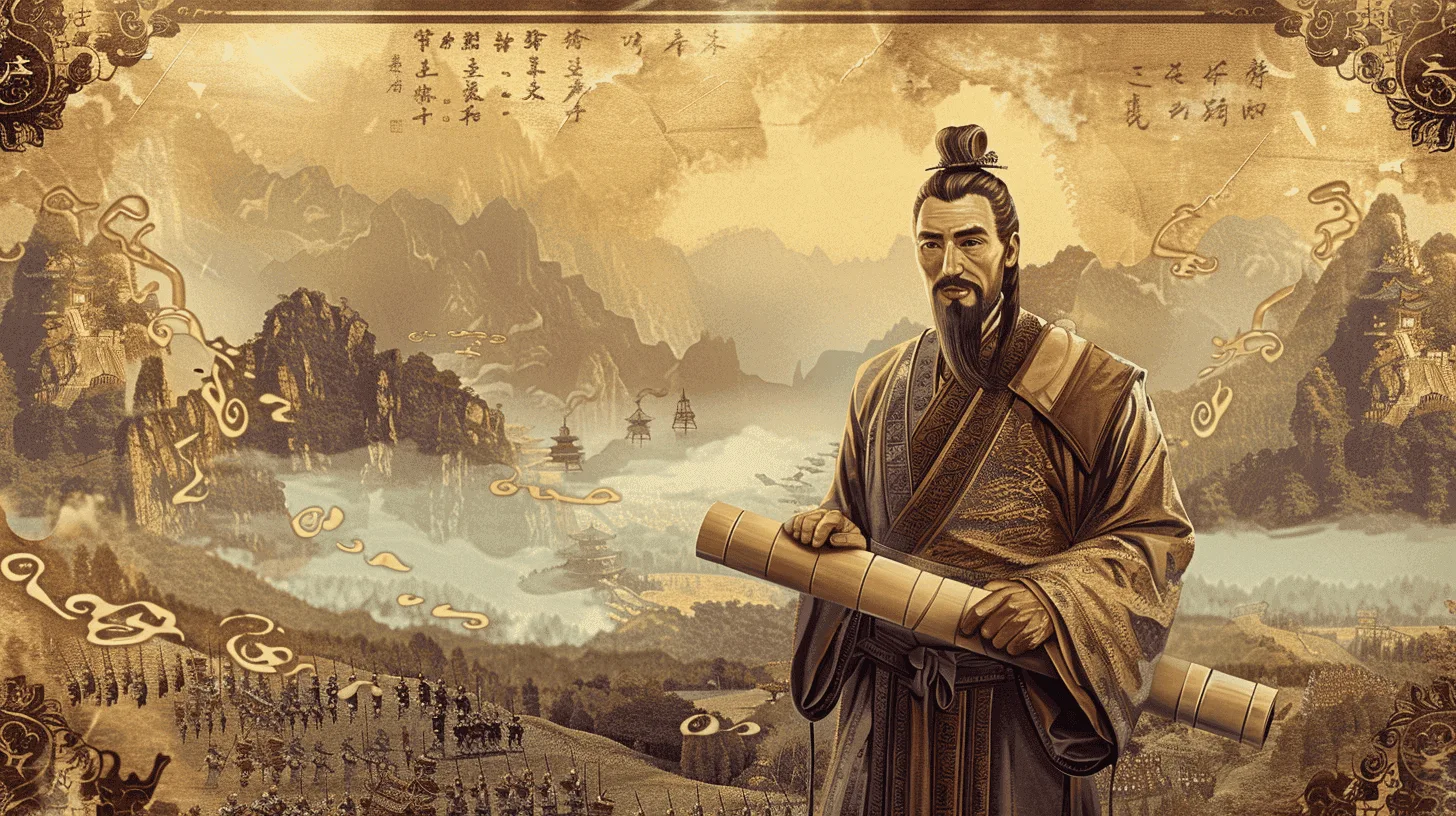
Sun Tzu (also known as Sunzi) was a Chinese military strategist who lived during the late Spring and Autumn Period of ancient China, approximately 544–496 BCE. His given name was Sun Wu, and he served as a general for the state of Wu during one of China’s most chaotic and violent eras. This period, along with the subsequent Warring States Period, saw constant warfare between rival Chinese states competing for dominance. It was a time of tremendous military innovation—new weapons, tactics, and organizational methods emerged rapidly as states fought for survival.
In this crucible of conflict, military thinking evolved from ritualized aristocratic combat to more sophisticated approaches emphasizing strategy, deception, and psychological warfare. Sun Tzu emerged as one of the most brilliant strategic thinkers of this era, and his ideas were eventually compiled into the thirteen chapters that comprise The Art of War. The text itself was likely not written entirely by Sun Tzu personally but represents a compilation of his teachings and strategic principles, possibly recorded by students or followers—a common practice in ancient Chinese philosophical and military traditions.
Why The Art of War Stands Apart from Other Military Texts
What distinguishes Sun Tzu’s work from countless other military treatises written throughout history? Several factors explain its unique staying power:
Focus on Strategy Over Tactics: Many military texts obsess over specific formations, weapon techniques, or battlefield maneuvers that become obsolete as warfare evolves. Sun Tzu instead concentrates on strategic principles—understanding your situation, making intelligent decisions, managing resources—that remain relevant regardless of whether you are commanding ancient chariots or modern corporations.
Emphasis on Avoiding Battle: Counterintuitively for a military treatise, Sun Tzu repeatedly argues that the best victories are those achieved without fighting. He views battle as expensive, risky, and unpredictable—a last resort when superior strategy has failed. This perspective makes his work applicable far beyond pure military contexts.
Psychological Sophistication: Sun Tzu understands that warfare is fundamentally about human psychology—morale, fear, perception, and motivation. His strategies often focus on breaking enemy will, creating confusion, and winning psychological victories that translate into physical ones.
Systematic Thinking: The text presents strategy as a systematic discipline requiring careful analysis, planning, and execution rather than charismatic heroism or martial prowess. This makes strategic thinking accessible to anyone willing to study and practice.
Practical Wisdom: Sun Tzu’s advice is remarkably practical and grounded. He acknowledges resource constraints, political realities, and human limitations rather than presenting idealized scenarios. This realism makes his guidance applicable in messy real-world situations.
The Journey from Ancient China to Global Influence
The Art of War remained influential in Chinese military and strategic thinking for centuries after Sun Tzu’s death. Various Chinese dynasties studied and applied his principles. The text reached Japan around the 8th century CE, where it profoundly influenced Japanese military culture. Samurai warriors studied it extensively, and it shaped bushido and Japanese strategic thinking more broadly.
Western awareness of Sun Tzu came much later. The first European translation appeared in French in 1772, but the text did not gain significant Western attention until the 20th century. British military theorist Basil Liddell Hart championed Sun Tzu’s ideas between World Wars I and II. The real breakthrough came during and after the Vietnam War, when American military analysts recognized Sun Tzu’s fingerprints in Vietnamese tactics. Business adoption accelerated in the 1980s and 1990s as executives sought competitive advantages in increasingly global markets.
Today, The Art of War is studied in military academies, business schools, law schools, and leadership programs worldwide. It has been translated into dozens of languages and continues to shape how people think about competition, strategy, and leadership across cultures.
The Thirteen Chapters: Core Principles and Strategic Wisdom
Chapter 1: Laying Plans — The Foundation of Strategic Thinking
Sun Tzu begins with the most fundamental aspect of strategy: careful planning before action. This chapter establishes that warfare—or any competitive endeavor—is too important to approach casually or emotionally.
The Five Fundamental Factors that must be analyzed before any campaign:
- The Way (Moral Law): The alignment between leadership and those being led. When people genuinely support their leadership’s goals, they fight willingly and effectively.
- Heaven (Timing and Conditions): The external circumstances—seasons, weather, timing, broader environmental factors—that influence outcomes.
- Earth (Terrain and Ground): The physical environment and battlefield—distances, dangers, open ground versus narrow passages, positions of life versus death.
- The Commander: Leadership qualities—wisdom, sincerity, benevolence, courage, and strictness.
- Method and Discipline: Organization, logistics, chain of command, and resource management.
Sun Tzu argues that leaders who thoroughly assess these five factors before acting will win, while those who ignore them will fail. This emphasis on foreknowledge and preparation over impulsive action runs throughout the entire text. He also introduces a principle that shocks many first-time readers: "All warfare is based on deception." He does not advocate lying in all circumstances but recognizes that strategic thinking inherently involves information management—revealing what benefits you and concealing what harms you.
Chapter 2: Waging War — Resource Management and Speed
The second chapter focuses on the economics and logistics of conflict. Sun Tzu understood that wars are expensive, drain resources rapidly, and create enormous burdens on states that wage them. Speed is essential: prolonged warfare exhausts resources, degrades troop morale, and gives enemies time to prepare or ally against you. He advocates living off enemy territory when possible rather than maintaining extended supply lines.
Understanding true costs matters deeply. Sun Tzu calculates not just obvious expenses but hidden costs—lost agricultural production, economic disruption, and deteriorating morale. The goal is not just winning but winning efficiently. A pyrrhic victory—one that exhausts your resources even in success—represents strategic failure.
Chapter 3: Attack by Stratagem — Winning Without Fighting
Chapter Three contains perhaps Sun Tzu’s most famous principle: "The supreme art of war is to subdue the enemy without fighting." This counterintuitive idea distinguishes Sun Tzu from many other military thinkers. He establishes a hierarchy of victory:
- Best: Break enemy strategy before it can be executed
- Second Best: Disrupt enemy alliances and isolate them diplomatically
- Third Best: Attack enemy armies in the field
- Worst: Besiege fortified cities—slow, expensive, with high casualties
The principle of knowing yourself and your enemy appears here in Sun Tzu’s most quoted passage: "If you know the enemy and know yourself, you need not fear the result of a hundred battles. If you know yourself but not the enemy, for every victory gained you will also suffer a defeat. If you know neither the enemy nor yourself, you will succumb in every battle." Most strategic failures stem from self-deception rather than lack of information about enemies.
Chapter 4: Tactical Dispositions — Invincibility Through Defense
Sun Tzu shifts focus to positioning and defensive preparation. Before seeking victory, secure yourself against defeat. This principle reflects his fundamentally risk-averse approach—first ensure you cannot lose, then look for opportunities to win. Wise strategists focus first on what they can control—their own security—rather than gambling on factors beyond their control.
Skillful warriors ensure victory before seeking battle. They first create conditions where victory is achievable, then engage. Less skilled warriors engage first and hope to win through battle itself. This preparation-focused mindset applies across competitive contexts: successful businesses establish strong market positions before launching major initiatives; effective negotiators secure alternatives before entering negotiations.
Chapter 5: Energy — Momentum and Indirect Force
This chapter explores shi—the concept of positioning yourself so circumstances work in your favor rather than against you. Sun Tzu distinguishes between direct engagement (orthodox methods) and indirect approaches (unorthodox tactics). Victory comes from combining both, using direct force to occupy enemy attention while indirect approaches create decisive advantages.
Like water flowing downhill, effective strategy aligns with natural forces rather than fighting against them. This includes timing, psychology, and positioning. Strategic thinking creates force multipliers—making your resources more effective through superior positioning and timing rather than simply having more resources.
Chapter 6: Weak Points and Strong — Concentration of Force
Sun Tzu focuses on the fundamental principle of concentrating superior force at decisive points while avoiding enemy strength. Through feints, deceptions, and strategic positioning, you force enemies into disadvantageous formations. Make them respond to you rather than executing their preferred strategies.
The water principle guides this thinking: water flows around obstacles toward low ground, taking the path of least resistance. Similarly, military force should avoid enemy strength and strike at weakness. Formlessness is also crucial—maintaining strategic flexibility and avoiding rigid, predictable patterns that enemies can exploit. If your tactics remain fluid and adaptive, opponents cannot prepare specific counters.
Chapter 7: Maneuvering — The Challenge of Gaining Position
This chapter addresses the difficult art of making the circuitous appear direct—gaining advantageous position while making it seem effortless. By managing perceptions and information, you can turn disadvantages into advantages, lure enemies into mistakes, and create opportunities from challenges.
Sun Tzu emphasizes using local guides and gathering detailed intelligence about the area of operations. Metaphorically, this means understanding the specific contexts and environments where you compete rather than assuming universal principles always apply. Managing how you are perceived becomes part of strategy itself.
Chapter 8: Variation in Tactics — Adaptability and Contingency Planning
Sun Tzu emphasizes flexibility and adaptation to specific circumstances rather than rigid adherence to standard approaches. He identifies five dangerous faults of a general: recklessness, cowardice, quick temper, excessive pride, and over-concern for troops. These character flaws reveal how psychological weaknesses become strategic vulnerabilities.
No single approach works everywhere. Commanders must adjust tactics to terrain, enemy capabilities, weather, supply situations, and countless other factors. Strategic principles provide guidance, but specific applications require judgment and flexibility.
Chapter 9: The Army on the March — Reading Situations and Maintaining Discipline
This chapter provides practical guidance on interpreting signs and managing forces during campaigns. Sun Tzu describes dozens of specific indicators that reveal enemy intentions—dust clouds indicating troop movements, bird behavior suggesting hidden forces, changes in camp activity revealing morale or supply problems. The principle extends to reading market signals, organizational behaviors, or negotiation cues in modern contexts.
Maintaining fighting effectiveness requires balance—too harsh and you break morale, too lenient and you lose discipline. Sun Tzu advocates firm but fair leadership that enforces standards while caring for soldier welfare. Soldiers who trust their commander will follow dangerous orders when necessary.
Chapter 10: Terrain — Using Geography Strategically
Sun Tzu categorizes six types of terrain and explains how each affects strategy: accessible ground, entangling ground, temporizing ground, narrow passes, precipitous heights, and positions at great distance. He also categorizes ground by its strategic implications for survival: dispersive ground, facile ground, contentious ground, open ground, focal ground, serious ground, difficult ground, hemmed-in ground, and desperate ground.
Understanding these categories helps determine when to attack, defend, advance, retreat, or avoid engagement entirely. The principle extends metaphorically to business—some markets are desperate ground where you must commit completely, others are entangling ground where entry is easy but exit difficult.
Chapter 11: The Nine Situations — Psychological Factors in Different Contexts
This chapter explores how different strategic situations affect psychology and require different leadership approaches. Sun Tzu provides specific guidance on building unity, commitment, and fighting spirit depending on circumstances. In desperate situations, soldiers fight fiercely because they must. In comfortable situations near home, they lack motivation and may desert.
The principle of committed forces emerges here: troops deep in enemy territory with no retreat option fight better than those with easy escape routes. This paradoxical principle—that eliminating options increases effectiveness—applies beyond warfare. People and organizations often perform better when fully committed to courses of action rather than maintaining numerous exit strategies.
Chapter 12: The Attack by Fire — Force Multipliers and Tactics
This chapter discusses using fire as a tactical weapon and, more broadly, how to employ devastating but difficult-to-control forces effectively. The broader principle: understand the dynamics of powerful forces before attempting to employ them. Fire represents tactics that are devastating when executed correctly but potentially self-destructive if mismanaged.
In modern terms, fire attacks represent high-impact, high-risk tactics—aggressive pricing wars, hostile takeovers, or disruptive innovations. Like literal fire, these approaches can devastate opponents but also consume you if poorly controlled.
Chapter 13: The Use of Spies — Intelligence and Information Warfare
Sun Tzu concludes with perhaps his most practically focused chapter: the critical importance of intelligence gathering and information management. He identifies five classes of spies: local spies, inside spies, double agents, expendable spies, and surviving spies. He argues that intelligence is incredibly cost-effective—spending resources to gain information that saves lives, prevents costly mistakes, or creates strategic advantages represents excellent investment.
The text concludes by emphasizing that everything discussed in previous chapters depends on having good information. Without accurate intelligence, even the best strategic principles cannot be properly applied. In modern contexts, these principles extend to market research, competitive intelligence, organizational awareness, and information security.
Modern Applications: Ancient Wisdom in Contemporary Contexts
Business Strategy and Competitive Advantage
Corporate strategist Michael Porter, whose frameworks dominate modern business thinking, echoes many of Sun Tzu’s principles. Porter’s Five Forces analysis essentially updates Sun Tzu’s emphasis on thoroughly understanding your strategic situation before acting. The principle of avoiding enemy strength and striking at weakness translates to Porter’s advice that companies should either differentiate themselves from competitors or achieve cost leadership—but avoid being stuck in the middle.
Practical business applications of Sun Tzu’s principles include:
- Market Entry Decisions: Do not enter markets where you will face entrenched competitors head-on unless you have clear advantages. Find segments where incumbents are weak or uninterested.
- Competitive Positioning: Shape how competitors perceive you. Appear strong where you are weak but irrelevant, and weak where you are strong but do not want competition.
- Strategic Patience: Resist pressure to act before you are prepared. Build capabilities, gather intelligence, secure resources—then move decisively when positioned for success.
- Efficient Resource Use: Avoid expensive battles—price wars, marketing wars, bidding wars—when strategic positioning can achieve goals more efficiently.
- Alliance Strategy: Build partnerships that strengthen your position relative to competitors. Disrupt enemy alliances and isolate rivals.
Leadership and Management Principles
Sun Tzu’s advice about command and leadership applies directly to modern organizational management. Building trust and morale through competence, fairness, and genuine concern for others translates to modern leadership principles about psychological safety and employee engagement. Organizations need clear objectives, well-understood roles, and consistent accountability—Sun Tzu’s method and discipline—but excessive rigidity stifles initiative.
Leading by example matters deeply. Sun Tzu describes effective generals as sharing hardships with troops and demonstrating the behaviors they expect. The five dangerous faults apply to modern leaders as well. Self-awareness about your tendencies—toward recklessness, excessive caution, quick temper, pride, or over-protection—helps prevent these weaknesses from becoming organizational vulnerabilities.
Political Strategy and Diplomacy
Political leaders and diplomats throughout history have drawn on Sun Tzu’s principles for navigating international relations. The concept of deterrence—preventing war by making it too costly for opponents—aligns with Sun Tzu’s preference for winning without fighting. Joseph Nye’s concept of soft power—achieving influence through attraction and persuasion rather than coercion—echoes Sun Tzu’s preference for breaking enemy strategy before it can be executed.
Negotiation strategy also benefits from Sun Tzu’s principles about information management, shaping perceptions, understanding opponent motivations, and creating favorable positions before engaging directly. Political leaders facing crises often face the strategic question Sun Tzu poses: when to engage, when to defend, when to maneuver, when to retreat.
Historical Examples: Sun Tzu’s Principles in Action
Understanding how historical figures applied Sun Tzu’s principles illustrates their practical significance. Mao Zedong explicitly drew on Sun Tzu throughout the Chinese Civil War (1927-1949). Rather than engaging in conventional battles against superior Nationalist forces, Mao adopted guerrilla warfare—striking where enemies were weak, avoiding where they were strong, using mobility and local support to compensate for inferior firepower. He accepted a long conflict rather than seeking quick decisive battles he would likely lose.
The Vietnam War provides another textbook example. North Vietnamese forces explicitly studied Sun Tzu and applied his principles: they avoided major engagements against superior American firepower, used terrain that neutralized American advantages, extended the conflict to exhaust American will, and won the psychological war by making American costs appear unsustainable. America won the vast majority of battles but lost the war because Vietnamese strategy targeted American weaknesses rather than confronting American strengths.
The Netflix-Blockbuster competition illustrates these principles in corporate strategy. Netflix avoided direct competition initially by creating a different business model (mail delivery) rather than opening video stores. They targeted Blockbuster’s main customer pain point (late fees and inconvenient store trips) while avoiding their strengths. They established subscription-based DVD-by-mail service, built a distribution network, and gathered customer data before engaging in major battles. When streaming technology emerged, Netflix pivoted again, staying ahead of the evolving competitive landscape.
Common Misunderstandings and Criticisms
The Deception Misinterpretation
Some readers interpret Sun Tzu’s statement about deception as advocating lying and dishonesty in all competitive situations. In reality, his deception refers to information management, strategic positioning, and shaping perceptions in adversarial contexts. It does not advocate unethical behavior in cooperative relationships or situations where trust matters more than competitive advantage.
Over-Application of Military Thinking
Enthusiasts sometimes apply military strategy frameworks to situations that are not truly adversarial or zero-sum. Many situations involve collaboration, mutual benefit, and relationship-building where trust matters more than strategic advantage. Recognizing when cooperation serves better than competition matters just as much as knowing how to compete effectively.
The Ethics Question
Sun Tzu’s focus on effectiveness over ethics troubles some readers. The text itself focuses on effectiveness rather than ethics, reflecting its pragmatic military purpose. Readers must supplement Sun Tzu with ethical frameworks appropriate to their contexts. In genuinely adversarial, high-stakes situations, effectiveness may be paramount, but in cooperative contexts, ethical behavior builds the trust essential for long-term success.
Studying The Art of War Today
Recommended Translations
The Art of War was written in classical Chinese, which is concise, metaphorical, and open to interpretation. Different translations emphasize different aspects. The Lionel Giles translation (1910) is historically important and now public domain. Samuel B. Griffith (1963) offers extensive historical notes. Thomas Cleary (1988) provides accessible modern language popular with business readers.
Ralph D. Sawyer (1994) includes other ancient Chinese military texts for broader context. Reading multiple translations reveals interpretive choices and provides fuller understanding.
Study Approaches
For maximum understanding, read the text multiple times with different focuses: first for overview and structure, second for detailed analysis with commentary, and third for application to your specific contexts. Return periodically as you gain experience—Sun Tzu’s principles often reveal deeper meanings as you encounter situations they describe. Joining study groups or online communities discussing the text enriches understanding through diverse interpretations and applications.
Why Sun Tzu Still Matters
Over 2,500 years after Sun Tzu compiled his strategic insights, The Art of War remains relevant for several fundamental reasons. Core aspects of human psychology, social dynamics, and competitive behavior remain remarkably consistent despite technological change. Sun Tzu provides a framework for thinking systematically about competitive situations, analyzing positions, recognizing patterns, and making better decisions.
In an age often characterized by impulsivity and short-term thinking, Sun Tzu’s emphasis on thorough preparation, patient positioning, and only engaging when ready provides valuable counterbalance. His repeated emphasis on honest assessment—of yourself, your opponent, your situation—offers timeless wisdom about grounding decisions in reality rather than wishful thinking. The preference for achieving objectives through positioning, maneuver, and psychology rather than direct confrontation reflects sophisticated strategic thinking that applies well beyond warfare.
Perhaps most importantly, Sun Tzu’s counterintuitive teaching that the best victories involve no fighting at all suggests seeking win-win solutions and avoiding unnecessary conflicts—wisdom that applies far beyond military contexts to business, relationships, and social challenges. The Art of War endures not because it is perfect or complete but because it provides a foundation for strategic thinking that remains relevant across contexts and centuries.
For further exploration, the Stanford Encyclopedia of Philosophy entry on Chinese military thought provides scholarly analysis within broader Chinese intellectual traditions. Multiple translations are freely available through Project Gutenberg and similar public domain resources.