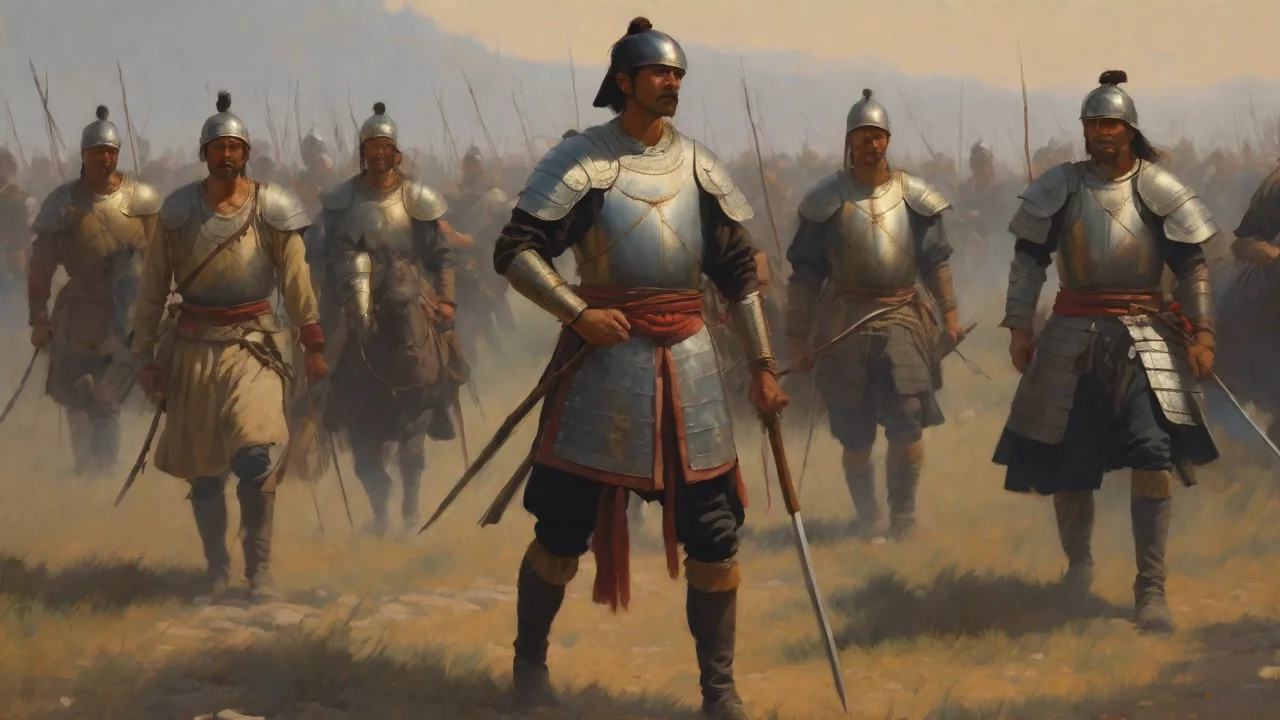
The Impact of Warrior Epics on Collective Memory and Cultural Heritage
The Role of Warrior Epics in Shaping Collective Memory and Cultural Heritage
Warrior epics have long served as powerful vessels for collective memory, carrying the values, struggles, and triumphs of societies across generations. These narratives are not merely stories of combat; they are cultural artifacts that encode the moral frameworks, social hierarchies, and historical self-understanding of entire civilizations. By examining how warrior epics function within collective memory and cultural heritage, we can better understand the dynamic relationship between storytelling, identity, and societal continuity. These epics act as a kind of cultural DNA, preserving the essential traits that define a people while also evolving to meet the needs of each new era. Their impact on collective memory is profound, as they provide shared reference points that unite individuals through common narratives of heroism, sacrifice, and honor.
The very act of retelling a warrior epic reinforces social bonds and transmits ethical lessons across generations. Unlike dry historical accounts, epics engage emotions and imagination, embedding themselves deeply in the psyche of a community. They transform raw events into meaningful patterns, turning battles into parables and warriors into archetypes. This process of mythologizing the past is central to how societies construct a usable history—one that explains the present and guides the future.
Defining Collective Memory and Cultural Heritage
Before diving into the specific role of warrior epics, it is important to clarify the concepts of collective memory and cultural heritage. Collective memory refers to the shared pool of knowledge, experiences, and narratives that a group holds about its past. It is not a static archive but a living, constantly reinterpreted body of stories that shape group identity. The French sociologist Maurice Halbwachs, who pioneered the study of this phenomenon, argued that memory is socially constructed and maintained through group frameworks such as family, religion, and nation. Warrior epics provide one of the most enduring frameworks, as they are deliberately preserved and recited in communal settings. For a deeper theoretical grounding, see the Stanford Encyclopedia of Philosophy on collective memory.
Cultural heritage, meanwhile, encompasses the tangible and intangible expressions of a society’s past—including monuments, rituals, languages, and, crucially, epic traditions. Warrior epics sit at the intersection of these two concepts: they are tangible texts or oral performances that carry intangible meanings and memories. Through them, societies transmit the emotional and moral lessons of history, often blending fact with legend to create a usable past. For instance, the Iliad does not just tell the story of the Trojan War; it encodes Greek ideals of honor (timē), glory (kleos), and the proper relationship between mortals and gods. Over millennia, these ideals have become embedded in Western cultural heritage, influencing everything from medieval chivalry to modern concepts of heroic leadership.
Historical Significance: How Warrior Epics Forged National and Cultural Identity
Historically, warrior epics have been instrumental in forging and reinforcing national and cultural identities, particularly during periods of political transformation or external threat. They provide a shared origin story that legitimizes rulers, unites disparate groups, and instills a sense of pride and purpose. The Epic of Gilgamesh, one of the earliest known works of literature from ancient Mesopotamia, explores themes of friendship, mortality, and the limits of human power. Though Gilgamesh is a king and warrior, his epic is as much about existential discovery as about martial prowess. It served as a foundational text for Sumerian and Akkadian cultures, cementing the ideal of the heroic ruler who must balance strength with wisdom. The discovery of the epic in the 19th century also reshaped modern understanding of ancient Near Eastern civilization. For more on its discovery and significance, visit the British Museum’s overview of the Epic of Gilgamesh.
In ancient Greece, the Homeric epics—the Iliad and the Odyssey—were more than entertainment. They were educational cornerstones, used to teach young Greeks about ethics, warfare, and the proper behavior of aristocrats. The figure of Achilles, with his rage and eventual reconciliation, became a symbol of the individual’s struggle against fate and society’s expectations. Similarly, the cunning of Odysseus provided a model for intelligence and perseverance. These epics were recited at festivals, painted on pottery, and quoted by philosophers. As classicist Gregory Nagy has noted, the Homeric poems became a kind of “script” for Greek identity, influencing not only literature but also law, religion, and politics. Their impact on Western cultural heritage cannot be overstated; they remain touchstones for themes of honor, fate, and the cost of war.
In India, the Mahabharata and the Ramayana have played a similarly profound role. The Mahabharata, an epic of over 100,000 verses, is not merely a story of a dynastic war; it is a comprehensive treatise on dharma (righteous duty), incorporating philosophical dialogues, moral dilemmas, and instructions on governance and spirituality. The Bhagavad Gita, a segment of the Mahabharata, is a core text of Hinduism that addresses the nature of duty, life, and death. The Ramayana, with its narrative of Prince Rama’s exile, his wife Sita’s abduction, and his ultimate victory over the demon king Ravana, provides a model for ideal kingship, loyalty, and marital devotion. These epics have shaped not only Indian but also Southeast Asian cultural heritage, influencing art, dance, theater, and even political ideologies for over two millennia.
The Shahnameh (Book of Kings) of Persia, written by the poet Ferdowsi around 1000 CE, is another prime example. It chronicles the mythical and historical past of Iran from the creation of the world to the Islamic conquest. Ferdowsi deliberately used the Persian language and pre-Islamic legends to preserve Iranian identity during a time of Arab cultural influence. The epic celebrates heroic warriors like Rostam, whose seven trials embody courage, loyalty, and the struggle against evil. The Shahnameh is credited with helping to preserve the Persian language and national consciousness, and it remains a central pillar of Iranian cultural heritage, recited in families and performed in public festivals.
Beyond these major traditions, epics such as the Beowulf in Old English, the Song of Roland in French, and the Nibelungenlied in German have each played critical roles in shaping national literatures and identities. Beowulf, for example, has become a symbol of Anglo-Saxon heritage and is often taught as a foundational text of English literature. Its themes of loyalty, heroism, and the struggle against monstrous forces resonate with modern audiences and have been adapted into films and novels. The Song of Roland, meanwhile, celebrated the chivalric ideals of medieval France and was used to promote the Crusading spirit.
The Mechanisms of Transmission: Oral Tradition, Manuscripts, and Modern Media
Warrior epics are transmitted through a variety of mechanisms, each of which affects how collective memory is shaped and preserved. Oral tradition was the original vehicle for most early epics. In pre-literate societies, trained bards or storytellers memorized and performed these lengthy narratives, often using poetic devices like meter, repetition, and stock epithets to aid recall. This oral transmission allowed for flexibility: each performance could be adapted to the audience’s context, ensuring the epic remained relevant. The work of Milman Parry and Albert Lord in the 20th century demonstrated that even the Homeric epics were composed orally using formulaic structures. Their fieldwork with South Slavic bards revealed how oral poets invent within a traditional framework. For insights into oral-formulaic theory, refer to the Center for Hellenic Studies on oral tradition.
The standardization of epics into written texts, such as the transcription of the Homeric poems in the 6th century BCE or the compilation of the Mahabharata over centuries, fixed certain versions and allowed for broader dissemination. Manuscripts were copied by hand, often in monastic or courtly settings, and became prized possessions. The invention of the printing press dramatically expanded access to warrior epics. The Epic of Beowulf, for example, survived in a single manuscript but became widely known through printed editions and translations. In the 19th and 20th centuries, nationalistic movements often revived and promoted vernacular epics as symbols of ethnic identity. The Kalevala, compiled by Elias Lönnrot from Finnish oral poetry, played a key role in the Finnish national awakening and subsequent independence. Today, digital media and global publishing have made warrior epics available to a worldwide audience, but they also risk homogenizing interpretations or detaching them from their original cultural contexts.
Impact on Cultural Heritage: Art, Ritual, and Social Values
Warrior epics leave an indelible mark on cultural heritage by inspiring numerous forms of artistic expression. In architecture, temples and palaces often depict scenes from epics—the reliefs at Angkor Wat in Cambodia, for instance, illustrate the Ramayana and Mahabharata. In theater and dance, traditional forms such as the Indian Kathakali or the Javanese Wayang Wong rely extensively on epic narratives. The visual arts, from ancient Greek vase paintings to Renaissance frescoes and modern comic books, continually draw on these stories. The Nibelungenlied, a Germanic epic, inspired Richard Wagner’s opera cycle Der Ring des Nibelungen, which itself became a cornerstone of German cultural identity. The epic hero has also found new life in graphic novels like Age of Bronze by Eric Shanower, which retells the Trojan War in a meticulously researched format.
Beyond the arts, warrior epics reinforce social norms and ethical principles. They define the characteristics of a hero: often courage, loyalty, honor, sacrifice, and justice. These traits become aspirational for the society, shaping everything from child-rearing practices to legal codes. The epics also address complex moral questions, such as the tension between individual desire and communal duty, or the consequences of violence and revenge. Through repeated storytelling, these ethical dilemmas become part of the collective moral imagination, providing frameworks for handling real-world conflicts.
Moreover, warrior epics are frequently embedded in rites and rituals. In many cultures, recitations of epics accompany ceremonies such as weddings, funerals, and harvest festivals. The Bilgamesh cycle in ancient Sumer was likely performed during the New Year festival. In contemporary India, televised serials of the Ramayana and Mahabharata draw enormous audiences and are often watched as a form of devotion. This ritualistic embedding ensures that the epics are not passively consumed but actively lived and felt, deepening their imprint on collective memory.
Modern Relevance: Warrior Epics in Contemporary Media
In the 21st century, warrior epics continue to resonate powerfully, even as they are adapted into new media. Hollywood films like Troy (2004) and 300 (2006) draw directly on ancient epic traditions, albeit with modern sensibilities and special effects. Video games such as God of War and Assassin’s Creed Odyssey allow players to inhabit the world of Greek mythology, making them active participants in epic narratives. Fantasy literature and television, from J.R.R. Tolkien’s The Lord of the Rings to George R.R. Martin’s A Song of Ice and Fire, are heavily indebted to warrior epic structures, complete with quests, battles, and moral ambiguity.
These modern adaptations serve a dual function. On one hand, they keep the ancient stories alive for new generations, fostering interest in historical cultures and encouraging further exploration. On the other hand, they often reinterpret the epics through contemporary lenses—questioning the glorification of violence, exploring the experiences of marginalized characters, or critiquing imperialist undertones. This ongoing reinterpretation is itself a form of collective memory work, as societies use the past to confront present concerns. For example, the 2017 film Mummy or the Netflix series The Last Kingdom reframe traditional warrior ethics in light of modern questions about identity, colonialism, and gender.
However, there is a risk of oversimplification or misappropriation. When warrior epics are divorced from their original cultural contexts and commodified for entertainment, they can lose their deeper significance. Some nationalist or extremist groups have selectively cited epic narratives to justify violence or xenophobia. Therefore, critical engagement with these texts is essential. Educators, scholars, and cultural practitioners must help audiences understand both the beauty and the complexity of warrior epics—including their inherent contradictions and historical baggage.
Preserving and Teaching Warrior Epics for Future Generations
Given the enduring importance of warrior epics to collective memory and cultural heritage, deliberate preservation and education are necessary. Too often, these narratives are treated as relics rather than living traditions. To ensure they remain a vibrant part of our global heritage, several strategies should be pursued:
- Integrate epics into school curricula beyond simple plot summaries. Students should analyze the historical context, the moral questions raised, and the artistic techniques used. Comparative approaches—exploring how different cultures tackle similar themes—can foster intercultural understanding.
- Support the preservation of original texts and oral performances. Many epics exist only in fragile manuscripts or in the memories of aging storytellers. Digitization projects, archives, and community documentation initiatives are vital. For example, the World Digital Library and the UNESCO program for endangered languages work to safeguard such heritage.
- Promote cultural festivals and performances that celebrate warrior epics. Events like the Kerala Kalamandalam performances of Kathakali or the Jashn-e-Shahnameh in Iran keep traditions alive. These festivals also attract tourism and generate economic support for cultural practitioners.
- Encourage modern adaptations that respect the source material while engaging new audiences. Grants, fellowships, and prizes for artists working with epic themes can stimulate creative reinvention.
- Foster critical scholarship that explores the role of epics in colonialism, nationalism, and identity politics. Understanding how these stories have been used to both unite and divide can inform responsible contemporary engagement.
By actively engaging with warrior epics through education, preservation, and artistic innovation, societies can ensure that these powerful stories continue to inspire future generations. They are not frozen in time but dynamic resources for thinking about courage, duty, and the human condition.
Conclusion
Warrior epics are far more than ancient tales of combat. They are foundational texts of collective memory that shape cultural heritage across millennia. From the Iliad and the Odyssey of Greece to the Mahabharata and Ramayana of India, from the Shahnameh of Persia to the Kalevala of Finland and the Beowulf of England, these epics encode the values, struggles, and dreams of their societies. They provide shared identity, moral guidance, and artistic inspiration. In a rapidly changing world, they remind us of the enduring power of storytelling to unite people and preserve what is most important. By preserving, teaching, and critically engaging with warrior epics, we not only honor our ancestors but also hand down to future generations a rich legacy of human experience that continues to speak to the deepest questions of life, death, and what it means to be heroic.