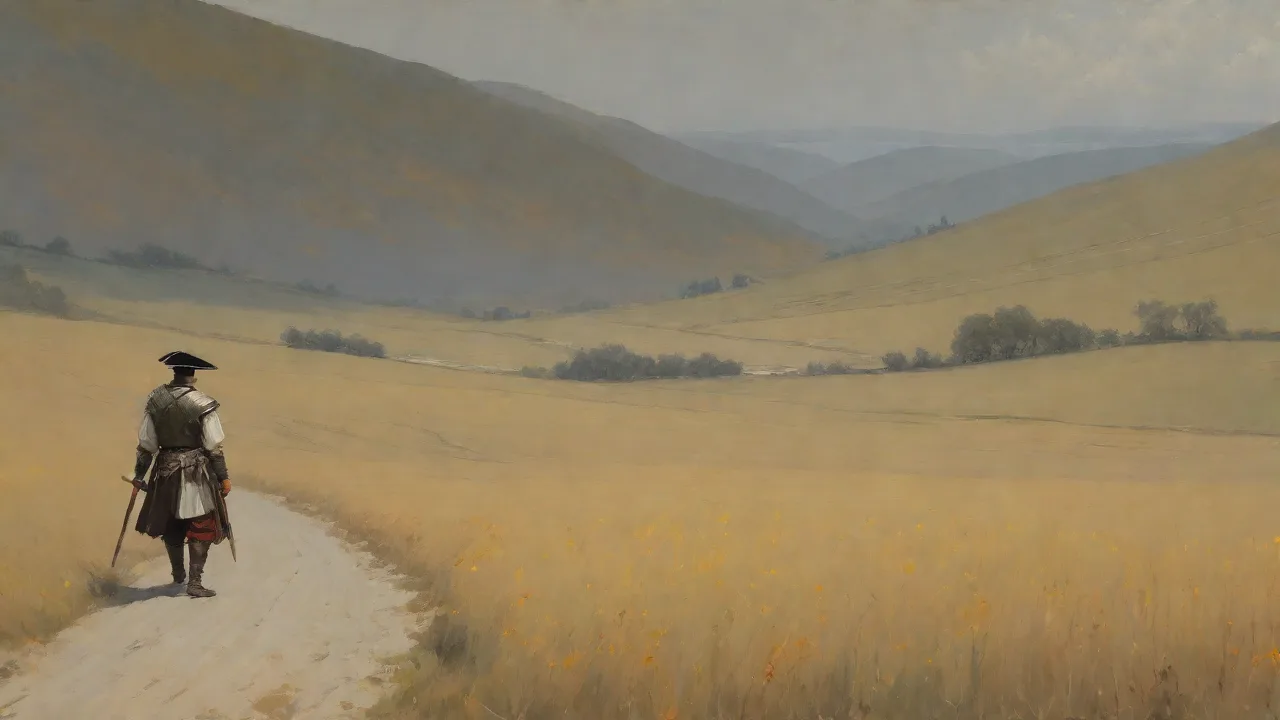
The Influence of Warrior Literature on Contemporary Fantasy Genre Tropes
From Ancient Epics to Modern Sagas: The Warrior Literature Foundation
The DNA of contemporary fantasy is coded with the values, structures, and archetypes of warrior literature. Before the modern novel, before printing presses, the epic poem served as the primary vehicle for cultural storytelling, blending history, mythology, and moral instruction into narratives centered on warriors and their quests. These foundational texts did not merely entertain—they established a narrative grammar that persists today. The Epic of Gilgamesh (circa 2100 BCE) introduces us to a king who learns humility through friendship and loss. Homer's Iliad (8th century BCE) explores the destructive and creative power of rage through the warrior Achilles. The Old English Beowulf (circa 700–1000 CE) presents a hero whose strength is matched only by his sense of duty. These works share a common core: they place the warrior at the center of a world defined by conflict, honor, and the struggle against forces that threaten order. The endurance of these narratives across millennia speaks to their power. They offer templates for character, plot, and theme that modern fantasy writers draw upon, consciously or not, to create stories that feel both timeless and immediate. Understanding this lineage allows both readers and writers to appreciate the depth and complexity of contemporary fantasy, recognizing the old bones beneath the new flesh.
The Enduring Toolkit: Key Tropes from Warrior Literature
The narrative devices forged in ancient warrior epics are not arbitrary conventions. They are psychologically potent patterns that tap into universal human experiences of growth, conflict, and morality. These tropes function as a shared language between author and audience, providing a framework that can be either faithfully followed or purposefully subverted for effect. The following sections examine these foundational tropes in detail.
The Hero's Journey as Narrative Architecture
Mythologist Joseph Campbell's concept of the monomyth—a universal pattern of departure, initiation, and return—is perhaps the most influential structural framework in storytelling. While Campbell formalized it mid-20th century, its roots are in the ancient epics. Gilgamesh departs from Uruk, journeys to the Cedar Forest to face Humbaba, undergoes trials, and returns transformed. Beowulf leaves Geatland to aid the Danes, confronts Grendel and his mother, and returns home with honor. This pattern provides a built-in engine for character development and narrative momentum. The hero begins in a known world, crosses a threshold into the unknown, faces ordeals, receives aid, confronts a central crisis, and returns with new wisdom or power. For contemporary fantasy authors, the monomyth offers a reliable structure for creating satisfying arcs. It resonates because it mirrors real psychological and social transitions: leaving home, facing challenges, and integrating new experiences. Modern works from Star Wars to The Name of the Wind use this framework, sometimes faithfully and sometimes as a starting point for deconstruction. The pattern endures because it works—it provides a shape for the human story of growth through adversity.
Epic Battles as Moral and Physical Crucibles
Warrior literature is defined by its depiction of conflict, but these battles are never merely physical. In the Iliad, the clashes on the plains of Troy are expressions of pride, grief, and fate. The duel between Hector and Achilles is not just a fight; it is a collision of two different conceptions of honor and duty. Beowulf's battles against Grendel, Grendel's mother, and the dragon are each symbolic: against envy, against the monstrous feminine, against mortality itself. Contemporary fantasy inherits this layered approach to conflict. The Battle of Helm's Deep in The Lord of the Rings is a stand for civilization against the forces of industrial darkness. The Battle of the Bastards in Game of Thrones is a brutal depiction of tactical desperation and personal rage. Modern fantasy has expanded the scope to include not just the spectacle but the cost. Works like Joe Abercrombie's The Heroes focus entirely on a single battle, exploring its chaos, futility, and the small, human moments within the carnage. This evolution—from glorified combat to complex depictions of violence and its aftermath—shows how the trope has matured while retaining its core function as a test of character and will.
Mentors, Allies, and the Communal Hero
The solitary hero is a myth; ancient epics are filled with essential relationships. Gilgamesh is nothing without Enkidu; his growth is catalyzed by friendship and loss. Achilles has Patroclus, whose death drives the plot of the Iliad. Beowulf has his band of warriors, and later, the loyal Wiglaf who aids him in his final battle. These relationships provide emotional depth, practical support, and moral grounding. In contemporary fantasy, this trope has evolved into the archetypal mentor figure—Gandalf, Obi-Wan Kenobi, Haymitch Abernathy—who provides guidance, training, and often a crucial sacrifice. The fellowship model, where a diverse group of characters with complementary skills unites for a common purpose, is a direct descendant of the warrior band. The Fellowship of the Ring, the Companions of the Wheel of Time, and the crew of Serenity in Firefly all draw on this ancient pattern. This trope reinforces that heroism is rarely a solo endeavor; it is forged in relationship. The bonds between characters create emotional stakes that elevate the narrative beyond mere adventure, grounding the epic in human connection.
Mythical Weapons as Symbols and Drivers of Plot
Weapons in warrior literature are never just tools; they are extensions of identity, carriers of destiny, and symbols of power. Achilles' shield, forged by Hephaestus, depicts the entire cosmos, reminding the hero of what he fights for and what he risks. Beowulf's sword Hrunting fails him, forcing him to rely on his own strength, while a giant's sword from the hoard provides the means to defeat Grendel's mother. These objects have histories, names, and wills of their own. Contemporary fantasy fully embraces this trope. Andúril, reforged from the shards of Narsil, represents the return of the king and the renewal of Gondor. The Elder Wand in Harry Potter is an object of ultimate power that corrupts its seekers. The One Ring is the ultimate mythical artifact—a weapon of such power that it drives the entire plot and tests every character who encounters it. The search for, acquisition of, and struggle over magical weapons and artifacts provides a concrete goal for quest narratives while symbolizing themes of rightful rulership, corruption, destiny, and sacrifice. This trope connects directly to the treasure hunts and trials of ancient epics, giving modern readers a tangible stake in the hero's journey.
Honor and Duty as Moral Engines
Warrior literature is fundamentally concerned with codes of conduct. The concept of honor in the Homeric world—kleos or eternal glory—is the primary motivation for heroic action. Achilles chooses a short, glorious life over a long, anonymous one. Beowulf acts out of a sense of duty to his king, his people, and his own reputation. This moral framework provides a powerful engine for character decisions. Contemporary fantasy has both inherited and complicated this trope. Characters like Ned Stark in Game of Thrones are defined and destroyed by their adherence to a personal code of honor. Jon Snow's arc is a series of impossible choices between competing duties—to the Night's Watch, to his family, to his own sense of right. Modern writers often use honor codes to create tragic dilemmas or to critique the very concept of honor, showing it as a tool of control or a dangerous idealism. Yet the trope persists because it speaks to a fundamental human question: how should one act in the face of difficult choices? By anchoring character decisions in a moral framework, fantasy narratives gain weight and consequence, making the reader care about the outcome of every choice.
Direct Lines of Influence: Warrior Literature in Modern Fantasy
The influence of warrior literature on contemporary fantasy is not abstract; it is visible in the structure, themes, and characters of the genre's most celebrated works. J.R.R. Tolkien, a professor of Anglo-Saxon literature and a translator of Beowulf, consciously modeled much of his legendarium on the patterns of ancient epic. Aragorn is a direct descendant of the returning king archetype, complete with a broken sword reforged and a lineage of honor. The fellowship mirrors the war band, and the final battle at the Black Gate echoes the climactic confrontations of epic poetry. George R.R. Martin's A Song of Ice and Fire takes a different approach, deconstructing these tropes with brutal realism. His characters grapple with the consequences of violence, the failures of honor, and the messy reality of war. Yet even in subversion, the framework of warrior literature is present—the hero's journey is twisted, the epic battle is shown in its squalid detail, and honor is revealed as both a virtue and a trap. In the realm of fantasy video games, The Witcher series draws heavily on Slavic mythology while echoing the weary, morally compromised warrior figure found in later sagas. Dark Souls and Elden Ring immerse players in a world where the epic quest is fragmented, and the hero's journey becomes a personal, often isolating struggle against overwhelming odds. These works are not imitations; they are conversations with the tradition, each new story adding to the ongoing dialogue about heroism, conflict, and what it means to be a warrior.
The Visual and Interactive Dimension: Warrior Literature in Film and Games
Modern media has given warrior literature new forms and audiences. Film adaptations like Peter Jackson's Lord of the Rings trilogy translate the scale and emotional weight of epic battles into visceral visual experiences. The charge of the Rohirrim at Pelennor Fields is a direct descendant of the great battle scenes in the Iliad, made tangible through technology and performance. The Conan the Barbarian films, inspired by Robert E. Howard's pulp fiction, which itself drew heavily on ancient warrior sagas, established the sword-and-sorcery subgenre in cinema, emphasizing the physicality and savagery of the warrior ideal. Video games offer a unique evolution: interactivity. In The Elder Scrolls V: Skyrim, players live out the hero's journey firsthand, forging their own weapons, choosing their own allies, and confronting dragons—a beast type that descends directly from Beowulf and earlier serpent myths. The God of War series (particularly the 2018 entry and Ragnarök) places players in the role of Kratos, a former Greek hero now navigating Norse mythology. The game combines the brutal combat of warrior epic with a deeply personal story of fatherhood, grief, and duty. These interactive narratives allow players not just to witness but to participate in the tropes of warrior literature, making choices that affect the outcome of their hero's journey. This participation creates a new layer of engagement, allowing the ancient patterns to speak directly to modern audiences in a way that static narrative cannot.
The Evolution of Warrior Tropes in Contemporary Works
While the core tropes of warrior literature remain potent, contemporary fantasy has increasingly turned to subversion, critique, and expansion. This evolution prevents the genre from becoming a museum of conventions, keeping it relevant to new generations of readers who bring different expectations and values.
Subverting the Heroic Ideal
Modern fantasy has embraced the flawed, reluctant, or outright anti-heroic protagonist. Joe Abercrombie's The First Law trilogy presents Logen Ninefingers, a warrior whose reputation for violence is well-earned and who struggles with a brutal inner nature. Mark Lawrence's Prince of Thorns features a protagonist who is cruel and manipulative, yet still functions within the framework of a hero's journey. These works do not reject the tropes; they invert them. Honor becomes a dangerous illusion, duty a trap, and the epic battle a messy, morally ambiguous affair. This subversion appeals to readers who find the clear-cut morality of ancient epics less compelling than the gray areas of real-world ethics. By questioning the assumptions of warrior literature, these authors deepen the tradition, proving that the framework can accommodate cynicism and pessimism as effectively as idealism.
Expanding the Archetype: Gender and Cultural Diversity
Warrior literature was historically dominated by male protagonists from a limited cultural sphere. Contemporary fantasy has actively worked to broaden this scope. Characters like Brienne of Tarth in Game of Thrones and Vin in Brandon Sanderson's Mistborn series embody the core values of the warrior—strength, courage, loyalty—while navigating worlds that do not expect or welcome female fighters. Tamora Pierce's Alanna: The First Adventure directly addresses a girl disguising herself as a boy to become a knight, exploring the intersection of gender and the warrior code. These stories enrich the warrior tradition by introducing new perspectives on honor, duty, and the costs of violence. Similarly, authors are drawing on warrior traditions beyond the Western European model. N.K. Jemisin's The Broken Earth trilogy incorporates elements from African and Middle Eastern mythologies, creating a world where the warrior role is redefined through the lens of survival and communal responsibility. Ken Liu's Dandelion Dynasty series draws on Chinese epic poetry, including Romance of the Three Kingdoms, offering a different set of warrior values centered on strategy, loyalty, and collective honor. This diversification of the warrior archetype ensures that the genre reflects a global readership and introduces fresh narrative possibilities.
Conclusion: The Living Tradition
Warrior literature is not a relic of the past; it is a vibrant, evolving tradition that continues to shape the most popular and innovative fantasy works of our time. From the clay tablets of Gilgamesh to the interactive worlds of Elden Ring, the core tropes of the hero's journey, epic battles, mentors, mythical weapons, and honor provide a reliable and resonant narrative toolkit. Yet the genre thrives precisely because it refuses to stand still. Modern creators subvert expectations, diversify characters, and push the boundaries of what a warrior story can be. The result is a body of work that explores the deepest questions of human existence—struggle, sacrifice, connection, and meaning—through the lens of conflict and transformation. For writers, understanding this lineage is not about slavish imitation but about informed choice. The tropes are tools, and knowing their history allows for more intentional and creative use. As long as readers seek stories of adventure, moral complexity, and personal growth, the influence of warrior literature will remain a vital and dynamic force in fantasy.
For further exploration of these ideas, consult Joseph Campbell's foundational work The Hero with a Thousand Faces for the monomyth framework. The source texts themselves—The Epic of Gilgamesh and Beowulf—are freely available and essential reading. Modern works like George R.R. Martin's A Song of Ice and Fire and J.R.R. Tolkien's The Lord of the Rings demonstrate the continuing power of these ancient patterns in contemporary storytelling.