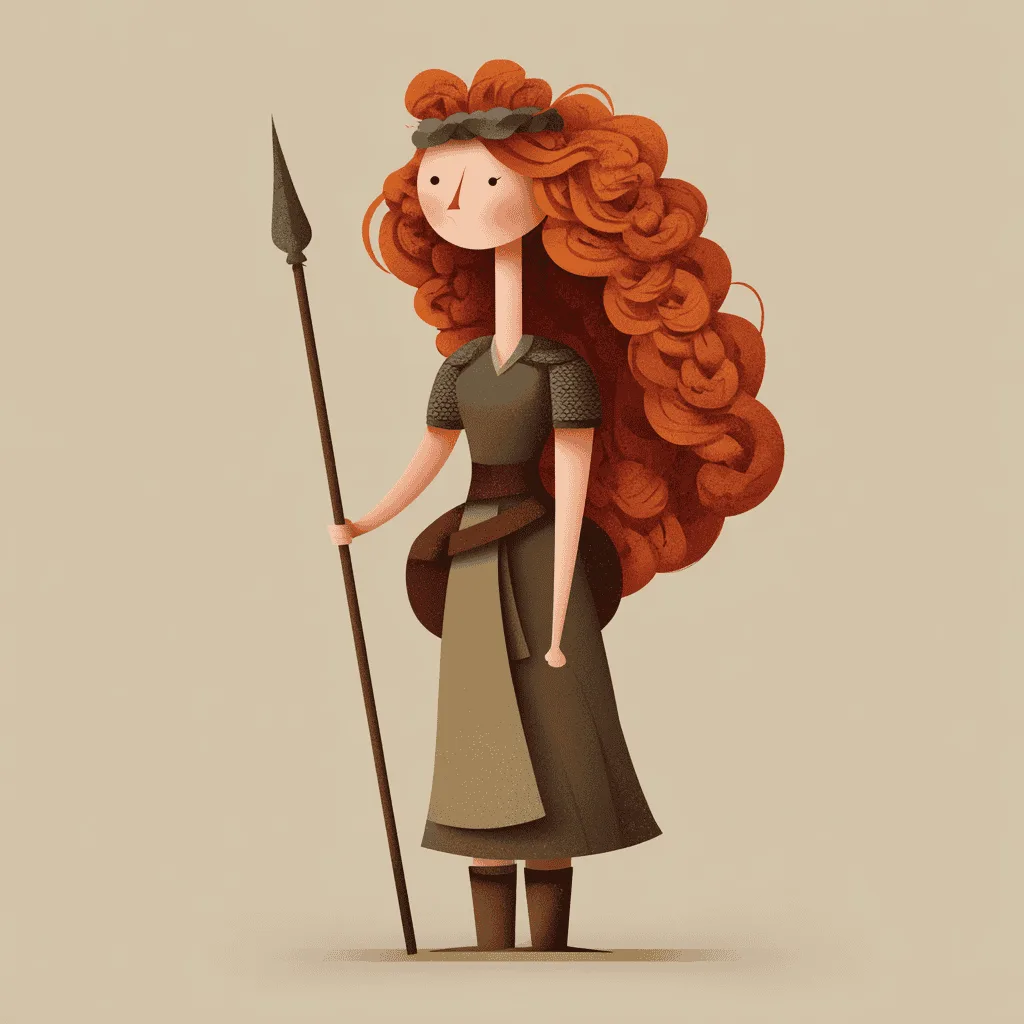
Who Was Boudica? the Warrior Queen Who Defied Rome
Key Takeaways
- Boudica led the largest and most destructive rebellion against Roman rule in Britain, nearly ending imperial control of the island and forcing a fundamental policy shift in how Rome governed its provinces.
- The revolt was ignited by specific Roman atrocities against the Iceni royal family—the public flogging of Boudica and the rape of her daughters—following the death of King Prasutagus, whose will was illegally disregarded by Roman officials.
- In a matter of months, the rebellion destroyed three of Roman Britain’s most important urban centers: Camulodunum (Colchester), Londinium (London), and Verulamium (St. Albans), with estimated casualties reaching 70,000–80,000 people, soldiers and civilians alike.
- The Roman victory at the final battle, though decisive, came at a high strategic cost: it required the recall of the victorious governor Suetonius Paulinus and a complete reversal of Roman administrative policy toward conciliation and reduced taxation.
- Boudica’s story, preserved through only two major Roman historical sources and confirmed by archaeological evidence of destruction layers, has become a powerful and continually reinterpreted symbol of resistance, female leadership, and anti-imperial struggle across multiple centuries.
Roman Britain and the Iceni Kingdom Before the Storm
To understand Boudica’s rebellion, one must first understand the fragile arrangement that governed Rome’s presence in southern Britain. When Emperor Claudius launched the conquest of Britain in AD 43, the Roman military did not immediately subjugate every tribe. Instead, a pragmatic system of client kingship was employed. Certain powerful tribal leaders were allowed to retain their thrones in exchange for loyalty, tribute, and military cooperation. This arrangement saved Rome the expense of full occupation while maintaining a buffer of allied territory.
The Iceni, a tribe inhabiting the region of modern Norfolk and Suffolk, entered this arrangement under King Prasutagus. Archaeological evidence, including rich burials and coin hoards, indicates that the Iceni were a prosperous and relatively sophisticated society by the mid-first century AD. They had strong trade connections with the Roman world even before the conquest, and their elite class had adopted some Roman material culture while maintaining distinct Celtic traditions. Prasutagus himself appears to have been a shrewd diplomat, carefully navigating the demands of his Roman overlords while preserving Iceni autonomy.
Yet the client kingdom system was inherently unstable. It depended on the goodwill of individual Roman governors and the compliance of local kings. When a client king died, the arrangement was often renegotiated, and Rome frequently used the transition as an opportunity to absorb the kingdom directly. This was precisely the fate that Prasutagus sought to avoid when he drew up his will around AD 59–60.
The Spark of Rebellion: Why Boudica Rose Against Rome
King Prasutagus’s will was a calculated political document. He named Emperor Nero as co-heir alongside his own daughters, a common strategy among client kings intended to flatter Rome and secure imperial protection for the royal family and the kingdom. The implicit message was that the Iceni kingdom would pass smoothly into Roman hands upon the king’s death, but that the royal family would be treated with honor and allowed to retain some status and property.
Roman officials, however, had no interest in honoring this arrangement. The procurator Catus Decianus, the chief financial officer of Roman Britain, saw Prasutagus’s death as an opportunity for plunder. He ordered the confiscation of Iceni lands and property, treating the entire kingdom as conquered territory rather than an allied state. Roman debt collectors and slave traders moved in. Iceni nobles were enslaved, their lands auctioned off to Roman veterans and speculators. The royal household was subjected to public humiliation: Boudica, the widowed queen, was flogged in the presence of her people, and her two young daughters were gang-raped by Roman soldiers.
These were not random acts of cruelty. In the Roman world, the flogging of a royal woman and the sexual violation of her children were calculated acts of domination designed to demonstrate total power and break the spirit of resistance. The public nature of the punishment was meant to send a message to every Iceni: your queen is nothing, your royal line is defiled, and your tribe is now property of Rome. But the Roman officials had badly misjudged their target. Boudica, described by the historian Cassius Dio as a tall woman with a fierce gaze, a harsh voice, and a mass of bright red hair falling to her hips, possessed a will that could not be broken by whips. She transformed her personal humiliation into a rallying cry for national liberation.
The moment was propitious for revolt. The Roman governor, Gaius Suetonius Paulinus, was at that very time leading a major military campaign against the druid stronghold on the island of Anglesey in northwestern Wales. This expedition had stripped the rest of Roman Britain of its most experienced troops. The province was defended only by scattered garrisons, veterans, and local militias. Boudica moved quickly, forging alliances with neighboring tribes who had their own grievances. The Trinovantes, whose former capital at Camulodunum had been seized for a Roman colony, joined eagerly. Other tribes, weary of Roman taxation, forced conscription, and cultural humiliation, followed. Within weeks, a coalition army of unprecedented size had assembled.
Destruction of Three Roman Cities
The rebellion unfolded with terrifying rapidity, catching the Roman administration completely off guard. The first target was Camulodunum, modern Colchester, which had been established as a colony for Roman veterans on land forcibly taken from the Trinovantes. The city was not just a settlement but an instrument of oppression. Its massive temple to the deified Emperor Claudius was a daily reminder of Roman power, funded by taxes extracted from the local population. Roman veterans had treated the native Britons with contempt, seizing their property and enslaving their families.
Boudica’s army swept down upon Camulodunum before the inhabitants could properly organize their defense. The small garrison was overwhelmed. The veterans and colonists who had terrorized the countryside were now trapped inside their own walls. The city was put to the torch, its wooden buildings burning with terrifying speed. Those who could not escape were slaughtered without mercy. Archaeological excavations in modern Colchester have revealed a thick layer of red ash and charred debris, sometimes up to three feet deep, that archaeologists call the "Boudican destruction layer." Among the finds are melted glass, warped metal, and the skeletal remains of those who perished in the flames. The temple of Claudius, built of stone, was razed to its foundations.
News of the disaster reached Quintus Petillius Cerialis, commander of the Ninth Legion (Legio IX Hispana), which was stationed at Lincoln. Cerialis marched south with about 2,500 men—roughly half his legion’s infantry plus a contingent of cavalry. He was likely expecting to confront a disorganized rabble. Instead, he walked into a trap. Boudica’s scouts had been tracking his approach, and the rebel army was waiting in a position of their choosing. The Ninth Legion was ambushed, its infantry annihilated almost to the last man. Cerialis managed to escape with his cavalry and fled back to Lincoln, but the field army of Roman Britain had ceased to exist as an effective fighting force.
Governor Suetonius Paulinus, having received word of the catastrophe while still in Wales, conducted a forced march with his own troops. He reached Londinium ahead of the rebel army but faced an agonizing decision. Londinium was already a thriving commercial center, a hub of trade and administration, but it was not fortified by city walls. Suetonius judged that he did not have enough troops to defend both the city and the strategic line of the Thames. In a coldly pragmatic decision, he ordered the city evacuated and abandoned it to its fate.
Boudica’s forces arrived in Londinium to find a ghost town. The Roman citizens who had not fled were systematically killed. The city, built largely of wood and wattle-and-daub, was burned to the ground. The destruction layer in London is just as dramatic as that in Colchester: a stratum of red ash containing pottery, coins, and personal belongings that can be precisely dated to AD 60–61. The same fate befell Verulamium, modern St. Albans, a prosperous settlement that had been granted municipal status. All told, the three cities destroyed represented the largest, wealthiest, and most strategically important urban centers in Roman Britain. The death toll was staggering. Tacitus reports that 70,000 Roman citizens and their allies perished in the three massacres. Even allowing for rhetorical exaggeration—a common feature of ancient historiography—the number reflects a disaster of the first magnitude. Roman Britain, in the space of a few months, had been reduced to a smoking ruin.
The Final Battle: Where Boudica Fell
Suetonius Paulinus, having abandoned Londinium, had not given up. He gathered his available forces: the veterans of the Fourteenth Legion (Legio XIV Gemina), detachments of the Twentieth Legion (Legio XX Valeria Victrix), and auxiliary troops drawn from allied tribes. His total force numbered perhaps 10,000 men, a fraction of Boudica’s massive army, which may have numbered over 200,000 including the families of warriors who had come to witness the final victory.
The Roman governor chose his battlefield with tactical genius. The site is not precisely identified in ancient sources, but it was likely somewhere along the Roman road network in the Midlands, possibly near modern Towcester or Mancetter. The terrain was a narrow defile or valley, with dense forest protecting the Roman rear and flanks, and open ground in front. This was terrain that negated the British advantage in numbers. The rebels could not outflank the Roman position; they could only charge straight into the Roman front, where discipline, armor, and professional training would tell.
Both leaders delivered speeches before the battle, as was the convention in ancient accounts. Tacitus gives us what he imagines Boudica said: a fierce exhortation to fight for freedom, country, and revenge. She pointed to her daughters as symbols of the wrongs suffered. Suetonius, by contrast, reminded his soldiers of their training, their reputation, and the punishment that awaited them if they failed. The speeches cannot be taken as verbatim records, but they capture the psychological stakes of the battle.
When the British charged, they came forward in a dense, undisciplined mass. The Roman infantry held its ground, then unleashed a volley of pila—heavy javelins designed to pierce shields and armor. The javelins caused chaos in the cramped British ranks. Then the legionaries advanced in wedge formation, their short swords ideal for close-quarters combat against an enemy that had little room to maneuver. The Roman cavalry, held in reserve, struck the flanks of the now-disorganized British mass. Panic spread. Warriors tried to flee but found their escape blocked by their own supply wagons and the families who had come to watch. The battle became a massacre. Tacitus claims 80,000 Britons died for the loss of only 400 Romans. These numbers must be treated with extreme skepticism, but there is no doubt that the defeat was catastrophic for the British coalition.
Boudica’s fate remains mysterious. Tacitus, the more reliable source, writes that she took poison rather than be captured, a death befitting a warrior queen. Cassius Dio states that she fell ill and died of natural causes, receiving an elaborate funeral from her grieving people. No grave has ever been discovered, despite extensive searching. This absence has only enhanced her legendary status. The surviving Britons who witnessed her funeral kept its location secret, perhaps to prevent her remains from being desecrated by the Romans.
Aftermath: How Rome Changed Its Policies
Suetonius Paulinus followed his victory with a campaign of brutal reprisals. He scoured the countryside, burning fields, destroying villages, and executing anyone suspected of participation in the rebellion. The Roman army, still seething over the destruction of its cities and the massacre of its civilians, showed no mercy. But this harshness alarmed the imperial administration in Rome. Emperor Nero, who had initially been thrilled by the victory, grew concerned that Suetonius’s brutality was creating conditions for future revolts.
The emperor recalled Suetonius Paulinus to Rome, replacing him with Publius Petronius Turpilianus, who adopted an entirely different approach. Taxes were reduced, Roman officials were instructed to treat tribal leaders with respect, and the military occupation was restructured to prevent a concentration of power in any single governor’s hands. More fortresses were built, and the network of roads and supply depots was strengthened so that troops could be moved quickly to trouble spots. Nero, in a moment of despair, considered abandoning Britain entirely—a sign of just how close Boudica had come to succeeding.
The long-term consequences of the rebellion were profound. Rome learned that client kingship was an unreliable system and gradually phased it out in favor of direct provincial administration. But it also learned that direct rule required conciliation as well as force. The Roman presence in Britain became more militarized but also more sensitive to local concerns. Tribal elites were cultivated as partners in governance, offered Roman citizenship, and given roles in local administration. The Boudican revolt marked the end of the conquest phase in Roman Britain and the beginning of a longer, slower process of integration.
For the native Britons, the rebellion left a complicated legacy. Some tribes had fought against Boudica—the Brigantes under Queen Cartimandua remained loyal to Rome, as did several smaller groups. The rebellion deepened divisions among the British peoples, divisions that Rome would exploit for generations. Yet the memory of Boudica’s stand endured. It became a touchstone for those who resented Roman rule, a story of what could be achieved when the tribes united, and of the terrible price of failure.
Historical Sources: Reading Between the Lines of Tacitus and Cassius Dio
Our knowledge of Boudica and her rebellion rests almost entirely on two Roman historians: Publius Cornelius Tacitus, writing in the early second century AD, and Lucius Cassius Dio Cocceianus, writing about a century later in the early third century AD. Neither author was an eyewitness, but Tacitus had an unusually reliable source: his father-in-law, Gnaeus Julius Agricola, served as a military tribune in Britain under Suetonius Paulinus and almost certainly participated in the final battle. Agricola later became governor of Britain and his detailed reports to his son-in-law provide the backbone of Tacitus’s account.
Tacitus writes about Boudica in two works: the Agricola, a biography of his father-in-law, and the Annals, a comprehensive history of the Roman Empire from AD 14 to 68. In both, he portrays Boudica with a degree of sympathy unusual for a Roman writer describing a barbarian enemy. He uses her story to criticize the corruption and brutality of Roman provincial administration. Boudica’s speech, as imagined by Tacitus, contains a line that has echoed through history: "We Britons are used to women commanders in war." This was not just a rhetorical flourish—it reflected a genuine difference between Celtic and Roman societies regarding female leadership.
Cassius Dio’s account, written later and in Greek, is more sensational and literary. He provides the famous physical description of Boudica—her flaming red hair, her harsh voice, her piercing eyes—that has shaped her modern image. He also emphasizes the bloodshed and cruelty of the rebellion in greater detail. Dio’s version is less reliable than Tacitus’s, but it is not without value. He had access to sources now lost, and his dramatic details have become an inseparable part of the Boudica story.
Neither historian, of course, had access to British sources. We see the rebellion entirely through Roman eyes, filtered through Roman literary conventions and Roman moral concerns. The Britons themselves left no written accounts. Their side of the story can only be inferred from archaeology and from the silences and biases of the Roman texts. This means that Boudica herself remains a partially opaque figure. We know what she did, and we know how Roman writers chose to represent her, but her own voice, her own words, her own motivations—these are irretrievably lost. The archaeology confirms the broad outlines of the story. The destruction layers in Colchester, London, and St. Albans are real and datable. Coins and personal items buried in haste have been found, confirming the panic. But no inscription bearing Boudica’s name has ever been discovered. No monument, no coin, no artifact can be directly linked to her. She exists only in words written by her enemies.
Boudica’s Legacy: From Tudor Patriotism to Modern Feminism
Boudica’s posthumous career has been as dramatic as her life. She was not forgotten after the fall of the Roman Empire. British monks and chroniclers, working from Roman sources, preserved her story throughout the Middle Ages. In the sixteenth century, the antiquarian John Leland and the historian Polydore Vergil revived interest in her as a figure of British national identity. The Elizabethans saw her as a patriotic queen who had defied a foreign invader, a fitting ancestor for a nation that was itself challenging Spanish and Catholic hegemony.
The most famous physical monument to Boudica was erected in the Victorian era. The bronze statue near Westminster Bridge in London, created by Thomas Thornycroft and completed in 1905, shows Boudica in a scythed chariot, her daughters beside her, her arm raised in defiance. This statue reflects Victorian imperial ideology: Boudica is depicted as a civilizing force, a British warrior queen who fought against tyranny but whose legacy was ultimately fulfilled by the British Empire that succeeded the Roman one. This interpretation was deeply ironic, given that Boudica had fought against imperial occupation, but it reveals how her story could be reshaped to suit different political agendas.
In the twentieth and twenty-first centuries, Boudica has been reclaimed by feminist and anti-colonial movements. She is held up as a powerful example of female military leadership, a woman who led armies and commanded respect in a world dominated by men. Celtic scholars emphasize that her position as a warrior queen was not anomalous in Iron Age British society—women could hold political and military power, as Cartimandua of the Brigantes also demonstrates. Yet the very fact that two such queens existed, and that only one chose resistance, raises complex questions about agency and collaboration.
Boudica appears today in novels, films, television series, and video games. She is a character in the Assassin’s Creed video game series, a subject of operas and songs, and a frequent figure in historical fiction. Her story has been adapted for children’s books, comic books, and documentaries. She is one of the few ancient Britons whose name is recognized around the world, alongside Caratacus, Cartimandua, and perhaps the legendary King Arthur. This global recognition is a testament to the power of her story, the endurance of her memory, and the fierce spirit of resistance that she embodies.
Key Figures in the Rebellion
Emperor Nero, who ruled the Roman Empire from AD 54 to 68, was largely indifferent to Britain until the rebellion forced his personal attention. His administration’s predatory tax policies and tolerance of official corruption created the conditions for the uprising. After the rebellion, Nero’s indecision over whether to abandon Britain entirely reflected the strategic shock of the uprising. His eventual decision to maintain the province but change its governance was a direct result of Boudica’s rebellion.
Gaius Suetonius Paulinus was the Roman governor whose campaign against the druids on Anglesey inadvertently created the opportunity for rebellion. His tactical brilliance at the final battle saved Roman Britain from destruction, but his brutal reprisals afterward cost him his command. He is a complex figure: a skilled general, a ruthless imperialist, and a man whose own harshness ultimately undermined the victory he had won.
Quintus Petillius Cerialis was the commander of the Ninth Legion whose rash advance led to the annihilation of his infantry. Despite this disaster, Cerialis survived and went on to have a distinguished career, eventually returning to Britain as governor in the AD 70s and successfully campaigning against the Brigantes. His story is a reminder that failure in the Roman military was not necessarily fatal to a career, provided one learned from the mistake.
King Prasutagus was Boudica’s husband and the client king whose death set the rebellion in motion. His attempt to secure his dynasty through a will naming Nero as co-heir was a fatal miscalculation. He trusted that the legal framework of Roman client kingship would protect his family. He failed to account for the greed and brutality of Roman officials on the ground. His death, and the destruction of his family, unleashed the storm that nearly destroyed Roman Britain.
Cartimandua, queen of the Brigantes, chose a different path from Boudica. She remained loyal to Rome, even betraying the rebel leader Caratacus to the Romans in AD 51. Her cooperation kept her tribe relatively peaceful and prosperous for a generation, but it also earned her the hatred of many Britons. Her story is a counterpoint to Boudica’s, illustrating the difficult choices faced by tribal leaders under imperial pressure. Both women were powerful; both made consequential decisions; but only one is remembered as a hero.
Why Boudica Still Matters
Boudica’s rebellion is a timeless lesson about the limits of military power. Rome, with the most professional and disciplined army of the ancient world, was brought to the brink of defeat by a coalition of tribes armed largely with spears, swords, and courage. For nearly a year, the empire could not protect its own cities or citizens. The rebellion proved that overwhelming material superiority is not enough to guarantee security if the subject population is sufficiently determined. This lesson has been rediscovered by every empire since Rome, from the British in America to the French in Algeria to the United States in Vietnam and Afghanistan.
Her story also forces us to confront the human cost of imperial expansion. The ash layers beneath the streets of London, Colchester, and St. Albans are not just archaeological curiosities; they are physical evidence of real suffering. Boudica’s rebellion killed tens of thousands of people, on both sides. The Roman civilians who died in the burning cities were not all oppressors; many were traders, artisans, and settlers trying to build new lives. The British warriors who died at the final battle left families behind, families that were then subjected to Roman reprisals. There are no clean hands in imperial warfare, only degrees of suffering.
And Boudica’s gender continues to challenge assumptions about leadership and warfare. In many contemporary contexts, the idea of a woman leading armies into battle is still seen as exceptional or unnatural. Boudica proves that this is a cultural prejudice, not a historical constant. Iron Age British society accepted female military leadership as normal. Roman society found it shocking. Our own society falls somewhere in between, but Boudica’s example pushes us to question our own assumptions. She was not a feminist in the modern sense—she did not fight for women’s rights as an abstract cause. She fought for her tribe, her family, and her people’s freedom. But in doing so, she became a symbol of what women can achieve when they refuse to accept the roles imposed on them.
Boudica stands today as one of the most recognizable figures from the ancient world, a warrior queen whose name is spoken with respect even by those who know little else about Roman Britain. She is a reminder that history is not only written by the victors—sometimes, the defeated leave a mark that lasts far longer than the empires that crushed them. Her rebellion failed, but her memory endured. That is a different kind of victory, and one that she would likely have appreciated.
Additional Resources
- Britannica’s comprehensive overview of Boudica provides accessible, scholarly information about her life and rebellion, including a timeline of events and maps of the campaign.
- The British Museum’s collection on Roman Britain includes numerous artifacts from Boudica’s era, including Iceni coins, Roman military equipment, and objects recovered from the destruction layers of Colchester and London.
- Hall of Ancient Warriors features a detailed profile of Boudica along with profiles of other legendary figures from classical antiquity, offering comparative perspectives on ancient warfare and leadership.