Table of Contents
Who Was Crazy Horse? Understanding a Lakota Icon
Crazy Horse stands as one of the most revered and enigmatic figures in Native American history. A warrior and spiritual leader of the Oglala Lakota, he dedicated his life to defending his people's traditional way of life against relentless American expansion during the 19th century. Unlike many other prominent Native leaders of his era, Crazy Horse never signed a treaty with the United States government, never allowed himself to be photographed, and never accepted the confinement of reservation life. His military brilliance, most famously demonstrated at the Battle of the Little Bighorn, combined with his uncompromising resistance, has transformed him into a symbol of indigenous defiance and dignity. Yet the historical Crazy Horse remains elusive, shrouded in legend, conflicting accounts, and the absence of any written record from the man himself.
Understanding who Crazy Horse truly was requires careful examination of the world that shaped him, the conflicts that defined him, and the complicated legacy that continues to evolve today.
The Lakota World That Forged a Warrior
To understand Crazy Horse, you must step inside the Lakota universe he defended with his life. The Lakota, also called the Teton Sioux, dominated the northern Great Plains by the mid-19th century through military skill, strategic alliances, and a culture built around the horse and the buffalo. Their society valued mobility, spiritual connection to the land, and martial prowess. Young men earned status through horse raids, counting coup, and demonstrating courage in battle. Leadership was earned, not inherited—followers chose to support leaders who proved their worth through demonstrated ability and generosity.
The Lakota world was decentralized. Seven major bands, including the Oglala (Crazy Horse's band), Hunkpapa, and Minneconjou, operated independently but united against common threats. The buffalo provided everything: food, shelter, clothing, tools, and spiritual significance. The horse provided mobility that transformed Plains life after its introduction by Europeans. The Great Mystery, Wakan Tanka, provided spiritual meaning and guidance.
Ceremonies like the Sun Dance and vision quests connected individuals to the sacred forces that governed existence. This was the world Crazy Horse was born into—a world at its height, unaware that American expansion would soon shatter it completely within a single generation.
Birth and the Vision That Defined Him
Crazy Horse was born around 1840 near the Black Hills of present-day South Dakota, a region the Lakota consider the spiritual center of their universe. His birth name was Cha-O-Ha, meaning "In the Wilderness" or "Among the Trees." His father, also named Crazy Horse, was a respected wičháša wakȟáŋ (holy man) who conducted ceremonies and offered spiritual guidance to the Oglala band. His mother, Rattling Blanket Woman, came from the Miniconjou band. She died when Crazy Horse was young, and his father later married her sister, keeping family ties strong in accordance with Lakota kinship customs that emphasized communal child-rearing.
Accounts describe Crazy Horse as having unusually light hair and a lighter complexion than most Lakota, which led to childhood teasing and perhaps contributed to his quiet, serious nature. He trained like all Lakota boys—learning horsemanship, hunting, and warfare—but his path took a decisive turn when he witnessed the Grattan Massacre in 1854. A dispute over a cow escalated into violence when an inexperienced U.S. lieutenant led a small force to arrest a Lakota man accused of killing the animal. The confrontation turned bloody: the lieutenant, his soldiers, and the respected Lakota chief Conquering Bear were all killed in a chaotic exchange. The young Crazy Horse saw American military power up close for the first time, and the experience left a permanent mark on his understanding of the conflict between his people and the United States.
Around age thirteen, he undertook a vision quest, a traditional Lakota practice involving fasting, isolation, and prayer to seek spiritual guidance and protection. He went into the hills alone, without food or water, and waited for a vision that would define his path. The vision he received was extraordinary: he saw himself riding through a storm while bullets and arrows passed harmlessly around him. A figure resembling him rode beside him, showing that he would remain unharmed in battle if he stayed humble, never took scalps, never captured property for himself, and prepared through sacred rituals before fighting. The vision promised protection but demanded strict adherence to spiritual discipline.
This vision shaped his entire warrior career. Crazy Horse followed its instructions with remarkable consistency. He went into battle nearly naked, with minimal adornment—just a single hawk feather in his hair and a dusting of earth over his body and horse. He never wore a war bonnet or elaborate regalia. He never took scalps.
He never kept captured goods, giving away any plunder he acquired. And despite fighting in the front lines of numerous battles throughout his life, he was never seriously wounded. His apparent invulnerability convinced the Lakota that he carried genuine spiritual power, and his discipline in following the vision's commands earned him deep respect from warriors who saw his commitment as evidence of authentic connection to the sacred.
After this vision, his father gave him the name Crazy Horse and took the name Worm for himself—a humbling gesture that acknowledged his son's spiritual calling. The name "Crazy Horse" does not imply mental instability; rather, it refers to a wild, spirited, untamable horse—a symbol of freedom and untamed power that perfectly captured the young warrior's nature and aspirations.
Rising Through a Century of Conflict
Red Cloud's War and the Fetterman Fight
The discovery of gold in Montana during the 1860s drove American miners and soldiers straight through Lakota territory along the Bozeman Trail. This route cut through prime buffalo hunting grounds and violated previous treaty agreements. The U.S. built forts along the trail despite Lakota opposition, triggering a conflict known as Red Cloud's War (1866–1868), named after the prominent Oglala leader who coordinated the resistance. Crazy Horse, still a young warrior in his mid-twenties, distinguished himself early in this war, most famously during the Fetterman Fight on December 21, 1866.
Captain William Fetterman led about eighty soldiers in pursuit of a small group of Lakota warriors who appeared to be attacking wood-cutting parties near Fort Phil Kearny. The warriors, including Crazy Horse, were decoys operating under a carefully designed plan. They lured Fetterman farther and farther from the fort, riding back and forth just beyond rifle range, taunting and provoking the soldiers while making themselves look vulnerable. They led Fetterman into an ambush where more than 1,000 Lakota, Cheyenne, and Arapaho warriors waited in concealed positions. The entire command was annihilated within minutes.
It was one of the worst U.S. military defeats on the Plains up to that time, and Crazy Horse's role in the decoy operation demonstrated the tactical sophistication that would define his career. The victory showed that coordinated Native forces could defeat well-armed U.S. troops when strategy and terrain were used effectively.
Red Cloud's War ended with the Treaty of Fort Laramie (1868). The U.S. agreed to close the Bozeman Trail, abandon the three forts built along it, and establish the Great Sioux Reservation, including the Black Hills, which the treaty promised would belong to the Lakota "for as long as grass shall grow and water flow." Crazy Horse apparently did not participate in the treaty negotiations, and he may have been skeptical of agreements with the U.S. from the start. While Red Cloud and other leaders chose to negotiate and accept reservation boundaries, Crazy Horse preferred to live freely and hunt traditionally, maintaining the autonomous lifestyle that had defined Lakota existence for generations.
The Black Hills Betrayal
The Black Hills, called Pahá Sápa in Lakota, were the spiritual heart of the Lakota world. Warriors went there for vision quests. Spirits dwelled there. The hills also offered timber, game, water, and shelter from winter storms. The 1868 treaty placed them squarely within the Great Sioux Reservation, legally off-limits to American settlement or exploitation.
The treaty was signed with great ceremony and was understood by the Lakota as a permanent, sacred agreement.
That legal protection lasted about six years.
In 1874, the U.S. Army sent an expedition into the Black Hills led by Lieutenant Colonel George Armstrong Custer. The official purpose was reconnaissance and scientific exploration, but the real mission was to survey for gold deposits and assess the region's economic potential. When the expedition found gold in the French Creek valley, prospectors poured into the hills by the thousands, ignoring treaty provisions and establishing illegal mining camps. The U.S. government's response revealed how little the treaty actually meant: instead of removing the illegal miners as required by law, federal authorities attempted to buy the Black Hills from the Lakota. When Lakota leaders refused to sell their sacred land, the government decided to take it by force.
In 1876, the U.S. issued an ultimatum: all Lakota must report to designated agencies by January 31, 1876, or be considered hostile and subject to military action. The deadline was impossible to meet. It was mid-winter on the northern Plains, with deep snow and brutal cold. People were scattered across vast territories hunting and gathering supplies. Many bands never received the message.
Those who did could not travel with families, possessions, and elders through dangerous winter conditions. The ultimatum was designed to fail, providing legal cover for a military campaign against Lakota who were simply living on lands the 1868 treaty had guaranteed them. Crazy Horse was among those labeled "hostile." He was living freely in unceded territory, hunting buffalo, and refusing agency supervision. He became a primary target of the U.S. military campaign to force all Lakota onto reservations.
The Great Sioux War of 1876
The U.S. military planned a three-pronged campaign to converge on the "hostile" Lakota and Northern Cheyenne bands. General George Crook would march north from Fort Fetterman in Wyoming. General John Gibbon would move east from Fort Ellis in Montana. General Alfred Terry, with Colonel Custer's Seventh Cavalry, would move west from Fort Abraham Lincoln in Dakota Territory. The strategy assumed the combined forces could trap the resisting bands between the columns and force surrender through superior numbers and firepower.
The plan underestimated both the resistance and the leadership arrayed against it.
Crazy Horse and other leaders had united their bands—perhaps 10,000 to 15,000 people total, including 2,000 to 3,000 warriors—recognizing that only unity could stop the military campaign. This was an extraordinary achievement given the decentralized nature of Lakota political organization. Leaders like Sitting Bull, Crazy Horse, Gall, and others set aside traditional rivalries to present a united front against the common enemy.
The Battle of the Rosebud
On June 17, 1876, General Crook's column was marching north along the Rosebud Creek in Montana when Crazy Horse attacked with about 1,000 to 1,500 Lakota and Cheyenne warriors. The battle demonstrated Crazy Horse's tactical ability at a new level: instead of individual heroics and scattered charges, he organized his warriors into groups that attacked in waves, used terrain for cover, and maintained coordinated pressure on multiple parts of Crook's forces simultaneously. Warriors under his direction would charge, withdraw to regroup, then attack again from a different direction, keeping Crook's soldiers off balance and unable to concentrate their firepower effectively.
Crook claimed victory because he held the battlefield at the end of the day when the Native forces withdrew. But strategically, the fight was a clear Native victory. Crook's forces took heavy casualties—28 soldiers killed and 56 wounded—and his Native scouts and packers suffered as well. More importantly, Crook's advance was halted, and he retreated south to reorganize and await reinforcements. This decision meant his column would not arrive to support Custer at the Little Bighorn eight days later.
The Battle of the Rosebud is often overlooked in popular accounts of the Great Sioux War, but it was arguably as tactically significant as the more famous engagement that followed.
The Battle of the Little Bighorn
The Battle of the Little Bighorn—the Lakota call it the Battle of the Greasy Grass, referring to the river's Lakota name—is the most famous engagement of the Indian Wars and Crazy Horse's greatest military triumph. A massive village of Lakota and Cheyenne people, perhaps 7,000 to 8,000 individuals, was camped along the Little Bighorn River in Montana. The village stretched for miles along the valley, containing thousands of tipis and tens of thousands of horses. Custer's Seventh Cavalry, about 600 soldiers, approached on June 25 after receiving reports of the village's location.
Custer made catastrophic decisions that would prove fatal. He divided his forces into three battalions, a classic military error that allowed his outnumbered forces to be defeated in detail. He refused to wait for reinforcements, including Gatling guns that could have provided devastating firepower. He attacked immediately despite his Arikara and Crow scouts warning him about the village's enormous size. He personally led about 210 men in a charge toward what he believed was the village center, apparently expecting the Lakota to flee rather than fight.
When Custer's forces attacked, Crazy Horse was reportedly at the far end of the village or in his tipi resting. He heard the alarm and gunfire, rallied warriors, and led a counter-attack that helped surround and overwhelm Custer's battalion. Accounts describe him riding through the battle, encouraging warriors, and leading coordinated charges that broke the soldiers' defensive formations. Instead of warriors fighting for personal glory, Crazy Horse organized systematic assaults that overwhelmed the outnumbered and surrounded soldiers. The battle was over in less than an hour.
Custer and every soldier in his immediate command were killed. The other two battalions, led by Major Marcus Reno and Captain Frederick Benteen, survived by taking defensive positions on a ridge, but they suffered heavy losses and were besieged until the Lakota withdrew.
The complete annihilation of an entire U.S. cavalry battalion shocked the American public and military establishment. It proved that well-led Native forces could decisively defeat U.S. troops in the field when conditions favored them. But that victory, while stunning, would prove strategically disastrous for the Lakota.
Aftermath: Pursuit and Pressure
The Little Bighorn did not lead to Lakota victory. It triggered intensified American determination to crush the "hostiles" once and for all. The press portrayed Custer as a martyred hero and the Lakota as savage enemies requiring extermination. Congress authorized additional military funding. The Army poured in more troops, including reinforcements from across the country.
The military pursued a strategy of total war, destroying buffalo herds—the foundation of the Lakota economy—and burning camps and food supplies wherever they were found. Winter campaigns attacked when people were most vulnerable, disregarding the traditional seasonal ceasefires that had governed Plains warfare for generations.
Crazy Horse spent the following months evading pursuing forces, moving his band constantly through the winter landscape, facing increasing hardship as buffalo grew scarce and military pressure mounted. Other Lakota leaders began surrendering as continuing resistance became unsustainable. The bands that had united so effectively after the Little Bighorn began to fragment as hunger, cold, and constant movement took their toll on women, children, and elders.
Surrender and Death
The Impossible Choice
By spring 1877, Crazy Horse faced circumstances that left no good options. Buffalo herds had been decimated by commercial hunting and deliberate military strategy—the U.S. government understood that destroying the buffalo was the most effective way to force Native peoples onto reservations. His people were starving. Multiple Army columns pursued him relentlessly, making it impossible to rest, hunt effectively, or establish secure camps. Other leaders had surrendered or fled.
Sitting Bull had taken his people to Canada, seeking refuge across the border. Crazy Horse's band was increasingly isolated, without allies or escape routes. The winter of 1876–1877 was brutal; women, children, and elders suffered terribly from cold and hunger. The choice was stark: surrender or watch his people die.
On May 6, 1877, Crazy Horse surrendered at Fort Robinson in Nebraska. He led about 800 followers—200 warriors and 600 women, children, and elderly—in a formal procession that witnesses described as both dignified and heartbreaking. Crazy Horse wore simple clothing, without the elaborate regalia of a conquering hero. He carried a pipe in one hand, a symbol of peace and prayer. The last major Lakota leader who had never signed a treaty, never accepted reservation life, was forced to submit to the authority he had resisted his entire adult life.
The four months at the Red Cloud Agency were tense and difficult. Military officers feared Crazy Horse's influence and worried he might lead a breakout or inspire broader resistance. Other Lakota leaders at the agency resented his prominence and spread rumors, possibly hoping to eliminate a rival for influence and resources. Communication was filtered through unreliable interpreters who may have deliberately mistranslated conversations to create conflict. Crazy Horse struggled with reservation life—the confinement, the corruption of Indian agents, the prohibition on traditional practices, the constant presence of soldiers watching his every move.
He told friends he felt like he was dying, suffocated by restrictions. Rumors circulated that he planned to leave the reservation, possibly to join Sitting Bull in Canada. Whether those rumors had any factual basis is debated by historians to this day. Some believe he was genuinely planning to leave; others think the rumors were manufactured by enemies who wanted him removed from a position of influence.
The Arrest and Killing
On September 4, 1877, General Crook ordered Crazy Horse's arrest, believing reports that he was planning to flee to Canada with his followers. On September 5, Crazy Horse was brought to Fort Robinson under the pretext of meeting with the military commander to discuss issues at the agency. When he realized he was being led to the guardhouse rather than to a meeting, he resisted and attempted to escape.
The exact events of the next moments are disputed, with conflicting accounts from multiple witnesses. A struggle ensued as soldiers attempted to restrain him. A soldier, probably Private William Gentles, bayoneted Crazy Horse from behind, piercing his kidney. Whether Crazy Horse drew a knife during the struggle remains contested to this day—some accounts say he did, others say he did not, and others suggest he was already wounded before any weapon appeared. Some accounts say Touch the Clouds, a fellow Lakota leader and a man of enormous physical strength, tried to intervene and protect Crazy Horse but could not reach him in time.
Crazy Horse was carried to the adjutant's office, where he lay dying on the floor. His father and other leaders were summoned to his side. He refused medical treatment, knowing the wound was fatal and accepting his death with the same stoicism he had shown throughout his life. He died late that evening, about thirty-six years old. His last reported words, spoken to his father: "Tell the people it is no use to depend on me anymore now."
The Secret Grave
Crazy Horse's parents took his body from Fort Robinson, intending to bury him according to traditional Lakota practices in a secret location. The exact burial site remains unknown to this day. Various locations have been claimed but never confirmed, including sites in the Pine Ridge Reservation and the Badlands. The secrecy is deliberate and purposeful—the Lakota wanted to protect his grave from souvenir hunters, trophy seekers, and those who would exploit his remains for profit or spectacle. The unknown resting place has become part of the legend: even in death, Crazy Horse remains elusive, uncontrolled by American authorities, his final location known only to his people.
Legacy: Symbol, Controversy, and Memory
An Enduring Symbol of Resistance
Crazy Horse stands as a powerful symbol of Native American resistance for several interconnected reasons. He never signed a treaty with the U.S. government, maintaining his independence in an era when treaties were routinely broken. He never accepted reservation boundaries voluntarily, choosing instead to live freely in the lands his people had occupied for generations. He never accommodated American demands or compromised his principles for the sake of personal safety or comfort. His military victories, especially at Little Bighorn, proved that Native forces could defeat U.S. military power under the right leadership and conditions.
His apparent spiritual protection and tactical brilliance made him a figure of mythic proportions in his own lifetime, and the stories told about him have only grown in the generations since his death. His death in custody—whether murder or a preventable killing during a poorly handled arrest—symbolizes the tragic fate of leaders who resisted longest: not honored for courage or accommodated in defeat, but eliminated as obstacles to American expansion.
For many Native Americans today, Crazy Horse represents the possibility of dignity in resistance, the value of fighting for what matters even when victory seems impossible, and the tragedy of a civilization destroyed by forces that recognized no boundaries and respected no agreements. He has been invoked in movements for Native rights, sovereignty, and cultural preservation throughout the 20th and 21st centuries.
The Crazy Horse Memorial Controversy
In the Black Hills of South Dakota, the Crazy Horse Memorial—a massive mountain carving of Crazy Horse on horseback—has been under construction since 1948. When finished, it will be the world's largest mountain carving, over 500 feet tall and 600 feet long, dwarfing the nearby Mount Rushmore monument. The memorial is deeply controversial within Native communities and beyond.
Many Lakota people oppose the project, noting that Crazy Horse refused to be photographed in life and would likely have opposed a giant public monument to himself. Some view the carving as a desecration of the same sacred Black Hills that were stolen from the Lakota in violation of treaty agreements. Others support it as a symbol of Native pride and achievement, arguing that it honors Lakota culture and provides economic benefits to the region. The project was initiated by a non-Native sculptor, Korczak Ziolkowski, who was invited by Lakota elders to create the monument but whose control over the project has raised questions about who has the authority to represent Native leaders. Operating as a commercial tourist attraction funded by admission fees rather than government money, the memorial raises further questions about whether monumental sculpture is an appropriate way to honor a man who died resisting American cultural imposition and who, by all accounts, valued humility and rejected personal glorification.
For a deeper look at the memorial's history and the debates surrounding it, visit the National Register of Historic Places entry on the Crazy Horse Memorial.
Historical Challenges
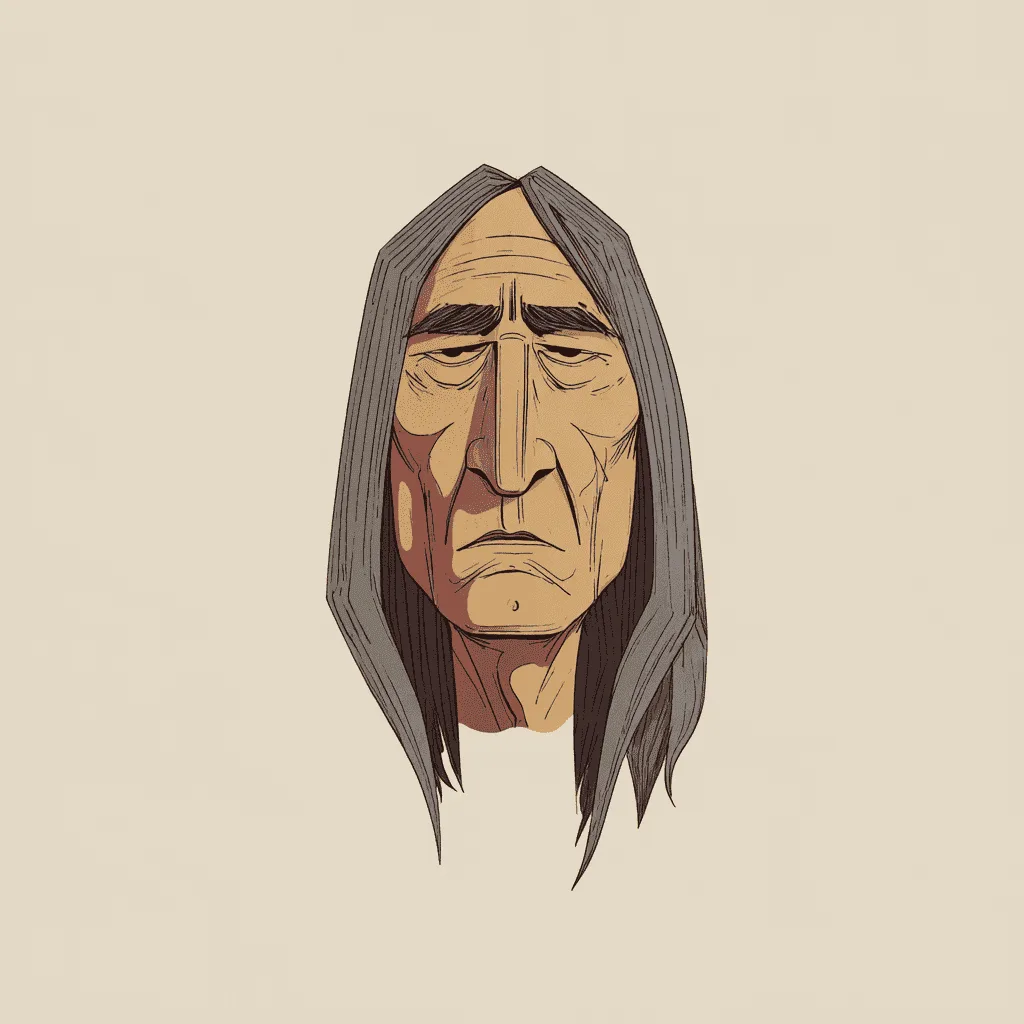
Understanding Crazy Horse historically is extraordinarily difficult. He never learned to read or write in English or in Lakota. He refused to be photographed, meaning we have no contemporary visual representation of him—only artists' renderings created after his death. He left no letters, diaries, or documents of any kind. Everything we know about him comes from other people's accounts: from fellow Lakota who knew him, from U.S. Army officers who fought against him, from interpreters and traders who interacted with him, from newspaper reporters who interviewed those who knew him.
These accounts are sometimes contradictory, sometimes filtered through cultural barriers and language differences, and sometimes shaped by the political agendas of the people providing them. Even during his lifetime, he became legendary; separating historical fact from exaggeration and myth is nearly impossible for scholars. Both Native activists and American nationalists have used his story for political purposes, sometimes distorting the truth to serve contemporary agendas. Some portrayals idealize him to the point of denying his humanity, presenting a purely heroic figure rather than a complex person who made difficult choices in impossible circumstances.
The Catastrophe That Context Explains
Crazy Horse's story must be understood within the demographic and cultural catastrophe that American expansion inflicted on the Lakota people. The Lakota population declined from roughly 25,000 to 30,000 in 1850 to fewer than 15,000 by 1900 through warfare, disease, starvation, and the cumulative effects of forced relocation. The buffalo herds that numbered in the tens of millions in 1850 were reduced to fewer than 1,000 by 1890, destroyed by commercial hunting for hides and tongues and by deliberate military policy designed to eliminate the foundation of Native Plains economies. The U.S. government banned traditional religion, forced children into boarding schools designed to eliminate Native culture and language, prohibited speaking the Lakota language in many contexts, and criminalized traditional practices like the Sun Dance. The Black Hills, guaranteed by treaty, were taken through legislation and force.
The Great Sioux Reservation was progressively reduced through further treaties and executive orders and eventually broken into smaller, separate reservations that fragmented Lakota political unity. Forced onto reservations, unable to hunt or practice traditional subsistence, Lakota people became dependent on government rations that were often inadequate, spoiled, or withheld as punishment for resistance.
Crazy Horse's resistance was ultimately futile not because he lacked courage, skill, or spiritual power, but because the forces against him were overwhelming in their numbers, resources, and determination. His surrender and death marked the end of independent Lakota life on the Plains. After his death, the remaining "hostile" bands surrendered or were captured. The Lakota way of life that had flourished for generations was systematically dismantled.
Conclusion: The Meaning of Uncompromising Resistance
Crazy Horse lived his entire adult life defending everything that made Lakota life meaningful: the freedom to roam the plains following buffalo herds, the spiritual connection to sacred lands, the warrior culture that defined identity and purpose, and the autonomy to live according to traditions passed down through generations. He achieved military victories that few Native leaders could match, demonstrating tactical brilliance that confounded conventional U.S. military operations. He inspired followers through courage, discipline, and apparent spiritual protection that seemed to validate his vision and his authority. Yet his story ends in defeat and death—not because he lacked ability or determination, but because the demographic, economic, and technological advantages of American expansion proved overwhelming. No amount of courage or tactical brilliance could compensate for the industrial resources, population growth, and political will that the United States brought to bear against the Lakota people.
His surrender in 1877 represented recognition of impossible circumstances rather than personal failure or cowardice. His death four months later—violent, controversial, and preventable—symbolizes the fate of those who resisted longest: not honored for courage, not accommodated in defeat, but eliminated as obstacles to be removed. For contemporary understanding, Crazy Horse's story challenges comfortable narratives about the American West as a story of progress and settlement. His resistance illuminates the violent reality of "settling" lands that were already home to peoples with their own cultures, spiritual traditions, and legitimate claims to territory. His military victories demonstrate that Native defeat was not inevitable or natural but the product of overwhelming advantages that had nothing to do with moral superiority or cultural advancement.
Nearly 150 years after his death, Crazy Horse endures in memory not because he achieved final victory—he didn't—but because his refusal to surrender until circumstances left no choice represents a profound statement about resistance, dignity, and the value of fighting for what makes life meaningful even when victory seems impossible. The warrior who never signed a treaty, never accepted reservation life, never allowed his photograph to be taken, and whose grave remains unknown offers a lasting testament to indigenous resilience and the bitter costs of conquest that shaped the American West. His story reminds us that history's most powerful figures are not always those who win, but sometimes those who refuse to surrender what matters most, even when they know they cannot prevail.
Resources for Further Study
Readers interested in a deeper understanding of Crazy Horse and Lakota history may find the following resources helpful. The Fort Laramie National Historic Site provides context on the treaty negotiations that shaped Lakota-American relations and preserves the location where the 1868 treaty was signed. The National Museum of the American Indian in Washington, D.C., offers exhibits on Lakota culture and history with indigenous perspectives and contemporary Native voices. For a concise biography that acknowledges the challenges of reconstructing Crazy Horse's life while avoiding both romanticization and reductionism, Larry McMurtry's Crazy Horse (Penguin Lives, 2005) is a strong starting point. For those seeking a more detailed academic treatment, Kingsley M. Bray's Crazy Horse: A Lakota Life (University of Oklahoma Press, 2006) is widely considered the most thorough and carefully researched biography available.