Table of Contents
The Paradox of Power: Who Was Nader Shah?
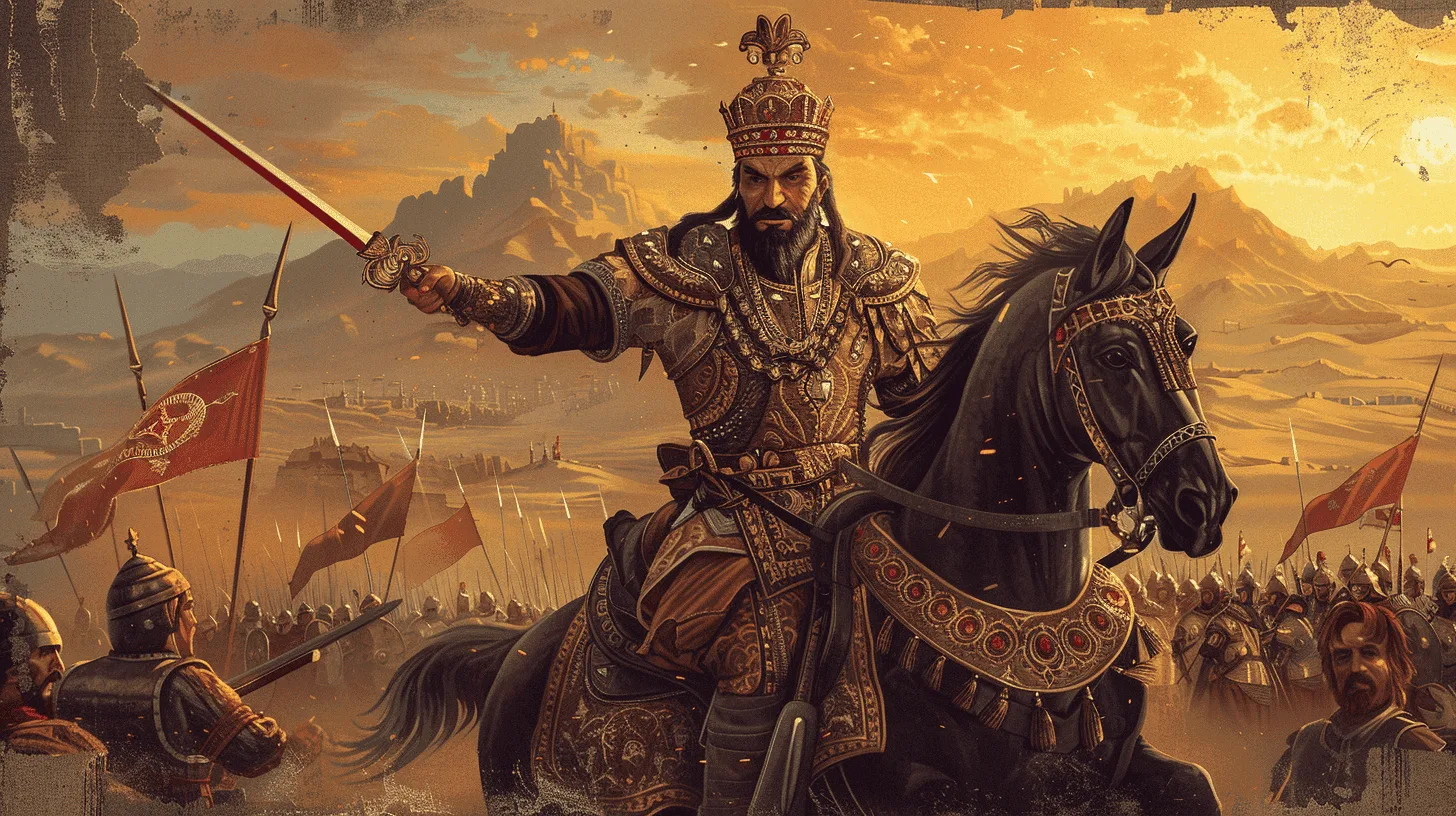
Few figures in world history embody the tension between military brilliance and political catastrophe as starkly as Nader Shah. Often called the "Napoleon of Persia," he rose from obscurity as a tribal warrior to restore an empire shattered by foreign invasion and internal decay. He defeated the Ottomans, humbled the Mughals, and extended Persian sovereignty further than any ruler since the ancient Sassanians. Yet his reign ended in paranoia, brutality, and assassination, and his vast conquests dissolved within months of his death. Understanding Nader Shah means grappling with the limits of conquest, the fragility of personal rule, and the high cost of ambition.
Historical Background: The Collapse of Safavid Iran
To appreciate the scale of Nader's achievement, one must first understand the depth of Iran's crisis in the late 17th and early 18th centuries. The Safavid Dynasty (1501–1736) had governed Iran for over two centuries, establishing Twelver Shi'a Islam as the state religion and creating a powerful, culturally vibrant empire. At its apex under Shah Abbas I (1588–1629), the Safavid state commanded a reformed military, controlled lucrative Silk Road trade routes, and maintained a magnificent capital at Isfahan that rivaled any city in Europe or Asia. Abbas had driven the Ottomans from western Iran, expelled the Portuguese from the Persian Gulf, and centralized authority to an unprecedented degree.
However, the decline after Abbas I was swift and severe. A succession of weak, pleasure-loving shahs allowed central authority to erode. Corruption infiltrated the military and bureaucracy. Conservative clergy gained influence and alienated Sunni minorities. Provincial governors grew increasingly autonomous, treating their territories as private domains.
The once-formidable ghulam (slave-soldier) system decayed, and the army lost its discipline and effectiveness. By the early 18th century, the Safavid state was a hollow shell—unable to defend its borders or maintain internal order.
This weakness invited catastrophe. Afghan tribes in Kandahar revolted in 1709, and by 1722, the Afghan leader Mahmud Hotak marched on Isfahan. After a brutal siege that caused mass starvation, Shah Husayn abdicated, and the Afghans took control of the capital. The fall of Isfahan sent shockwaves across the region. The Ottoman Empire and Tsarist Russia immediately exploited the chaos.
The Ottomans occupied Tabriz, Hamadan, and Baghdad, while Russia took control of the Caspian coast. Iran faced not merely political collapse but territorial dismemberment. The Safavid heir, Tahmasp II, fled north and declared himself shah in exile, but he commanded few troops and little authority.
The Rise of Nader Shah (1688–1736)
Early Life and Tribal Origins
Nader Qoli was born in 1688 into the Afshar tribe, a Turkic-speaking group settled in Khorasan, northeastern Iran. His father, a humble herdsman, died when Nader was young, leaving the family in poverty. According to tradition, Nader and his mother were captured by Uzbek raiders, though he later escaped. This harsh upbringing forged a man of extraordinary resilience, cunning, and ruthlessness. He entered military service as a common soldier, but his skill with weapons, tactical instincts, and political shrewdness soon distinguished him.
By his early thirties, he commanded a band of Afshar warriors and had begun to build a reputation as a capable leader in the chaotic environment of collapsing Safavid authority.
Khorasan was a frontier zone where tribal loyalties shifted constantly, and survival required constant vigilance. Nader learned to navigate these treacherous waters, forming alliances when expedient and destroying enemies when necessary. He also absorbed military lessons from the diverse forces operating in the region—Persian, Afghan, Uzbek, and Turkic—developing a flexible approach to warfare that would later serve him well.
Service to Tahmasp II and the Restoration of Safavid Rule
When the Afghan Hotaks controlled Isfahan, Shah Tahmasp II operated from a precarious base in the Caspian provinces. He lacked military strength and legitimacy. Around 1726, Nader approached Tahmasp with an offer: his tribal forces in exchange for official titles and authority. Tahmasp, desperate for any capable general, agreed. Nader was appointed commander of the royal army and given the title Tahmasp Qoli Khan ("Servant of Tahmasp").
This alliance transformed the struggle against the Afghans. Nader immediately began reorganizing the army, incorporating artillery, enforcing discipline, and training troops in modern tactics. In 1729, he won a series of decisive victories against the Afghan forces, culminating in the recapture of Isfahan. The Safavid dynasty was nominally restored, but real power now rested with Nader. He was the indispensable man—the general who had saved the empire.
He then turned against the Ottomans, who had seized Iran's western provinces. In 1730, he reclaimed Hamadan and Tabriz, demonstrating that Persian forces under capable leadership could match their traditional rivals. However, in 1732, Tahmasp II made a disastrous decision: impatient with Nader's cautious strategy, he personally led a campaign against the Ottomans, suffered a crushing defeat, and signed a humiliating treaty ceding territory. Nader used this failure to depose Tahmasp, installing his infant son Abbas III as figurehead shah while Nader ruled as regent. For four years, he governed Iran's army, treasury, and administration while maintaining the Safavid facade.
Founding the Afsharid Dynasty
By 1736, Nader felt secure enough to drop the pretense. He summoned a grand assembly of tribal leaders, nobles, and clergy on the Moghan plain in northwestern Iran. Through a combination of bribery, intimidation, and staged ceremonies, he pressured the assembly to recognize him as shah. The Safavid dynasty, which had ruled for 235 years, ended. The Afsharid dynasty began.
An interesting condition of Nader's coronation was his demand that Iran's religious establishment moderate hostility toward Sunni Muslims. This was a pragmatic attempt to unify an empire that included large Sunni populations in the Caucasus, Afghanistan, and Central Asia. However, it alienated the Shi'a clergy, who had been pillars of Safavid legitimacy. Nader also attempted to create a new religious order, the Ja'fari school, as a fifth school of Sunni Islam, hoping to bridge the sectarian divide. This effort ultimately failed, but it demonstrated his willingness to challenge entrenched religious authority in pursuit of political stability.
Military Campaigns and Imperial Expansion
Military Reforms
Nader's success rested on systematic military transformation. He created a large standing army, eventually reaching up to 200,000 men, rather than relying solely on tribal levies. This required unprecedented fiscal mobilization, including heavy taxation and the consolidation of state revenues. He invested heavily in artillery and firearms, importing European cannon and hiring European advisors. He established foundries for domestic weapons production, reducing dependence on foreign suppliers.
His armies practiced disciplined training, standardized tactics, and strict discipline. Logistics were organized to sustain long campaigns across difficult terrain. Tactically, Nader integrated cavalry, infantry (armed with muskets and pikes), and artillery in effective combined arms operations. He emphasized speed, surprise, and the concentration of force at decisive points. His battlefield approach often involved feigned retreats, flanking maneuvers, and devastating cannonades before a general assault.
Unusually for a Persian ruler, he even attempted to build a navy in the Persian Gulf to combat Omani pirates and project power into the Indian Ocean, though this effort had limited success.
The Ottoman Campaigns (1730s)
Nader fought multiple campaigns to reclaim territories the Ottomans had seized during the Safavid collapse. The key battles demonstrated his tactical superiority over larger Ottoman forces. At Hamadan (1730), he defeated an Ottoman army nearly double his size through aggressive cavalry charges and precise artillery fire. At Kirkuk (1733), he used a daring night attack to rout entrenched Ottoman positions.
The Ottomans, however, were formidable opponents with their own military reforms and extensive resources. The war dragged on for years, with sieges, counterattacks, and diplomatic maneuvering. After the decisive campaign of 1735, Nader forced the Ottomans to negotiate. The Treaty of Constantinople (1736) restored most lost territories, including Baghdad, and secured Iran's western borders. These victories reversed decades of Ottoman encroachment and restored Persian military prestige.
Nader had not merely defended Iran; he had reasserted Persian dominance in the Caucasus and Mesopotamia.
The Indian Campaign (1738–1739)
Nader's most spectacular achievement was the invasion of Mughal India. The pretext was the Mughal emperor Muhammad Shah's refusal to extradite Afghan refugees who had taken shelter in India. But the real motive was the immense wealth of the Mughal Empire, which Nader needed to finance his military machine. He first conquered Afghanistan to secure his eastern flank, capturing Kandahar and Kabul. Then, in 1738, he crossed the Indus River into Punjab.
The Mughal Empire, though still vast, was in decline. Emperor Muhammad Shah was weak, his nobles were factionalized, and the army was poorly led and equipped. Nader's disciplined force of about 55,000 men faced a Mughal army of perhaps 100,000–150,000 at the Battle of Karnal (February 1739). Despite the numerical disparity, Nader won a decisive victory through superior tactics, disciplined musketry, and effective artillery. Muhammad Shah surrendered Delhi without a fight, hoping to avoid destruction.
What followed revealed Nader's dark side. After rumors of his death sparked attacks on Persian soldiers by Delhi's populace, Nader ordered a general massacre. For hours, Persian troops slaughtered thousands of inhabitants—estimates range from 20,000 to over 100,000. Then came the plunder. Nader's forces systematically looted the Mughal treasury, taking the famous Peacock Throne (a jewel-encrusted masterpiece of Mughal craftsmanship), the Koh-i-Noor diamond (one of the largest and most famous diamonds in history), and loot worth an estimated 70 million rupees in gold and silver alone, plus countless works of art, textiles, and precious objects.
The scale of the plunder was staggering. This treasure temporarily made Nader perhaps the wealthiest ruler in the world. He suspended taxation in Iran for three years, a move that won him temporary popularity but did nothing to build sustainable state finances. The campaign also accelerated the decline of the Mughal Empire, which never fully recovered from the blow. The Peacock Throne was taken to Iran, where it became a symbol of Persian imperial glory, and the Koh-i-Noor eventually passed into British hands during the colonial era.
Central Asian and Caucasus Campaigns
Beyond India, Nader sought to extend Persian control into Central Asia. In 1740, he launched a campaign against the Uzbek khanates of Bukhara and Khiva. Despite the harsh desert terrain and fierce Uzbek resistance, Nader's disciplined army defeated the khanates, compelling them to recognize Persian suzerainty. This campaign extended Persian control to its greatest extent since the early Islamic conquests, reaching the Oxus River and incorporating parts of modern Turkmenistan, Uzbekistan, and Tajikistan.
In the Caucasus, Nader conducted multiple operations against the Lezgi tribes of Dagestan, who resisted Persian authority with Ottoman support. He also checked Russian expansion into the region, reaffirming Persian claims over Georgia, Armenia, and Azerbaijan. By 1741, his empire stretched from the Caucasus to the Indus, from the Persian Gulf to the Aral Sea—a territorial extent unmatched by any Persian ruler since antiquity.
The Dark Turn: Tyranny, Paranoia, and Collapse
Growing Brutality
As Nader's power grew, his governance became increasingly tyrannical. Several factors drove this transformation. Constant warfare required heavy taxation and forced recruitment, generating resentment. His lack of dynastic or religious legitimacy made him deeply suspicious of rivals. The enormous stresses of absolute power, coupled with his advanced age, may have affected his mental stability.
Some contemporaries reported signs of paranoia, irrational suspicion, and erratic behavior in his later years.
Nader ordered mass executions on flimsy evidence. He used systematic torture to extract confessions and terrorize opponents. He imposed collective punishment on rebellious cities, massacring inhabitants and destroying infrastructure. In one notorious incident, he ordered the execution of 2,000 religious scholars who opposed his religious reforms. His cruelty extended to his own family: most shockingly, he ordered the blinding of his own son, Reza Qoli Mirza, on suspicion of conspiracy.
This act horrified contemporaries and alienated even his most loyal supporters. The son who had once been his heir apparent was reduced to a blinded, broken figure, and Nader never fully recovered from the moral and political damage this act caused.
Economic Exhaustion
The empire's economy suffered immensely under the weight of endless military campaigns. Heavy taxation impoverished the peasantry and urban populations. Resources that might have supported infrastructure, trade, or agriculture were poured into war. The plunder economy relied on external conquest rather than sustainable development, creating a dangerous dependence on victory. When conquests slowed, the fiscal crisis deepened.
Demographic damage from warfare, massacre, and forced migrations weakened many regions. Entire communities were displaced or destroyed. The Caucasus, in particular, suffered from repeated campaigns. By the mid-1740s, much of Iran was exhausted and resentful. The administrative apparatus, which had never been strong, decayed further under the strain of constant military mobilization.
Assassination (1747)
On June 19, 1747, Nader Shah was assassinated by his own officers during a campaign in Khorasan. The immediate trigger was his plan to execute suspected conspirators among his commanders. Warned of the plot, the officers struck first, stabbing him in his tent. Some accounts say he fought back fiercely before being overwhelmed. The assassination met with widespread relief across the empire, reflecting how thoroughly he had alienated military, tribal, religious, and family circles.
Collapse of the Afsharid Empire
Nader's vast empire collapsed almost immediately after his death. It had been held together purely by his personal military power, not by institutions, loyalty, or shared interests. Within weeks, multiple claimants fought for the throne. Tribal leaders declared independence. Provincial governors asserted autonomy.
External powers reclaimed lost territories. The Ottomans reoccupied western frontier zones. The Uzbek khanates broke free. In the Caucasus, local rulers reasserted independence.
Nader's surviving relatives and generals fought a protracted civil war that further devastated Iran. The Afsharid dynasty continued nominally until 1796, but after Nader's death it controlled only parts of Khorasan. The power vacuum was eventually filled by the Zand Dynasty (1751–1794), which offered a brief respite of stable, humane rule under Karim Khan Zand, and then the Qajar Dynasty (1789–1925), which reunited most of Iran but never approached Nader's territorial extent. The Qajars had to rebuild state authority from the ground up, learning from Nader's failure that personal rule without institutional foundations could not endure.
Legacy and Historical Assessment
Military Genius
Nader's military achievements were extraordinary by any standard. He has been called "the Napoleon of Persia" for his tactical brilliance, rapid campaigns, and ability to defeat larger armies. His integration of artillery, cavalry, and infantry influenced Persian military thinking for generations. He restored Persian prestige after decades of humiliation and demonstrated that Iran could field armies capable of defeating the Ottomans, Mughals, and Central Asians. His training methods and logistical systems set standards that later reformers, including the Qajars and even the Pahlavis, studied and sought to emulate.
His strategic vision was equally impressive. He understood the importance of combining military force with political calculation, and he consistently sought to concentrate his forces against one enemy at a time while neutralizing others through diplomacy. His campaigns in India and Central Asia were masterpieces of strategic planning, execution, and logistics.
Political and Institutional Failure
Yet Nader's political legacy is profoundly flawed. His empire depended entirely on his personal power and collapsed with his death. He created no lasting institutions, no stable governance structures, no legitimate succession mechanism. His brutal tyranny turned even loyal supporters into enemies. The fundamental paradox of Nader Shah is that he was a superlative military leader but a terrible ruler.
He could conquer but not govern. He built an empire but not a state.
Cultural and Religious Impact
His attempt to reform Shi'ism failed, leaving a legacy of clerical resistance to state power that persisted into the Qajar and Pahlavi eras. The persecution of religious leaders weakened clerical authority temporarily but also fueled opposition that later dynasties had to manage. His empire's diversity—Shi'a Persians, Sunni Afghans, Christian Armenians and Georgians, Zoroastrians, Jews, and others—demonstrated both the possibilities and challenges of pluralism under autocratic rule. In some ways, Nader was more tolerant than his Safavid predecessors, but his tolerance was purely pragmatic and never institutionalized.
Historiographical Debates
Historians continue to debate Nader's significance and legacy. Some emphasize his role as a national hero who saved Iran from disintegration and restored its place among the great powers of Asia. Others point to his tyrannical excesses and the ephemerality of his empire as evidence of fundamental failure. A balanced view recognizes both his genuine achievements in restoring Persian power and the devastating costs of his methods. Contemporary Persian sources often express mixed feelings—admiration for victories alongside horror at cruelty.
The historian Michael Axworthy has provided the most accessible modern biography, arguing that Nader should be understood as a product of his violent times, while also condemning his excesses. Other scholars have placed Nader in the broader context of early modern empire-building, comparing him to contemporaries like Peter the Great or the Mughal emperor Aurangzeb.
Conclusion: The Enduring Lessons of Nader Shah
Nader Shah remains one of history's great paradoxes—a brilliant commander who restored an empire through military genius, yet a paranoid tyrant whose rule brought devastation and whose empire dissolved upon his death. His career offers enduring lessons about the limitations of pure military power. Conquest without legitimacy, institutions, or popular support cannot create sustainable empire. Violence may win battles, but it cannot build lasting political order. Nader achieved remarkable victories that reshaped the geopolitics of Asia, but he built nothing that outlasted him.
In the end, his life demonstrates that even the most spectacular military success cannot substitute for wise governance, institutional development, and the cultivation of loyalty through justice rather than fear.
For those interested in further exploration, the definitive modern biography is Michael Axworthy's The Sword of Persia: Nader Shah, from Tribal Warrior to Conquering Tyrant (I.B. Tauris, 2006), which provides a richly detailed and balanced account of his life and campaigns. A broader academic overview of the period can be found in the Cambridge History of Iran, Vol. 7, which covers the late Safavid and Afsharid periods in depth. For comparative context on the dynamics of early modern empire-building, the Oxford Bibliographies entry on Safavid Iran offers a curated selection of scholarly resources. Finally, for a concise overview of Nader's life and significance, the Encyclopaedia Britannica entry on Nader Shah provides a reliable starting point.