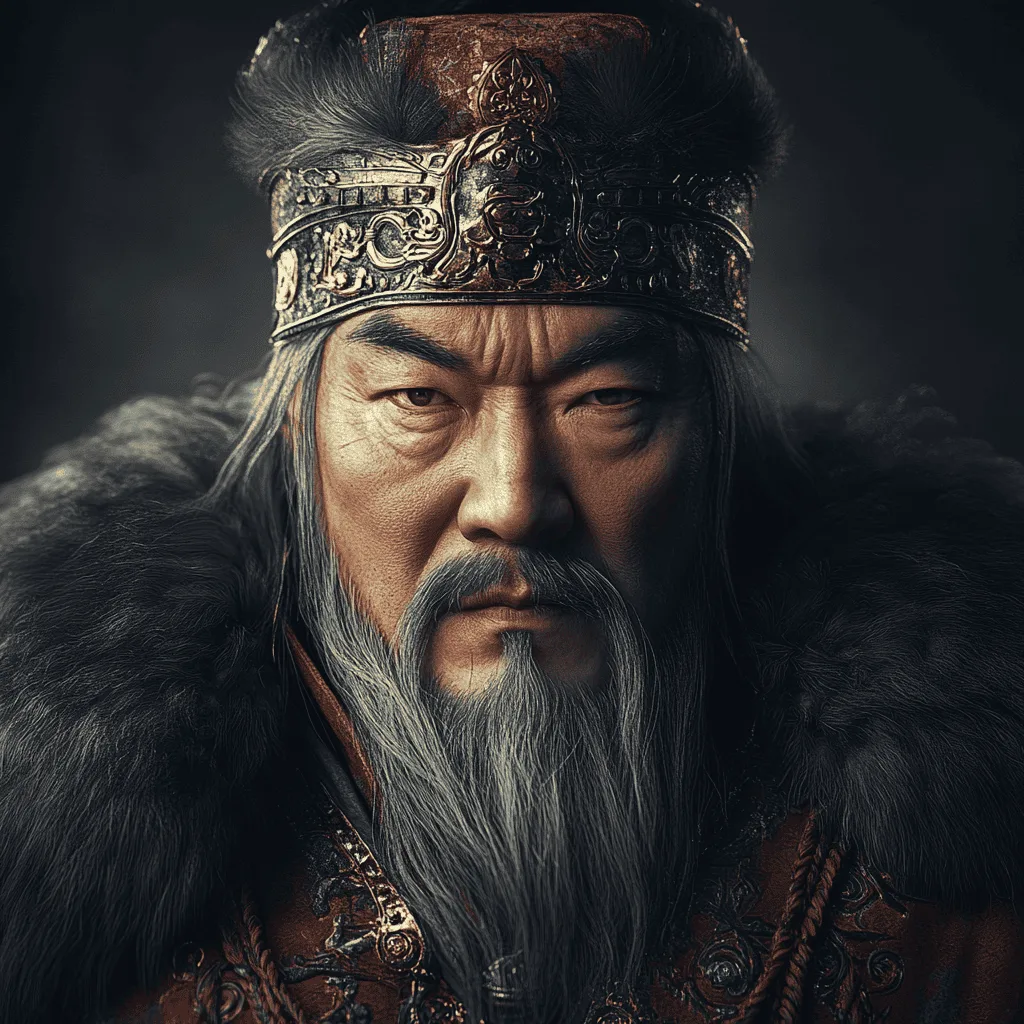
Who Was Subutai? the Genius General of the Mongol Horde
Introduction: The Blacksmith’s Son Who Conquered Continents
Subutai (1175–1248) is arguably the most successful military commander in human history—a claim that seems hyperbolic until you examine his record. Over four decades, he commanded armies across two continents, won an estimated sixty-five battles and sieges, conquered territory spanning 6.6 million square kilometers (more than any other general before or since), and never lost a single major engagement. His campaigns stretched from Korea to Hungary, from Siberia to Persia, demonstrating a strategic and tactical genius that modern military historians still study with awe.
What makes Subutai’s achievements even more striking is his origin. Unlike Alexander the Great, Julius Caesar, or Napoleon—all born to privilege and power—Subutai came from the Uriankhai, a forest-dwelling tribe that served the Mongols as hunters and blacksmiths. He had no noble blood, no inherited armies, and no formal military education. He rose through pure merit, tactical brilliance, and an extraordinary ability to coordinate massive military operations across thousands of miles.
Under Genghis Khan and his successors, Subutai transformed the Mongol army from a steppe cavalry force into history’s most sophisticated military machine. He pioneered combined-arms warfare integrating cavalry, siege engines, infantry, and psychological operations. He developed strategic concepts—simultaneous multi-front invasions, complex feigned retreats, deep reconnaissance, and lightning-fast mobility—that the West would not fully understand and replicate for centuries.
His campaigns read like a catalog of military impossibilities made real: defeating Russian armies in brutal winter conditions, crossing the Carpathian Mountains with a massive force, coordinating attacks across Eastern Europe with precision timing before the age of telecommunications, and destroying armies that significantly outnumbered his forces through superior tactics and intelligence gathering. Yet despite these extraordinary achievements, Subutai remains relatively unknown outside military history circles, overshadowed by Genghis Khan. This obscurity is unjust—Subutai was the strategic architect behind many of Genghis Khan’s greatest victories and continued expanding the Mongol Empire long after the great khan’s death.
This article explores Subutai’s rise from humble origins to supreme command, his revolutionary military innovations, his greatest campaigns from China to Europe, and his profound influence on the art of war.
Understanding the Mongol Military Revolution
The Mongol Army: More Than Horse Archers
To appreciate Subutai’s genius, we must first understand the instrument he wielded. The Mongol army was unlike any military force the medieval world had encountered. Popular imagination often reduces Mongol warfare to hordes of horse archers, but the reality was far more sophisticated. The army’s organization was decimal and hierarchical: arbans (10 men) formed the basic unit, jaguns (100 men), mingghans (1,000 men), and tumens (10,000 men) were the primary strategic units. This system created flexibility and clear command structures, allowing complex maneuvers and rapid communication through established chains of command.
Cavalry came in two primary types. Light cavalry—the majority—rode smaller, hardier steppe ponies, armed with composite bows capable of shooting accurately over two hundred yards while riding at full gallop. Each warrior typically had three to five horses, allowing constant remounting. Heavy cavalry wore armour (often leather or lamellar) and carried lances, swords, and maces, functioning as shock troops to break enemy formations after light cavalry had disrupted them.
Beyond cavalry, Mongol armies incorporated siege engineers—often captured Chinese experts—who designed trebuchets, catapults, siege towers, and incendiary devices. They built intelligence networks of merchants and spies who gathered economic, geographic, and military intelligence. Their logistics systems allowed sustained campaigns across vast distances: each warrior was responsible for his own horses and basic supplies, captured livestock supplemented food, and the ability to live off the land reduced supply train requirements. Subutai would perfect these systems.
The Mongol Way of War: Strategic Principles
Mongol warfare followed principles that Subutai developed to perfection: speed and mobility (armies sometimes covered sixty to one hundred miles per day); intelligence gathering before campaigns; psychological warfare (cultivating a reputation for invincibility and merciless brutality); adaptability to opponents and terrain; strategic patience (operations spanning years); and total war against resisting populations. Into this already sophisticated system came Subutai, whose genius elevated Mongol warfare to heights it had never before achieved.
The Rise of Subutai: From Blacksmith’s Son to Supreme Commander
Origins: The Uriankhai Tribesman
Subutai was born in 1175 (some sources say 1176) into the Uriankhai, a forest-dwelling tribe that occupied a subordinate position in Mongol society. His father, Jarchigudai, was a blacksmith—a respectable profession but far from nobility. In the rigidly hierarchical Mongol society, lineage determined much of one’s prospects, but several factors worked in Subutai’s favour. The Uriankhai had traditional military obligations as scouts and auxiliaries, giving young Subutai exposure to military service. His older brother, Jelme, joined Temüjin (the future Genghis Khan) early in his rise, providing a crucial connection. Temüjin himself came from relatively modest nobility and valued ability over aristocratic heritage, creating opportunities for talented individuals like Subutai to rise rapidly.
Joining Genghis Khan: The Early Years
Around 1190, when Subutai was about fifteen, he joined Temüjin’s forces. These early years were formative as Temüjin fought to unify the Mongol tribes, engaged in constant warfare against rival chiefs, betrayals, and shifting alliances. Subutai distinguished himself through courage, tactical intelligence, and loyalty—qualities Temüjin valued highly. By 1206, when Temüjin was proclaimed Genghis Khan, Subutai had risen to a position of significant responsibility, commanding units and participating in strategic planning.
Early Commands: Proving His Genius
Subutai’s first major independent command came during Genghis Khan’s conquest of northern China against the Jin Dynasty (1211–1215). In these campaigns, he demonstrated tactical flexibility by adapting Mongol cavalry tactics to siege warfare, strategic thinking by suggesting campaign plans that impressed the khan, logistical mastery in managing supplies across agricultural landscapes, and personal bravery that earned the respect of soldiers. By the mid-1210s, he was one of Genghis Khan’s most trusted generals, entrusted with independent commands and included in strategic councils.
The Khwarezmian Campaign: First Great Test
Subutai’s genius emerged fully during the campaign against the Khwarezmian Empire (1219–1221), which controlled much of Central Asia. He commanded the vanguard forces that screened the main Mongol army, developed operational plans for complex multi-pronged advances that confused and divided Khwarezmian forces, and led pursuit forces that tracked down the fleeing Shah Muhammad, eventually forcing him to flee to an island in the Caspian Sea where he died. Most remarkably, Subutai was given an extraordinary mission: with just 20,000 men, he was to pursue the shah’s son Jalal ad-Din and conduct reconnaissance of lands west of the Caspian Sea—essentially a scouting mission into the unknown that became one of history’s great military expeditions.
The Great Raid: Subutai’s Reconnaissance-in-Force (1221–1223)
An Unprecedented Mission
What began as a pursuit of Jalal ad-Din evolved into a reconnaissance expedition that carried Subutai and his co-commander Jebe across the Caucasus Mountains and into the steppes of modern Russia and Ukraine—a journey of over 8,000 kilometres through largely unknown territory. This expedition, sometimes called the “Great Raid,” demonstrated Subutai’s strategic vision on an epic scale.
The Campaign Through the Caucasus
After pushing Jalal ad-Din back into Afghanistan, Subutai and Jebe turned north, crossing into Azerbaijan and Georgia with approximately 20,000–30,000 horsemen. The Georgian and Armenian kingdoms attempted to stop the Mongol advance but were defeated in multiple engagements, including the Battle of Khunan (1221) where King Giorgi IV lost. Subutai used psychological warfare, spreading terror through massacres of resisting populations while offering generous terms to those who surrendered—a calculated policy that encouraged submission and reduced the need for costly sieges.
The Conquest of the Caucasus Steppe
Emerging from the Caucasus Mountains, Subutai’s forces entered the steppe regions north of the Caspian Sea, encountering the Alans (a powerful steppe confederation) and the Cumans (Kipchak Turks). Here Subutai demonstrated sophisticated diplomacy combined with military pressure. The Alans and Cumans initially allied against the Mongols. Subutai sent envoys to the Cumans, arguing they should not fight to defend the Alans since both were steppe peoples. The Cumans, persuaded by this argument and Mongol gifts, abandoned the alliance. Subutai then defeated the isolated Alans before turning on the Cumans—a ruthless but brilliant maneuver that showed his understanding that military victory requires political and psychological dimensions.
The Battle of the Kalka River (1223): Crushing the Rus’
The fleeing Cumans sought help from the Rus’ princes who ruled the principalities of modern Ukraine and Russia. Alarmed by reports, they assembled a coalition force. The Battle of the Kalka River on May 31, 1223, became one of Subutai’s most brilliant tactical victories. The Rus’ and Cuman coalition fielded perhaps 80,000–100,000 warriors—outnumbering the Mongols by roughly three to one. Subutai employed a massive feigned retreat lasting nine days. Light Mongol cavalry engaged and then appeared to flee in disorder. The allied army pursued eagerly, drawing further from their bases while suffering continuous harassment. When the pursuing forces were completely exhausted and strung out over many miles, Subutai sprang his trap: the “fleeing” Mongol forces turned, fresh and organized, while concealed forces emerged from flanks and rear. The result was catastrophic for the allies—perhaps 40,000–50,000 were killed, with six Rus’ princes among the dead. The princes who commanded the reserve forces, witnessing the disaster, fortified a camp and refused to fight. Subutai promised them safe passage if they surrendered; when they did, he had them crushed beneath wooden platforms during a victory feast—brutal treachery, but demonstrating the Mongol approach to those who resisted.
Return to Genghis Khan
After the Kalka River victory, Subutai led his forces back across the steppes, completing an unprecedented 8,000+ kilometre journey through enemy territory, defeating every army that opposed him, and returning with invaluable intelligence about lands west of Mongolia. This reconnaissance-in-force had achieved military, intelligence, psychological, and strategic objectives. Genghis Khan recognized its significance, promoting Subutai to the highest ranks of Mongol military leadership.
Subutai’s Strategic Innovations: Revolutionizing Warfare
Multi-Front Warfare: Coordinated Operations Across Continents
Subutai’s most revolutionary contribution was perfecting coordinated multi-front warfare on an unprecedented scale. Traditional medieval armies operated as single large forces that marched together and fought set-piece battles. Subutai developed a radically different approach: he would divide Mongol armies into multiple independent forces—sometimes three, four, or even five separate armies operating hundreds or thousands of kilometres apart. Each force operated semi-independently but according to an overall strategic plan with designated objectives and timelines. The separate forces would converge on a target area at a predetermined time, forcing enemies to face threats from multiple directions simultaneously. This approach created overwhelming psychological pressure, exploited Mongol advantages in mobility and communication, and required precise advance planning, excellent intelligence, disciplined adherence to plans, flexible adaptation, and reliable communication through mounted couriers. Subutai’s ability to execute such campaigns repeatedly across different terrain and enemies demonstrated strategic genius few leaders have matched.
The Feigned Retreat: Psychological Warfare at Scale
The feigned retreat was a Mongol standard tactic, but Subutai elevated it to an art form. While traditional feigned retreats occurred over short distances and brief periods, Subutai executed them lasting days or even weeks, covering hundreds of kilometres while maintaining the deception perfectly among tens of thousands of soldiers. The Battle of the Kalka River demonstrated this on a grand scale. This tactic required absolute confidence from soldiers, perfect discipline, detailed planning of routes and turning points, continuous intelligence, and deep psychological understanding of enemy responses. Subutai’s mastery made Mongol armies appear to have supernatural abilities—they could appear defeated, then suddenly reveal themselves as victors through planned deception.
Intelligence and Reconnaissance: Knowledge as Weapon
Perhaps no pre-modern military commander understood and exploited intelligence gathering as thoroughly as Subutai. Before major campaigns, he spent months or years gathering information from merchants, spies infiltrating enemy courts and armies, systematic interrogation of prisoners, scouts ranging far ahead, and map creation. This intelligence allowed him to plan campaigns in detail before armies even mobilized, identify and exploit enemy political divisions, choose invasion routes that avoided strongly defended positions, time operations to exploit seasonal factors, and effectively outthink opponents before battles began. This information advantage was perhaps more important than any tactical maneuver—Subutai often won campaigns before the first battle by understanding the strategic situation better than his opponents understood it themselves.
Logistics and Administration: The Unglamorous Foundation
Subutai’s genius extended to logistics—the unglamorous but essential management of supplies, transport, and administration. Mongol armies operated far from their bases for years because of sophisticated logistical systems that Subutai helped perfect: living off the land, multiple horses per warrior for rapid remounting, capturing enemy supply depots, seasonal planning timed to harvests, rapid communication via the yam courier system, and efficient administration of conquered territories. His campaigns succeeded partly because he ensured his armies could sustain themselves through careful planning and efficient resource exploitation—less glamorous than battlefield brilliance but equally essential.
The Russian Campaign (1236–1242): Subutai’s Masterpiece
Planning the Conquest of the Rus’
By the mid-1230s, Subutai was the Mongol Empire’s most senior and capable commander, serving under Ögedei Khan. He proposed and planned the conquest of the Rus’ principalities and Eastern Europe—a campaign that became his greatest achievement. He had personal knowledge of the region from his reconnaissance expedition thirteen years earlier. He assembled a massive force—estimates suggest 120,000–150,000 Mongol warriors plus auxiliaries. He developed a detailed multi-year campaign plan that would systematically conquer the fragmented Rus’ principalities one by one. Crucially, he planned for winter warfare—deliberately launching the invasion in winter when frozen rivers became highways for cavalry instead of barriers. The Rus’ principalities were numerous but divided, a political fragmentation that played perfectly into Mongol strategy.
The Conquest of Vladimir-Suzdal (1237–1238)
The campaign began in December 1237—a deliberately counterintuitive choice. Subutai recognized that winter offered advantages: frozen rivers could be crossed, frozen swamps became passable, deep snow limited Russian defensive options, and cold weather suited Mongol warriors better than Russians accustomed to wintering in fortified towns. The Mongols invaded in multiple columns. Cities fell in rapid succession: Ryazan was besieged and utterly destroyed after six days, Kolomna and Moscow were captured and burned, and Vladimir—the capital of the most powerful Russian principality—fell after just four days of bombardment from Mongol siege engines. Grand Prince Yuri II gathered an army but was defeated and killed at the Battle of the Sit River on March 4, 1238. Within three months, the most powerful Russian principality was destroyed.
The Conquest of Southern Rus’ (1239–1240)
After consolidating control over northeastern Rus’, Subutai turned south toward Kiev. Kiev’s fortifications were formidable, but Subutai brought up Chinese-built siege engines that systematically bombarded the walls. After several days, the walls were breached and Mongol forces stormed the city. The sack of Kiev was devastating—contemporary sources describe the city so thoroughly destroyed that it was nearly uninhabited for decades afterward. With Kiev’s fall, organized Russian resistance effectively ended.
The European Campaign (1240–1242): The Mongol High Tide
Strategic Planning: The Invasion of Europe
With the Rus’ conquered, Subutai planned an even more ambitious operation: the invasion of Central and Western Europe. The strategic situation in 1240 favoured the Mongols: Eastern Europe lay open, Central Europe was fragmented among numerous kingdoms, Poland was divided, Hungary faced internal dissent, and the Holy Roman Empire was embroiled in conflicts between Emperor and Pope. Subutai developed a staggeringly ambitious plan: three separate Mongol armies would invade simultaneously from different directions. A northern force would invade Poland, neutralizing threats and protecting the main army’s flank. The main central force would invade Hungary through the Carpathian Mountains—the primary objective. A southern force would advance through Moldavia into Hungary from the south. These three armies, operating hundreds of kilometres apart, would converge in Hungary at approximately the same time, trapping Hungarian forces between them. The coordination required was extraordinary—all without modern communication. The fact that this plan worked demonstrates Subutai’s genius on a level few commanders in history have matched.
The Polish Campaign: Defeating the North
The northern force, commanded by Baidar and Kadan under Subutai’s overall strategic plan, invaded Poland in early 1241. Polish resistance was organized but ineffective. The city of Sandomierz was captured and destroyed in February. Polish forces under various dukes were defeated in multiple engagements, most famously the Battle of Legnica (April 9, 1241). Duke Henry II of Silesia assembled a coalition army of perhaps 25,000–30,000 warriors including Polish and German knights and Teutonic Knights. The Mongol force of about 20,000 employed light cavalry harassment, feigned retreats, and smoke screens to create confusion. Henry and thousands of his knights were killed, with the Mongols reportedly filling nine bags with right ears to count the slain. With organized Polish resistance destroyed, the northern invasion force had accomplished its mission.
The Hungarian Campaign: The Main Objective
Meanwhile, the main Mongol army under Batu Khan—with Subutai exercising operational command—invaded Hungary through the Carpathian Mountains, a feat considered nearly impossible with a large army in winter. King Béla IV had been warned but was not adequately prepared. The Battle of Mohi on April 11, 1241—just two days after Legnica—became one of Subutai’s most brilliant tactical victories. The Hungarian army of perhaps 25,000–30,000 fortified a camp near the Sajó River. Subutai developed a complex plan: a frontal attack pinned the Hungarian forces while a flanking force crossed the river upstream and attacked from the rear. The attack launched at dawn. When the flanking force struck from behind, the Hungarians were caught completely by surprise, trapped between two Mongol armies with the river at their backs. Subutai deliberately left a gap in the encirclement—an escape route westward. The Hungarian army fled through this opening, exactly as Subutai intended. The “escape route” became a killing field: fleeing forces lost all cohesion and were pursued relentlessly by Mongol light cavalry. Perhaps 10,000–40,000 Hungarians died. King Béla IV barely escaped. The battle demonstrated Subutai’s tactical coordination, psychological insight, and strategic vision.
The Culmination: Europe Awaits Conquest
By late spring 1241, Eastern Europe lay open to Mongol conquest. No significant military force stood between the Mongols and Western Europe. Subutai reportedly planned to continue west, with scouts having penetrated as far as Vienna. However, in December 1241, Ögedei Khan died in Mongolia. Mongol tradition required all princes and senior commanders to return for the election of a new Great Khan. The Mongol armies withdrew from Europe. This withdrawal has been called one of history’s great “what ifs”; many historians believe Europe was saved by Ögedei’s death, as no European military force of the 1240s appeared capable of defeating Subutai’s armies in open battle.
Later Campaigns and Final Years
After the succession crisis was resolved and Möngke Khan became Great Khan in 1251, Subutai—now in his seventies—continued advising Mongol military operations, playing a role in planning campaigns against the Song Dynasty in southern China and various Central Asian kingdoms. He died in 1248 at approximately seventy-three years old, likely in Mongolia, having finally retired from active service. Unlike many great commanders who died in battle or fell from power, Subutai maintained his position and respect until his peaceful death—a testament to his diplomatic skills and political acumen.
Subutai’s Legacy: Influence on Military History
Statistical Superiority: The Numbers Speak
Subutai’s career statistics are unmatched: approximately sixty-five battles and sieges over forty years, never defeated, conquering about 6.6 million square kilometres—more than any other commander in history. For comparison, Alexander the Great conquered about 5.2 million square kilometres; Napoleon won about sixty battles but lost several major engagements; Genghis Khan conquered more total territory but over a longer period and with multiple generals including Subutai.
Strategic Innovations That Endure
Subutai’s military innovations influenced warfare far beyond his lifetime. Multi-front coordinated operations became standard in modern warfare—Germany’s Schlieffen Plan in WWI and WWII operations across theatres echo his concepts. His systematic use of intelligence as a strategic weapon prefigured modern military intelligence practices. His mobile warfare and exploitation of speed advantages anticipated German blitzkrieg tactics and modern combined-arms operations. His psychological operations—cultivating reputations for invincibility, using terror strategically—are now recognized as force multipliers.
Modern Military Study
Subutai’s campaigns are studied in military academies worldwide. The U.S. Army War College examines his operational coordination; Russian military academies study his winter warfare tactics. Military historians recognize him as one of history’s supreme commanders despite his relative obscurity in popular culture. For further reading, see The Metropolitan Museum of Art’s Mongol Empire collection and Mongolian Cultural Heritage. Additionally, the Encyclopaedia Britannica entry on Subutai provides an authoritative overview, and the HistoryNet article offers a detailed military analysis of his campaigns.
Why Subutai Remains Obscure
Despite his achievements, Subutai remains less famous than many less accomplished commanders. He operated in Genghis Khan’s shadow, left no personal writings, and his greatest victories came in regions that traditional Western historiography often neglected. The Mongols were portrayed negatively in European sources, and Subutai’s involvement in brutal massacres makes him difficult to romanticize. His non-noble background also contributed. Nonetheless, serious military historians recognize him as arguably the greatest operational commander in history.
Conclusion: The Supreme Strategist
Subutai’s life trajectory—from blacksmith’s son to supreme military commander—represents one of history’s most extraordinary examples of pure merit overcoming social barriers. His military achievements remain unmatched in scale and consistency. But his real greatness lay in his strategic vision: his ability to plan and execute operations of stunning complexity across continental distances, coordinate multiple armies without modern communications, gather and exploit intelligence, adapt tactics to different enemies and terrain, and understand that warfare encompasses psychological, economic, and political dimensions. His innovations anticipated concepts rediscovered centuries later. The European campaign of 1241–1242 stands as perhaps the greatest operational achievement in pre-modern military history. For students of military history and human achievement, Subutai remains essential—proof that strategic genius, when combined with opportunity and determination, can reshape the world.