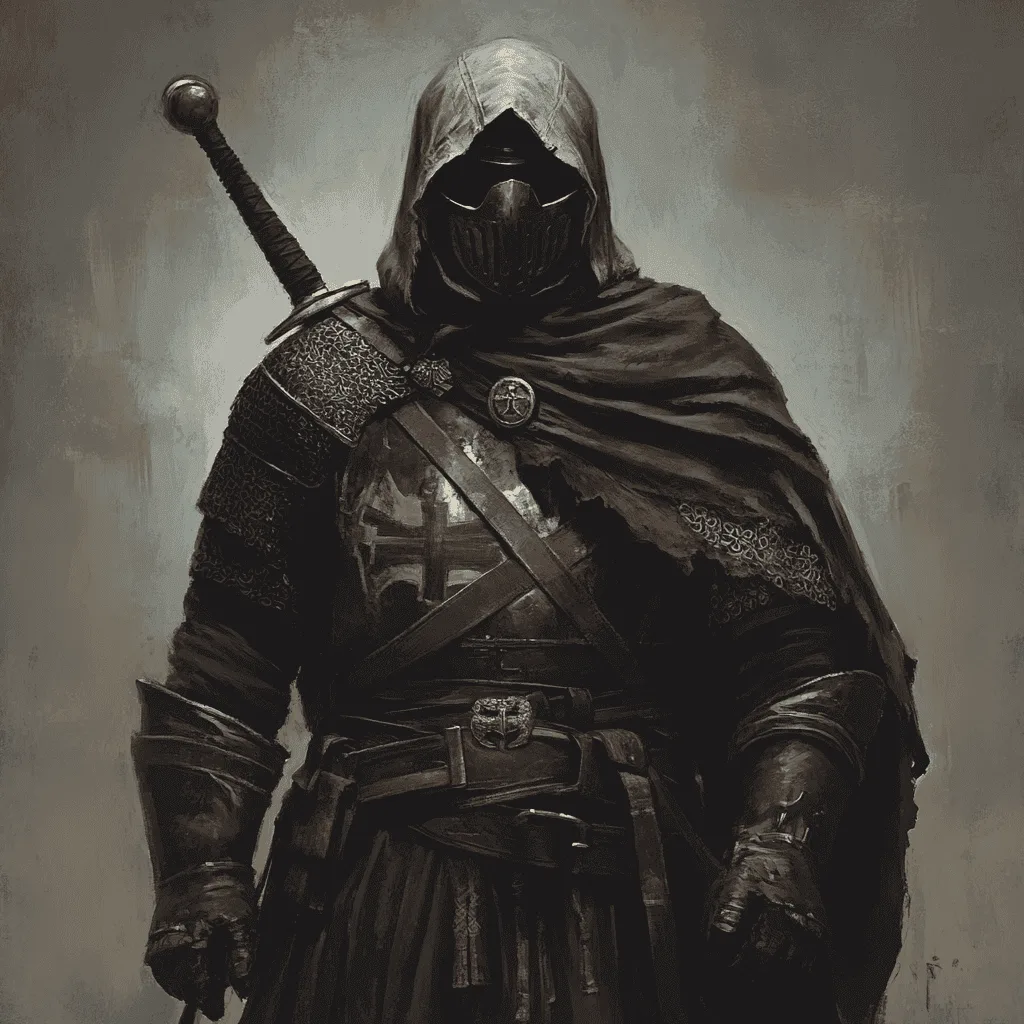
Richard the Lionheart: The Warrior King of the Crusades
Introduction: The King Who Never Was Home
Richard I of England (1157–1199), celebrated as Richard the Lionheart, presents one of history's great paradoxes. He is remembered as one of England's most iconic sovereigns, yet he spent barely six months of his ten-year reign within its borders, spoke no English, and regarded the island kingdom largely as a funding source for his continental wars and crusading ambitions. He was a brilliant military commander who won spectacular victories yet failed to reclaim Jerusalem, the ultimate prize of the Third Crusade. He cultivated an image of chivalric perfection yet ordered the massacre of thousands of prisoners. He was a man of his era who transcended it to become a legendary figure whose reputation has endured for over eight centuries.
The contrast between the historical figure and the legend defines Richard's enduring appeal. The historical Richard was a complex, deeply problematic ruler—a financially ruinous king who bled England dry, a commander whose tactical brilliance was often matched by strategic shortsightedness, and a man whose personal courage bordered on reckless abandon. His priorities lay not with governing his kingdom but with winning glory on distant battlefields. Yet the legendary Richard—the lion-hearted crusader, the chivalrous knight, the archetypal warrior-king—has proven far more powerful and enduring than the historical reality.
The Third Crusade (1189–1192), where Richard earned his legendary status, represented both his greatest triumph and his ultimate failure. He won every major battle he fought, outmaneuvered the formidable Saladin repeatedly, and restored Crusader military power in the Levant. Yet Jerusalem remained beyond his grasp. His rival, Saladin, came to respect him as a worthy opponent, forging one of history's most famous martial rivalries—two leaders from opposing worlds who fought fiercely yet maintained mutual admiration.
This examination explores the real Richard behind the legend—his upbringing in the ruthless world of Plantagenet politics, his early military campaigns in France, his leadership during the Third Crusade, his disastrous capture and ransom, and his final years fighting to preserve his continental empire. Understanding the historical Richard while appreciating why the legend emerged reveals much about medieval society and how historical memory is constructed across centuries.
The Making of a Warrior King: Early Life and Education
Born to Rule, Trained to Fight (1157–1172)
Richard was born on September 8, 1157, in Oxford, England, the third son of King Henry II of England and Eleanor of Aquitaine. His birth into the Plantagenet dynasty placed him at the center of medieval Europe's most powerful and turbulent families. Henry II ruled the sprawling Angevin Empire, territories stretching from Scotland to the Pyrenees. He was energetic, intelligent, hot-tempered, and relentlessly focused on consolidating his power. Eleanor of Aquitaine was the most remarkable woman of the 12th century—wealthy as Duchess of Aquitaine in her own right, formerly Queen of France, and a formidable political force.
Richard's position as the third son meant he was not originally expected to inherit England. His older brother Henry was designated heir to England and Normandy, while Richard was set to receive Aquitaine through his mother. This shaped his upbringing and lifelong priorities. Richard's early environment in Aquitaine exposed him to sophisticated courtly culture, while his military training began at a young age under the guidance of some of Europe's finest knights.
Education in Warfare and Courtly Arts
Richard spent most of his childhood in Aquitaine, the wealthy duchy his mother ruled. This southern French environment profoundly influenced his character. He became fluent in French and Occitan, learned Latin for administrative purposes, but never mastered English—reflecting the fundamentally French culture of the Plantagenet court. His military education was extensive and practical: horsemanship, swordsmanship, siegecraft, battlefield strategy, and the complex logistics of medieval armies.
He was also immersed in courtly culture, absorbing troubadour poetry (Richard himself composed verse), chivalric ideals, and the elaborate social codes of knighthood. He witnessed his mother's governance of Aquitaine, learning statecraft first-hand, though he apparently found governing far less interesting than fighting.
Family Warfare and the Great Rebellion
In 1173, Richard participated in one of medieval Europe's great family dramas—a rebellion by Henry II's sons against their father, orchestrated in part by Eleanor of Aquitaine. The causes were complex: Henry II controlled vast territories but was reluctant to share meaningful power with his adult sons. His heir, Henry the Young King, bore a royal title but exercised no real authority. Eleanor encouraged the rebellion, seeing an opportunity to secure greater independence for her sons.
King Louis VII of France supported the rebellion, seeking to weaken his powerful Plantagenet rival. Richard, aged just 16, joined his brothers Henry and Geoffrey in taking up arms against their father. Henry II proved formidable in suppressing the uprising. He mobilized loyal forces quickly, used mercenaries effectively, and captured Eleanor as she attempted to flee to France, imprisoning her for the next sixteen years. By 1174, the rebellion had collapsed, and all three sons were forced to submit. The failed rebellion taught Richard valuable lessons: never underestimate an opponent, maintain reliable troops, and understand that family ties guarantee nothing in medieval politics.
The Warrior Duke: Mastering Medieval Warfare (1175–1189)
Consolidating Control of Aquitaine
For the next fifteen years, Richard worked to consolidate his control over his frequently rebellious duchy. His campaigns in Aquitaine demonstrated evolving military sophistication. He built or renovated castles to control strategic points, developed intelligence networks to anticipate rebellions, formed alliances with some nobles while destroying others, and employed mercenaries to create more reliable professional forces. By the mid-1180s, Richard was recognized as one of Europe's most formidable military leaders, with a reputation for tactical brilliance and personal courage.
Renewed Conflict with His Father (1188–1189)
By the late 1180s, tensions between Richard and Henry II had renewed. Richard feared his father might disinherit him in favor of his younger brother John. Philip II of France skillfully exploited this family conflict, allying with Richard against Henry. In 1189, Richard and Philip launched a joint campaign that quickly overwhelmed the aging king's forces. Henry, sick and defeated, was forced to accept humiliating terms. He died on July 6, 1189, reportedly cursing his rebellious sons with his final breath. Richard, at age 31, became King of England and master of the Angevin Empire.
Becoming King: Priorities and Preparation (1189–1190)
The Coronation and Immediate Concerns
Richard was crowned King of England on September 3, 1189, in a magnificent ceremony at Westminster Abbey. The coronation was marred by anti-Jewish violence in London and other cities, which Richard disapproved of but responded to insufficiently. His priorities as king were immediately clear: raising money for the Third Crusade, organizing the military expedition, securing his French territories against Philip II, and appointing administrators to govern England in his absence. Governing England for its own sake did not interest him—it was a resource to be exploited for his military ambitions.
Financing the Crusade: The Saladin Tithe
Richard's fundraising efforts for the Third Crusade were extraordinary in scope and ruthlessness. The "Saladin Tithe" was a 10% tax on income and moveable property, justified as essential for the crusade. Richard sold royal offices, lands, and privileges to anyone willing to pay, famously declaring he would sell London itself if he could find a buyer. He released King William of Scotland from vassalage in exchange for 10,000 marks, effectively selling Scottish independence for crusade funding. He extracted money from every possible source—the Church, nobles, towns, and Jewish communities through special taxes. This aggressive fundraising raised unprecedented amounts but created lasting resentment. By August 1190, Richard was ready to depart, leaving England under a regency council. He would not return for nearly four years.
The Third Crusade: Journey to the Holy Land
The Crusading Coalition and Its Challenges
The Third Crusade was launched in response to Saladin's conquest of Jerusalem in 1187, following his devastating victory at the Battle of Hattin. The crusade brought together three of Europe's most powerful monarchs: Richard of England, Philip II of France, and Frederick Barbarossa of the Holy Roman Empire. The coalition faced inherent problems: personal rivalries, political complications from Philip's position as Richard's feudal superior, and competing strategic visions. Frederick Barbarossa's unexpected death in 1190 eliminated one leader but meant his large German army largely dispersed, reducing crusading forces significantly.
Richard's Conquest of Cyprus (1191)
En route to the Holy Land, Richard made an unplanned but strategically important diversion. His fleet was scattered by storms, with ships carrying his sister Joan and his fiancée Berengaria wrecked off Cyprus. Isaac Komnenos, the self-proclaimed Emperor of Cyprus, mistreated the survivors and refused to return plundered goods. Richard invaded Cyprus in May 1191, conquering the entire island in just three weeks. The conquest provided essential benefits: immediate wealth, a secure forward base, control of strategic shipping routes, and additional troops and supplies. Richard married Berengaria of Navarre in Cyprus, making her Queen of England, though she would never visit England. He later sold Cyprus to the Knights Templar, who resold it to Guy of Lusignan. The island would remain under Crusader control for centuries, making Richard's conquest one of the Third Crusade's most enduring achievements.
The Siege of Acre: First Major Victory
The Situation Richard Inherited
When Richard arrived at Acre in June 1191, the siege had been ongoing for nearly two years. Crusader forces had been besieging the coastal city since August 1189 but lacked the strength to take it. Saladin's army surrounded the besiegers, creating a double siege. The stalemate had caused enormous casualties. Philip II had arrived weeks earlier but made little progress without Richard's forces.
Richard's Tactical Mastery
Richard's arrival transformed the siege. He brought fresh troops, supplies, and siege engines, significantly strengthening the Crusader position. He coordinated with Philip to mount systematic attacks on Acre's fortifications. He personally directed siege operations with sophistication, positioning trebuchets and mangonels for maximum effect. Despite falling seriously ill, Richard continued directing operations from his sickbed, sometimes being carried to battle on a litter to shoot at defenders with a crossbow. After only a month under Richard's leadership, Acre surrendered on July 12, 1191—a remarkable achievement after the two-year stalemate.
The Aftermath: Massacre and Departure
What followed Acre's capture stained Richard's reputation. Negotiations with Saladin over surrender terms stalled. On August 20, 1191, Richard ordered the execution of approximately 2,700 Muslim prisoners in full view of Saladin's army. The reasons remain debated: practical military calculation, frustration with delays, strategic intimidation, and medieval siege warfare norms. The massacre shocked observers on both sides. Philip II departed for France shortly after Acre's fall, officially due to illness but likely due to his rivalry with Richard and designs on his French territories. His departure left Richard as the undisputed leader of the Third Crusade, but also exposed his French lands to Philip's ambitions.
The Campaign in Palestine: Battles and Near Victories
The March to Jaffa
After capturing Acre, Richard's strategic objective was clear: advance south along the coast to Jaffa, then turn inland toward Jerusalem. The march from Acre to Jaffa in August–September 1191 demonstrated his tactical brilliance. He organized the army in a defensive formation: infantry on the inland flank absorbed harassment from Saladin's cavalry, knights remained protected in the center, naval forces paralleled the march providing supplies, and crossbowmen protected the infantry. The formation minimized casualties from hit-and-run attacks and maintained cohesion despite constant pressure.
The Battle of Arsuf (September 7, 1191)
The Battle of Arsuf ranks among the medieval period's most tactically brilliant engagements. Saladin's plan was to attack the Crusader column, hoping to break their formation, provoke a premature charge, and wear them down through continuous pressure. After hours of defensive fighting, part of Richard's cavalry charged without orders. Rather than let the attack become disorganized, Richard immediately committed the rest of his cavalry in a coordinated assault. The full-scale charge smashed through Saladin's lines, scattered his forces, and turned potential disaster into decisive victory. Saladin's aura of invincibility, established at Hattin, was broken. However, Arsuf was not strategically decisive—Saladin's army withdrew in good order and continued resisting.
The Dilemma of Jerusalem
After securing the coastal strip, Richard faced the campaign's central question: Should he advance on Jerusalem? Arguments for attacking included spiritual and propaganda value. Arguments against included extended supply lines, Saladin's heavy fortifications, the difficulty of holding the city after Richard's departure, and limited water sources. Richard twice advanced close to Jerusalem in late 1191 and mid-1192, but both times he halted the advance after reconsidering the practical difficulties. This decision was deeply unpopular with many Crusaders, who saw Jerusalem as the only worthy objective. However, most military historians agree Richard's assessment was correct—capturing Jerusalem temporarily only to lose it again would have been worse than not capturing it at all.
Richard and Saladin: The Legendary Rivalry
The relationship between Richard and Saladin has fascinated historians and storytellers for centuries. The two leaders never met face-to-face during the Crusade, but they communicated through messengers, exchanged gifts, and developed a complex relationship blending warfare, diplomacy, and chivalric posturing. Medieval chroniclers recorded famous incidents: when Richard's horse was killed in battle, Saladin reportedly sent him replacement horses; when Richard fell seriously ill, Saladin sent his personal physician and fresh fruit and snow to aid his recovery; Richard even proposed marrying his sister Joan to Saladin's brother Al-Adil to create a joint Christian-Muslim kingdom of Jerusalem—a proposal that shocked both sides.
Modern historians caution against romanticizing this relationship. Both men were ruthless when necessary. The legendary chivalric encounters were partly propaganda and later romantic embellishment. Strategic calculation drove their interactions more than personal admiration. However, genuine mutual respect likely existed between two experienced commanders who recognized professional competence and understood their conflict was political and religious rather than personally vindictive. The Richard-Saladin relationship has endured partly because it offers an attractive alternative to pure hostility—the possibility that even in bitter conflict, opponents can maintain honor and respect.
The Treaty of Jaffa and Return to Europe
The Necessity of Peace (1192)
By mid-1192, both Richard and Saladin needed peace. Richard faced alarming news from England of his brother John's intrigues and Philip II's attacks on his French territories. The Crusader army was exhausted, further campaigns seemed unlikely to achieve more, and his resources were running low. Saladin's situation was equally challenging: his army and treasury were strained, his health was declining, and Muslim unity behind him was fraying.
In September 1192, Richard and Saladin negotiated the Treaty of Jaffa. Jerusalem remained under Muslim control, ending Crusader hopes of reconquest. Christian pilgrims received guaranteed safe access to Jerusalem and other holy sites. The Crusaders retained coastal territory from Tyre to Jaffa, securing their presence in the region. A three-year truce prohibited further major hostilities. The treaty satisfied neither side completely but recognized military reality—neither could decisively defeat the other.
The Disastrous Return Journey
On October 9, 1192, Richard departed the Holy Land, never to return. He attempted to travel overland through Europe in disguise, but his distinctive appearance made anonymity impossible. In December 1192, near Vienna, Duke Leopold V of Austria captured him. Leopold bore a grudge from the siege of Acre, where Richard had publicly humiliated him. Leopold handed Richard to Holy Roman Emperor Henry VI, who saw an opportunity to extract an enormous ransom.
Captivity, Ransom, and Final Years
Imprisonment in Germany (1192–1194)
Richard was held in various castles throughout the Holy Roman Empire, primarily at Trifels Castle, for 14 months. Emperor Henry VI demanded a massive ransom: 150,000 marks (approximately 35 tons of silver), roughly twice England's annual royal revenue. The ransom's impact on England was catastrophic. Special taxes were levied, church treasures confiscated, nobles required to contribute according to their landholdings, and the Cistercian order surrendered an entire year's wool production. Eleanor of Aquitaine worked tirelessly to raise the ransom while Richard's brother John and Philip II allegedly offered Henry VI money to keep Richard imprisoned. The ransom collection nearly bankrupted England, yet it demonstrated the loyalty of Richard's subjects—they paid crushing taxes to free a king who had spent virtually no time in their kingdom.
Final Years: Constant Warfare (1194–1199)
After his release in February 1194, Richard returned briefly to England (spending only two months there before departing permanently) and then focused on his French territories. Philip II had exploited Richard's absence and captivity to seize significant portions of Normandy and other Plantagenet holdings. Richard's final five years were spent in near-constant warfare to recover these losses. His military brilliance remained evident: he built the magnificent fortress Château Gaillard in Normandy, considered one of medieval Europe's greatest castles, and won several battles against Philip, recovering much lost territory. However, his recklessness persisted—he regularly exposed himself to danger in ways that alarmed his advisors but enhanced his legendary reputation.
Death at Châlus-Chabrol (1199)
In March 1199, Richard was besieging the minor castle of Châlus-Chabrol in the Limousin region. On March 26, while inspecting siege operations, Richard was struck by a crossbow bolt fired by a defender named Bertrand de Gurdon. The wound appeared minor initially, but it became infected with gangrene. Richard died on April 6, 1199, at age 41, having ruled for just under ten years. According to legend, Richard forgave his killer before dying, ordering that Bertrand be spared. However, after Richard's death, his mercenary captain Mercadier had Bertrand executed by flaying him alive. Richard's body was divided according to medieval practice: his body at Fontevraud Abbey with his parents, his heart at Rouen Cathedral, and his entrails at Châlus.
Legacy: The King Who Became a Legend
The Historical Assessment
Modern historians evaluate Richard with nuance and some criticism. As a military commander, he was brilliant tactically, personally courageous, and innovative in siege warfare. As a king, he was negligent toward England, exploitative of his subjects' wealth, and more interested in warfare than governance. As a crusader, he achieved significant military successes but failed to recapture Jerusalem. His financial legacy was particularly problematic: the crushing taxation for his crusade, ransom, and wars created economic disruption that haunted his brother John's reign and contributed to the events leading to Magna Carta in 1215.
The Legendary Richard: A Cultural Icon
Despite historical complexities, Richard became a legendary hero. Medieval romances celebrated him as the perfect knight. Troubadours sang his praises throughout Europe. Robin Hood legends cast him as the good king whose return would restore justice. This legendary Richard embodied idealized medieval virtues: courage, chivalry, martial prowess, and noble bearing. The legend persisted through centuries—the Victorian era depicted him as embodying British imperial virtues, 20th-century films portrayed him as a romantic adventurer, and today he remains a symbol of crusading Christianity, viewed positively or negatively depending on perspective.
Richard in Modern Memory
Richard the Lionheart remains culturally prominent. His statue stands outside the Houses of Parliament in London, sword raised, ready for battle—despite his minimal connection to governing from that location. Tourism sites associated with him in France and Cyprus promote his connections. Popular culture continues reimagining him in films, novels, and television. Academic debate continues about his effectiveness, character, and legacy.
Conclusion: The Warrior King's Enduring Appeal
Richard the Lionheart's reign was short and, by conventional standards of kingship, deeply problematic. He neglected England, bankrupted his subjects, failed to achieve his crusading objectives, and died in a minor siege over a trivial dispute. Yet over eight centuries later, he remains one of history's most famous medieval kings, his legend still resonating in historical imagination.
His military brilliance was genuine—his victories at Acre, Arsuf, and Jaffa demonstrated tactical genius that influenced military practice for generations. He was personally courageous to a fault, leading from the front and inspiring fierce loyalty. His relationship with Saladin created one of history's most famous rivalries. While romantic embellishments obscure the harsh realities of their warfare, the mutual respect between these two commanders seems genuine.
Perhaps Richard's enduring fascination lies precisely in his complexity—he was neither simple hero nor simple villain, but a deeply medieval figure whose virtues and vices reflected his era. He valued martial glory above all else, found fulfillment in warfare rather than governance, and possessed priorities that seem strange to modern sensibilities but made perfect sense in his cultural context. The legendary Richard tells us as much about the cultures that remembered him as about the historical person. Each era has reimagined Richard to reflect its own values, making him a mirror for changing attitudes toward warfare, kingship, crusading, and heroism itself.
Eight centuries after his death from an infected crossbow wound at an obscure castle siege, Richard the Lionheart remains a towering figure in historical memory—proof that legend can be more powerful than reality, that military glory can outshine practical failure, and that how a life is remembered sometimes matters more than how it was actually lived. Understanding both the historical Richard and the legendary Richard helps us grasp the medieval world that produced him and the cultural memory-making that has preserved his fame across centuries.
Additional Resources
For those interested in learning more about Richard the Lionheart and the Crusades, the following resources offer authoritative information and deeper analysis.
- The British Library's Medieval Manuscripts collection contains contemporary accounts of Richard's reign, providing firsthand perspectives on the period.
- Encyclopaedia Britannica's entry on Richard I offers a comprehensive and balanced historical overview of his life and reign.
- Cambridge University Press's Crusades series provides scholarly analysis of the crusading movement and Richard's role within it.
Learn more about medieval history on our sister site historyrise.com.