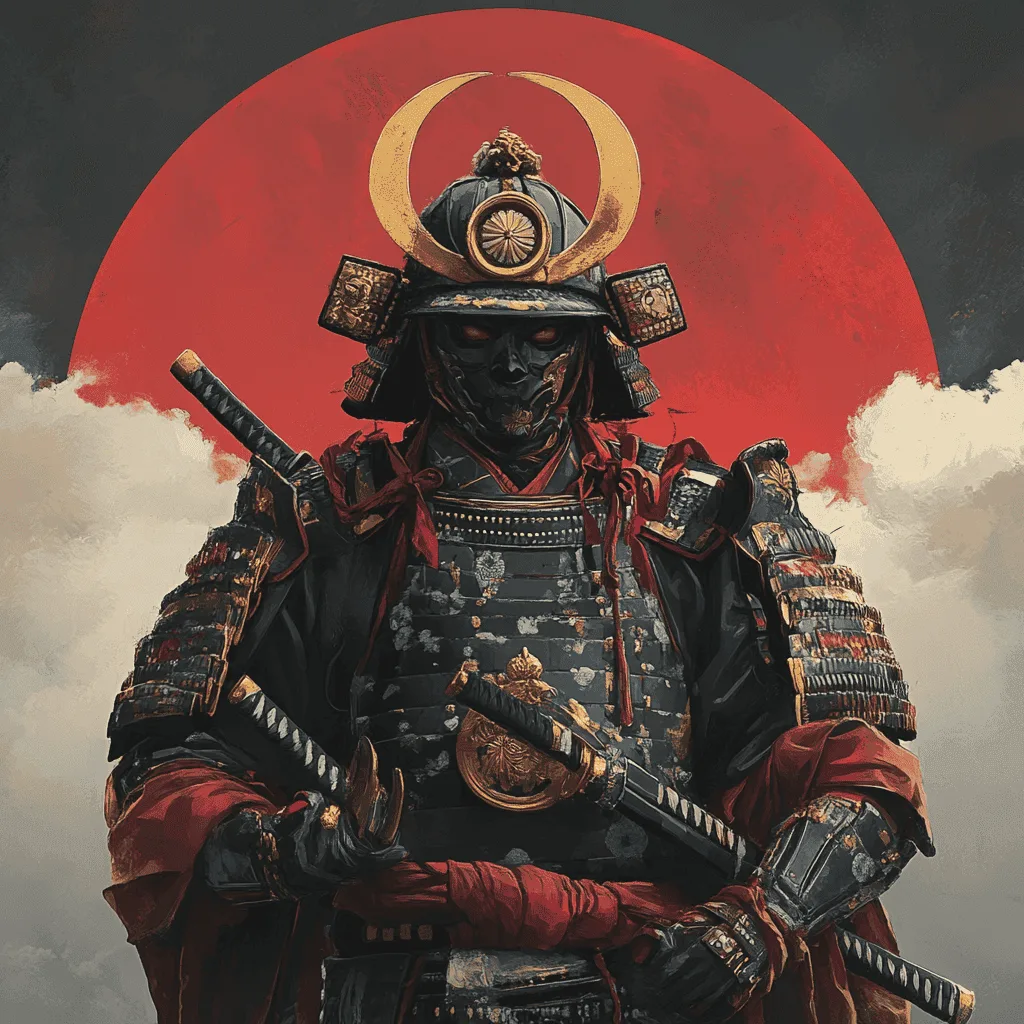
Yasuke Study Guide: The African Samurai of 16th-Century Japan
Yasuke: The African Samurai of 16th-Century Japan
Yasuke stands as one of history's most extraordinary figures—an African warrior who rose from obscurity to become a samurai retainer serving Oda Nobunaga, one of Japan's most powerful and innovative warlords during the tumultuous Sengoku period (1467–1615). His unprecedented journey from foreign outsider to honored warrior challenges conventional narratives about feudal Japan's insularity and offers a fascinating window into the era's surprising global connections.
Originally arriving in Japan around 1579 as a servant or attendant to Italian Jesuit missionary Alessandro Valignano, Yasuke's extraordinary physical presence, combat capabilities, and intelligence captured Nobunaga's attention, leading to his formal adoption into the samurai ranks—an honor almost unheard of for foreigners in 16th-century Japan. Despite frustrating gaps in historical records that obscure his origins and ultimate fate, Yasuke's documented service under Nobunaga represents a remarkable story of cultural boundary-crossing, individual merit transcending social hierarchies, and the complex intercontinental networks connecting Africa, Europe, and Asia during the Age of Exploration.
His presence in Nobunaga's court reflected the broader transformations of the Sengoku period, when Japan experienced unprecedented contact with foreign traders, missionaries, and technologies. Nobunaga himself was famous for embracing innovations regardless of origin, and Yasuke's elevation to samurai status exemplified this progressive approach to talent and capability. Yasuke's story continues to fascinate historians, novelists, and filmmakers centuries after his disappearance from historical records—serving as inspiration for contemporary works exploring themes of identity, belonging, cultural exchange, and the universal human capacity to adapt and excel in radically unfamiliar contexts.
This article explores the historical evidence surrounding Yasuke's origins, his remarkable rise to samurai status, his service under Nobunaga during crucial military campaigns, his role in the dramatic Honnō-ji Incident that ended Nobunaga's life, and his enduring legacy as a symbol of cultural bridge-building and individual achievement against impossible odds.
Key Takeaways
- Yasuke was likely from East Africa (possibly Mozambique, Sudan, or Ethiopia) and arrived in Japan around 1579, probably with Italian Jesuit missionary Alessandro Valignano
- He became one of the extremely few non-Japanese individuals ever granted samurai status, serving as a retainer to Oda Nobunaga from approximately 1581–1582
- Yasuke's physical presence (over six feet tall), combat skills, and intelligence impressed Nobunaga, who granted him samurai rank, a katana, and a position as bodyguard and military officer
- He fought in Nobunaga's campaigns and was present during the Honnō-ji Incident (1582) when the warlord was betrayed and killed by Akechi Mitsuhide
- After Nobunaga's death, Yasuke was captured by Mitsuhide's forces but spared execution—his ultimate fate remains one of history's tantalizing mysteries
- His story represents the surprising interconnections between Africa, Europe, and Asia during the 16th century and challenges assumptions about feudal Japan's isolation
- Yasuke has experienced a cultural renaissance in recent decades, inspiring books, anime, video games, and other media celebrating his extraordinary journey
The Historical Context: Japan's Sengoku Period and Global Connections
Understanding Yasuke's remarkable story requires grasping the specific historical moment when he arrived in Japan—a period of dramatic internal conflict coinciding with unprecedented foreign contact that created unique opportunities for exceptional individuals regardless of origin.
The Sengoku Period: An Era of Warfare and Transformation
The Sengoku period (1467–1615), or "Warring States period," was characterized by nearly constant military conflict as regional warlords (daimyō) competed for territorial control and political supremacy following the collapse of centralized Ashikaga shogunate authority. This era of fragmentation and competition paradoxically created conditions for dramatic social mobility and innovation.
During this chaotic period:
- Traditional social hierarchies weakened as military capability mattered more than hereditary status
- Innovation and adaptation determined survival, making daimyō more receptive to new technologies and tactics regardless of origin
- Foreign contact increased dramatically as Portuguese traders and Jesuit missionaries arrived in Japan beginning in 1543
- Military technology revolutionized with the introduction of firearms (arquebuses) that transformed battlefield tactics
Oda Nobunaga (1534–1582) epitomized the Sengoku period's transformative spirit. Rising from relatively modest origins among the nobility, he pursued the ambitious goal of reunifying Japan under his control through innovative military tactics, ruthless pragmatism, and remarkable openness to foreign innovations. Nobunaga was famous for promoting individuals based on merit rather than birth, embracing new technologies including firearms and European-style fortifications, and maintaining relatively tolerant policies toward Christianity (at least initially) to facilitate trade relationships with Portuguese merchants who supplied valuable weapons and goods.
This context of transformation, innovation, and unprecedented foreign contact created the conditions where an African warrior could potentially rise to samurai status—something nearly impossible in more stable, traditional periods of Japanese history.
Portuguese Trade and Jesuit Missions in Japan
Portuguese traders first arrived in Japan in 1543, landing on Tanegashima island and introducing firearms that would revolutionize Japanese warfare. This initial contact quickly expanded into substantial trade networks, with Portuguese merchants establishing bases in Kyushu (particularly Nagasaki) and engaging in lucrative commerce. The Portuguese brought firearms and gunpowder weapons, luxury goods including textiles, glassware, and tobacco, new foods including tempura (cooking technique), bread, and other edibles, and foreign knowledge about navigation, world geography, and European military tactics.
Jesuit missionaries arrived in 1549, led by Francis Xavier, beginning systematic efforts to convert Japanese people to Catholic Christianity. By the time Yasuke arrived in the late 1570s, the Jesuits had established a significant presence, converting thousands of Japanese including some daimyō who saw Christianity as facilitating trade relationships with Portuguese merchants. The Jesuits operated with remarkable sophistication, learning Japanese language and customs, engaging with Buddhist and Shinto traditions through dialogue and debate, and maintaining detailed records of their activities—records that provide our primary evidence about Yasuke's presence in Japan.
Alessandro Valignano (1539–1606), the Italian Jesuit who likely brought Yasuke to Japan, served as Visitor of the Missions in the Indies, overseeing Jesuit activities throughout Asia. Valignano was known for his progressive approach to missionary work, emphasizing cultural adaptation and respect for local traditions—an approach that may have influenced how he presented Yasuke to Japanese authorities. This Portuguese-Jesuit network connecting Europe, Africa, India, and East Asia created the pathways through which Yasuke traveled from Africa to Japan, representing the surprisingly interconnected nature of 16th-century global trade and religious networks.
The Origins of Yasuke: Mystery and Evidence
Perhaps the most frustrating aspect of Yasuke's story involves the significant gaps in historical records regarding his origins, early life, and ultimate fate. However, the available evidence allows historians to construct probable scenarios about where he came from and how he arrived in Japan.
African Roots: Theories and Evidence
Historical sources consistently identify Yasuke as African, with contemporary Japanese and Jesuit records describing his dark skin, impressive height, and extraordinary physical strength. However, specific details about his place of origin remain uncertain, leading historians to propose several theories based on Portuguese trading patterns and available evidence.
The Mozambique Theory
Many historians consider Mozambique the most likely origin based on several factors. Portugal established extensive control over Mozambique's coast beginning in the early 16th century, creating established networks for recruiting or enslaving Africans into Portuguese service. Contemporary Jesuit records use the term "cafre" or variations thereof to describe Yasuke—a Portuguese term historically used to refer to Bantu-speaking peoples from southeastern Africa, particularly the Makua ethnic group who inhabited coastal Mozambique. Mozambique's position on Portuguese trade routes to India, China, and Japan made it a logical recruiting point for servants, soldiers, or slaves accompanying traders and missionaries to Asia. If Yasuke came from Portuguese-controlled Mozambique, he would have had opportunities to learn Portuguese language and potentially convert to Christianity before reaching Japan—both factors that would facilitate his integration into Jesuit circles.
The Sudan/Nubia Theory
Some scholars propose Yasuke may have originated from Sudan or Nubia based on Portuguese and Arab slave trading networks extending into the Nile Valley, where they captured or purchased people from Dinka, Nuba, and other ethnic groups. Contemporary accounts emphasize Yasuke's extraordinary height (over six feet) and powerful build—characteristics associated with some Nilotic peoples including the Dinka. Sudanese and Nubian people were known to serve in various military capacities throughout the Indian Ocean world, making it plausible that Yasuke could have been recruited or enslaved into Portuguese service through these networks.
The Ethiopian Theory
A smaller number of historians suggest Ethiopian origins based on Ethiopia's unique position as a Christian kingdom maintaining diplomatic relations with European powers. If Yasuke had Ethiopian Christian background, this might explain his apparent integration into Jesuit missionary circles and his potential literacy or education that impressed Nobunaga. Portugal maintained diplomatic and military relationships with Ethiopia, potentially creating pathways for Ethiopians to enter Portuguese service voluntarily rather than through slavery.
The Journey to Japan: Pathways and Possibilities
The most widely accepted theory suggests Yasuke arrived in Japan with Alessandro Valignano around 1579, though the exact nature of their relationship remains unclear. Several scenarios seem plausible: Yasuke as missionary servant or bodyguard; a former slave who gained freedom through conversion to Christianity, loyal service, or other circumstances; or a mercenary or voluntary recruit seeking opportunity in Portuguese service. The journey from Africa to Japan likely took several years, following Portuguese trade routes through the Indian Ocean, around India, through Southeast Asian ports, and finally to Japan. Such journeys involved months at sea, stops at multiple trading posts, and exposure to diverse cultures and languages.
This extensive journey would have provided Yasuke with exposure to multiple languages (possibly Portuguese, perhaps some Indian Ocean trade languages), experience with diverse cultures and customs, potential military or security experience protecting trade vessels, and physical conditioning through the demands of sea travel and port activities. By the time he arrived in Japan, Yasuke was likely in his twenties or thirties—old enough to have developed the physical capabilities, combat experience, and cultural adaptability that would later impress Nobunaga.
First Impressions: Yasuke's Arrival and Initial Reception
Yasuke's arrival in Japan created an immediate sensation—his physical appearance, particularly his dark skin, was unlike anything most Japanese people had ever seen. Japan had minimal previous contact with African peoples, making Yasuke an object of intense curiosity and fascination. Contemporary accounts describe massive crowds gathering whenever Yasuke appeared in public, with people clamoring to see the "black foreigner." According to Jesuit records, these crowds sometimes became so dense that they created dangerous crush conditions.
The famous story recounts that when Yasuke was first presented to Oda Nobunaga, the warlord initially suspected Yasuke's skin was painted or dyed black—an understandable assumption given that Japanese people had no frame of reference for understanding dark skin as natural. Nobunaga reportedly ordered Yasuke scrubbed to remove what he assumed was ink or dye. When washing failed to change Yasuke's color, Nobunaga's fascination reportedly intensified. Rather than fear or rejection, Nobunaga seems to have been impressed and intrigued by this warrior from an unknown land.
Beyond physical appearance, Yasuke distinguished himself through capabilities that transcended the novelty of his origins: he learned Japanese language with remarkable speed, allowing direct communication with Nobunaga; he demonstrated combat skills and physical prowess that impressed even experienced samurai; he showed intelligence and adaptability in navigating the complex protocols of service under a powerful daimyō; and he displayed loyalty and reliability in his duties, earning trust that went beyond satisfying curiosity about a foreigner. This combination of factors created conditions where Nobunaga could seriously consider elevating Yasuke beyond the status of mere curiosity to actual military service.
Yasuke's Rise to Samurai Status: An Unprecedented Honor
Yasuke's elevation to samurai status represents one of the most remarkable social ascensions in Japanese history—a foreign-born individual of uncertain origins achieving warrior rank in one of feudal Japan's most hierarchical societies. Understanding what this meant requires examining both the privileges Yasuke received and the broader significance of Nobunaga granting samurai status to a foreigner.
Understanding Samurai Status in the Sengoku Period
"Samurai" designated members of the warrior class (bushi) who served daimyō as military retainers, administrators, and officials. By the Sengoku period, samurai status involved military service obligations, social privileges including the right to carry two swords (daisho) and use of family names, economic benefits such as stipends (paid in rice) or land grants, and cultural expectations following bushidō—a code emphasizing loyalty, honor, martial prowess, and willingness to die for one's lord.
Samurai status was typically hereditary, passing from father to son within warrior families. However, during the chaotic Sengoku period, social mobility increased dramatically as daimyō promoted talented individuals regardless of birth, soldiers of fortune rose through military success, and traditional hierarchies weakened. Even in this more fluid context, granting samurai status to a foreigner remained extraordinary—virtually unprecedented in Japanese history. A handful of other foreigners served Japanese lords in various capacities, but formal samurai status for non-Japanese remained exceptionally rare.
Nobunaga's Decision: Merit Over Birth
Oda Nobunaga was famous throughout Japan for his willingness to promote based on capability rather than hereditary status—a progressive approach that distinguished him from more traditional daimyō. Examples of this meritocratic philosophy included Toyotomi Hideyoshi, who began as an ashigaru (foot soldier) from peasant origins and rose through demonstrated military and administrative brilliance to become Nobunaga's top general; Maeda Toshiie, who rose from relative obscurity through proven battlefield performance; and Akechi Mitsuhide, whose advancement came primarily through demonstrated capability. This meritocratic approach extended to tactics and technology—Nobunaga enthusiastically adopted firearms despite conservative samurai viewing guns as dishonorable, employed innovative battlefield formations, and incorporated foreign technologies and knowledge regardless of origin.
Granting Yasuke samurai status fit perfectly within this pattern—Nobunaga recognized exceptional capability and valued it regardless of Yasuke's foreign origins, racial difference, or lack of samurai family background.
What Yasuke Received: Symbols and Substance of Samurai Rank
Historical records indicate Yasuke received tangible markers of samurai status: a katana (Japanese sword), the most important symbol of warrior status; a residence, probably within Azuchi Castle or nearby; a stipend appropriate to his status; the name "Yasuke" (whether his original African name or a Japanese name granted by Nobunaga); and an official position as bodyguard (kosho)—a position reserved for trusted, skilled warriors in close proximity to the daimyō. Beyond these tangible benefits, Yasuke received recognition as a warrior worthy of respect, whose service had value beyond novelty or curiosity.
Training and Cultural Adaptation
Yasuke's elevation to samurai required mastering Japanese military arts and cultural expectations. While he likely possessed combat experience before reaching Japan, samurai warfare had distinctive characteristics requiring specific training in kenjutsu (swordsmanship), bajutsu (horseback riding and mounted combat), kyūjutsu (archery), and sōjutsu (spear fighting). Beyond martial skills, Yasuke needed to understand Japanese social hierarchies, proper forms of address, ceremonial expectations, and the behavioral codes governing samurai conduct.
Yasuke's rapid adaptation to these requirements demonstrated both his intelligence and his determination to excel in his adopted role. Contemporary accounts emphasize that he learned Japanese language fluently and impressed Nobunaga not just with physical prowess but with understanding of Japanese customs and military culture.
Reactions to Yasuke's Samurai Status
Contemporary sources provide limited evidence about how other Japanese people reacted to a foreigner achieving samurai rank. However, several factors likely influenced reactions: Nobunaga's authority meant that his decisions about retainer status would have been accepted by those under his authority; the Sengoku period's social fluidity made Yasuke's promotion less shocking than it would have been in more stable periods; the precedent of foreign innovations made accepting a foreign warrior less of a break with tradition; and pragmatic recognition of useful capabilities seems to have outweighed purely racial or cultural prejudices among those in Nobunaga's circle. The fact that Yasuke served as Nobunaga's bodyguard and military officer suggests he gained genuine acceptance among at least some samurai in Nobunaga's forces—positions of such trust required trust not just from Nobunaga but from other retainers.
Service Under Nobunaga: Yasuke as Warrior and Retainer
From approximately 1581 until Nobunaga's death in 1582, Yasuke served as samurai retainer, bodyguard, and military officer—participating in campaigns, guarding his lord, and fulfilling the duties expected of warriors in Nobunaga's service during this critical period of attempted unification.
Military Campaigns and Battlefield Service
Yasuke participated in Nobunaga's military campaigns during the final phase of his drive to unify Japan under his control. While detailed records of Yasuke's specific battlefield actions are limited, historical sources confirm his presence in several campaigns. One of the best-documented instances of Yasuke's military service occurred during Nobunaga's final campaign against the Takeda clan in 1582—one of Japan's most powerful daimyō families and long-time Nobunaga rivals. The Takeda had been formidable opponents, but by 1582 the clan was weakening following losses to Nobunaga's forces and the death of Takeda Shingen. Nobunaga's campaign culminated in the Battle of Tenmokuzan in March 1582, where Takeda forces were decisively defeated and Takeda Katsuyori committed suicide. Historical sources place Yasuke among the forces in this campaign, serving in his capacity as Nobunaga's retainer.
Duties as Bodyguard and Close Retainer
Yasuke's primary role appears to have been as one of Nobunaga's personal guards (kosho)—a position that combined military security, ceremonial duties, and close proximity to one of Japan's most powerful men. Bodyguard duties involved physical protection, presence during audiences and ceremonies, accompanying on campaigns, and residential guard duty at Azuchi Castle. This position required complete trust—bodyguards had unparalleled access to their lord and opportunities to assassinate him if disloyal. Nobunaga's willingness to place Yasuke in this position demonstrates the genuine confidence he had in the African samurai's loyalty and capability. Yasuke's physical presence made him particularly effective as a bodyguard—his height (over six feet), muscular build, and imposing appearance likely intimidated potential threats while his combat skills provided genuine protection.
Daily Life and Integration at Azuchi Castle
Yasuke's life as a samurai at Azuchi Castle immersed him in a world of rituals, martial training, and political maneuvering. Azuchi Castle, built by Nobunaga in 1579, was a symbol of his power and innovation—a towering fortress with stone walls, lavish decorations, and a cosmopolitan atmosphere. Yasuke likely lived in quarters near Nobunaga's inner chambers, ate the same rations as other samurai (including rice, fish, and vegetables), and participated in daily drills and patrols. His interactions with other retainers would have required navigating language barriers and cultural misunderstandings, but his evident skill and the lord's favor smoothed many of these challenges. Yasuke also likely took part in tea ceremonies, poetry gatherings, and other cultural activities expected of samurai—an indication of how deeply he immersed himself in Japanese warrior culture.
Cultural Significance: Yasuke's Symbolic Role
Beyond his practical military and security functions, Yasuke served symbolic purposes in Nobunaga's court and public appearances. He demonstrated Nobunaga's cosmopolitanism, showcasing his openness to innovation and connections to global trade networks. He impressed visitors and rivals, reinforcing perceptions of Nobunaga's power, sophistication, and access to resources from across the known world. His imposing physical presence and genuine combat capabilities made him living testament to the quality of warriors in Nobunaga's service. Contemporary sources describe Nobunaga showing off Yasuke to visitors—displaying him as one might display rare treasures or exotic curiosities, though seemingly also respecting him as a capable warrior rather than merely an oddity. This dual role—both functional warrior and symbolic representation—characterized much of Yasuke's service.
The Honnō-ji Incident: Yasuke's Final Battle Under Nobunaga
The Honnō-ji Incident of June 21, 1582, represents one of Japanese history's most dramatic moments—the sudden betrayal and death of Oda Nobunaga at the hands of one of his own generals, ending his quest to unify Japan and plunging the country back into conflict. Yasuke's presence during this pivotal event places him at the center of one of the era's defining moments.
The Betrayal: Akechi Mitsuhide's Coup
Akechi Mitsuhide (1528–1582) was one of Nobunaga's most capable and trusted generals, known for intelligence, administrative skill, and military success. However, tensions had apparently been building between Mitsuhide and Nobunaga for reasons that remain historically debated: public humiliation, fear of punishment, ambition, or political calculations. On the night of June 21, 1582, Mitsuhide made his move. Nobunaga was staying at Honnō-ji Temple in Kyoto with only a small personal retinue, having sent most of his forces to other locations. Mitsuhide, commanding an army of approximately 13,000 troops, surrounded the temple—supposedly marching to support a campaign against the Mōri clan but instead turning his forces against his own lord.
Nobunaga's Last Stand and Yasuke's Defense
The attack came as complete surprise—Nobunaga was caught with only a few dozen personal guards against thousands of Mitsuhide's soldiers. Contemporary accounts suggest the battle unfolded with desperate intensity. Nobunaga's small force, including Yasuke, fought to defend the temple against overwhelming numbers. Historical sources mention Yasuke fighting actively during the defense, wielding his katana against Mitsuhide's forces. Recognizing the situation was hopeless, Nobunaga chose to commit seppuku (ritual suicide)—maintaining honor and control over his death. He retreated to an inner chamber with a few close attendants and performed the ritual disembowelment, having an attendant then behead him. To prevent Nobunaga's body from being captured and desecrated, the temple was set on fire. Even after Nobunaga's death, some defenders including Yasuke continued fighting.
Yasuke's Capture and Fate
After Nobunaga's death, surviving defenders either died in battle, committed suicide, or were captured. Yasuke was among those taken alive by Mitsuhide's forces—a fate that distinguished him from most of Nobunaga's samurai, who chose death over surrender. Why Yasuke was captured alive rather than dying in battle remains unclear: perhaps he fought until physically overpowered; cultural differences may have made capture more acceptable; or Mitsuhide's forces may have specifically attempted to capture him alive.
Mitsuhide's Decision: "Not a True Samurai"
According to historical accounts, Mitsuhide chose to spare Yasuke's life. The reasoning behind this decision reveals the ambiguous and precarious nature of Yasuke's position. Mitsuhide reportedly dismissed Yasuke with racist contempt, saying something to the effect that Yasuke was "an animal" or "not a person" and therefore not worth killing. This served multiple purposes: denying Yasuke's samurai status, racist dehumanization, political calculation (by dismissing him as unworthy of samurai treatment, Mitsuhide could spare him without appearing merciful), and expediency. Mitsuhide reportedly ordered Yasuke handed over to Jesuit missionaries—returning him to the religious community he had arrived with, essentially treating him as foreign property to be returned rather than as a Japanese samurai to be executed or incorporated.
What Happened Next: The Mystery of Yasuke's Fate
After 1582, Yasuke vanishes from reliable historical records—creating one of the great mysteries of his story. Several theories exist:
- Return to the Jesuits: The most likely scenario, suggesting Yasuke lived with Jesuit missionaries in Japan, possibly in Nagasaki. This is supported by Mitsuhide's reported decision to hand him to the Jesuits, but no Jesuit records explicitly confirm his presence after 1582.
- Service with another lord: Yasuke may have found service with another daimyō, such as Toyotomi Hideyoshi. However, he would likely have appeared in records if he continued military service.
- Death in conflict or exile: Yasuke may have died in the turbulent period following Nobunaga's assassination—executed, killed in conflicts, or died naturally. This would explain the complete absence of later records.
- Return to Africa or India: A more speculative theory that Yasuke might have left Japan entirely on a Portuguese vessel, though no evidence supports this.
The complete absence of records makes it impossible to determine his ultimate fate with certainty.
The Broader Significance of the Honnō-ji Incident
Nobunaga's death fundamentally altered Japanese history's trajectory. While his generals eventually completed unification, Nobunaga's specific vision—including his relatively tolerant policies toward Christianity and openness to foreign innovations—didn't fully survive him. For Yasuke, Nobunaga's death ended the unique circumstances that had allowed his extraordinary rise. Later rulers, particularly the Tokugawa shogunate, adopted increasingly isolationist and xenophobic policies—closing Japan to most foreign contact, expelling Christian missionaries, and forbidding Japanese from traveling abroad. In this later era, someone like Yasuke achieving samurai status would have been essentially impossible. Yasuke's story thus belongs specifically to the brief window of the late Sengoku period when unprecedented foreign contact coincided with dramatic social mobility—a historical moment that quickly passed.
Yasuke's Legacy: Memory, Meaning, and Modern Revival
Despite disappearing from historical records after 1582, Yasuke's story has experienced remarkable revival in recent decades—transforming from an obscure historical footnote to a celebrated figure inspiring books, films, anime, video games, and scholarly research exploring themes of identity, race, cultural exchange, and individual achievement.
Historical Significance: Breaking Barriers in Feudal Japan
Yasuke remains one of the extremely few non-Japanese individuals ever formally recognized as samurai—a distinction that makes his story historically significant beyond the personal drama. His achievement demonstrates the Sengoku period's social fluidity, Nobunaga's progressive meritocracy, Japan's 16th-century global connections, the limits and possibilities of cultural integration, and the complexity of historical racial dynamics.
Cultural Renaissance: Yasuke in Modern Media
In recent years, Yasuke has become increasingly prominent in popular culture. Numerous novels and historical fictions have reimagined his story. Netflix's "Yasuke" (2021), an original anime series, brought his story to global audiences while taking substantial creative liberties. Several major video game franchises, including Nioh and Assassin's Creed Shadows, have featured characters inspired by or directly based on Yasuke. These appearances have dramatically increased awareness of his story among global audiences. Historians have conducted increasingly sophisticated research on Yasuke and the broader context of his story, examining primary sources in Japanese and Portuguese, the African diaspora in Asia, race and identity in feudal Japan, and Portuguese-Japanese relations. This scholarly attention has established Yasuke as a serious subject of historical research.
Why Yasuke's Story Resonates Today
The contemporary fascination with Yasuke reflects several modern concerns: diversity in historical narratives, individual achievement against odds, global interconnectedness, representation in media, and the mystery element that creates space for creative interpretation. For further reading on the African presence in Asia, see BBC's article on Yasuke and History.com's feature on the African samurai. Also, the National Geographic article on Yasuke provides additional insights into his archaeological and historical context.
Limitations and Controversies
The contemporary revival of interest in Yasuke hasn't been without complications: historical accuracy concerns, cultural appropriation debates, overemphasis on foreignness, tokenism concerns, and political instrumentalization. Some depictions take substantial liberties with documented facts, creating confusion about what is historically supported versus creative invention.
Yasuke as Symbol and Historical Figure
Understanding Yasuke requires balancing his symbolic significance with historical reality. As a historical figure, his documented life provides valuable insights into the surprising diversity of historical societies, how individual capability could sometimes transcend social boundaries, the global networks connecting Africa, Europe, and Asia during the Age of Exploration, and the complex dynamics of race, identity, and belonging in cross-cultural encounters. As a symbol, Yasuke represents the possibility of achieving recognition despite facing enormous barriers, human adaptability, the universal nature of courage and loyalty, and challenges to simplistic historical narratives about racial and cultural boundaries. The most productive approach recognizes both dimensions—appreciating Yasuke's symbolic power while remaining grounded in historical evidence.
Conclusion: The Enduring Fascination of the African Samurai
More than four centuries after Yasuke vanished from historical records, his story continues to captivate imaginations worldwide—a testament to both the inherent drama of his documented life and the broader themes his journey represents about human potential, cultural boundaries, and historical diversity. Yasuke's documented achievements remain extraordinary: arriving in Japan as a foreign servant, he impressed one of history's most powerful and discerning warlords sufficiently to be granted samurai status, served as trusted bodyguard and military officer, participated in crucial military campaigns, and stood alongside Nobunaga during the dramatic betrayal that ended the warlord's life.
The mystery surrounding his origins and fate adds poignancy to his story—we know he achieved remarkable success but don't know where he came from or what became of him after his lord's death. These gaps create space for imagination while the documented facts provide anchoring evidence that this extraordinary story genuinely occurred. Yasuke's legacy transcends his individual story, offering insights into the Sengoku period's transformative nature, Nobunaga's progressive leadership, the surprising interconnections of the 16th-century world, the universal human capacities for adaptation and excellence, and the persistence of barriers alongside possibilities. For further exploration of the Sengoku period and samurai culture, visit Britannica's entry on the Sengoku period and the Metropolitan Museum of Art's resources on samurai.
For contemporary audiences, Yasuke represents inspiration—proof that individuals can sometimes transcend the boundaries societies construct, that merit can occasionally overcome prejudice, and that history contains more diversity and cultural exchange than simplified narratives often acknowledge. The continued fascination with Yasuke suggests his story addresses enduring questions about belonging, navigating foreign cultures, overcoming prejudice, and building identities between cultures. His legacy endures not despite the gaps in his story but partly because of them—the documented facts provide authentic historical anchoring while the mysteries allow each generation to find new meanings in his extraordinary journey across cultures, continents, and social boundaries.
Yasuke stands as a testament to the remarkable individuals whose stories challenge our assumptions about the past, remind us of history's complexity and diversity, and inspire us to recognize the universal human capacities for courage, adaptation, and achievement that transcend the boundaries of time, culture, and race.