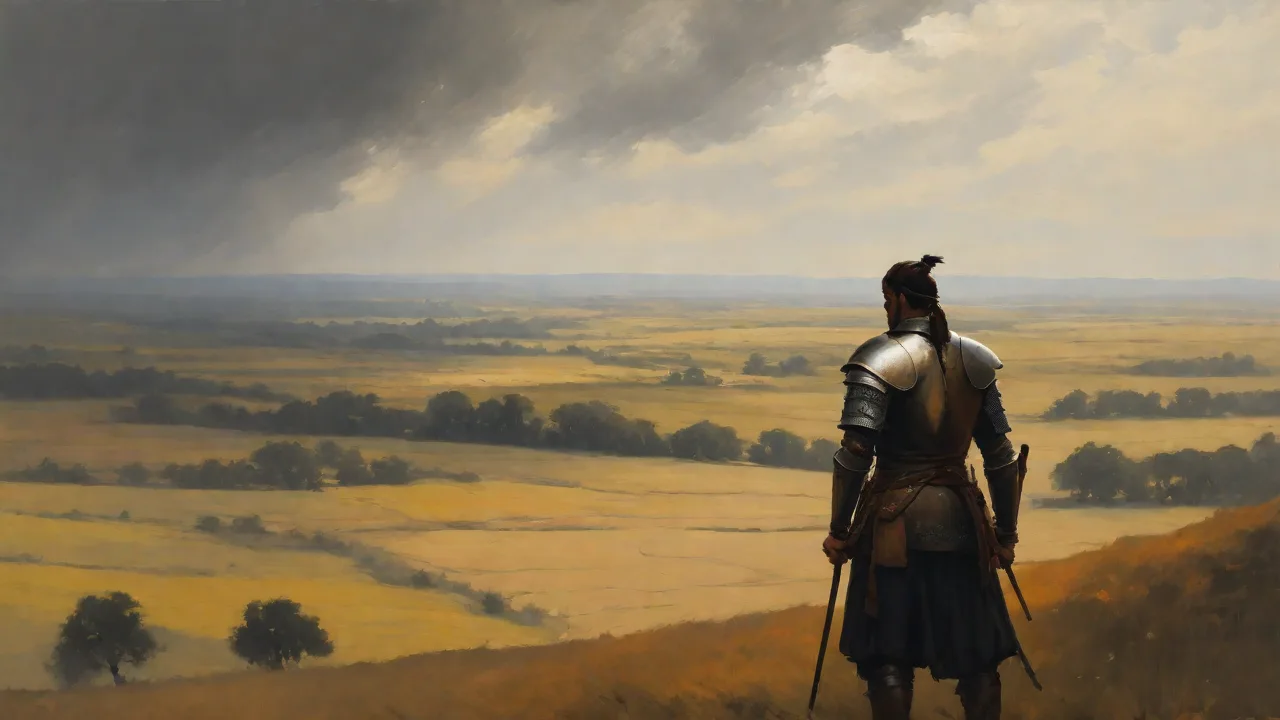
The Evolution of the Warrior Hero From Myth to Modern Literature
The warrior hero remains one of the most enduring and telling archetypes across world literature. From the demigod kings of ancient Sumer to the scarred veterans and reluctant rebels of contemporary fiction, this figure has consistently embodied a society's highest aspirations and deepest fears. The constant traits—bravery, power, honor, and self-sacrifice—hold fast, yet how these qualities are expressed and contextualized has shifted dramatically. The first named hero in recorded history, Gilgamesh, is a tyrannical king who learns humility only after suffering devastating loss. Today, readers embrace Katniss Everdeen, a teenager whose every action is surveilled and exploited by an authoritarian regime. The distance between these two characters is vast, yet they share a fundamental core: a willingness to enter danger for the sake of others. This evolution does not reflect mere changes in literary fashion; it offers a clear lens through which humanity’s evolving views on violence, justice, individuality, and morality can be observed. Tracing the warrior hero from the divine rulers of Mesopotamia to the disillusioned fighters of modern dystopia is essentially tracing the history of narrative itself.
The God‑Kings and Demigods of Antiquity
In the earliest epics, the warrior hero operates in a realm where the divine and the mortal are inseparably interwoven. These heroes frequently have mixed parentage, granting them strength that borders on the supernatural. Their primary mission is to impose order upon chaos, which takes the form of monsters, enemy cities, or the unpredictable whims of the gods. Their tales are grand, didactic, and foundational to their cultures.
The Mesopotamian Blueprint: Gilgamesh
The Epic of Gilgamesh presents the first comprehensive portrait of a warrior hero in recorded literature. Gilgamesh, king of Uruk, initially abuses his immense power to oppress his own subjects. The gods respond by creating Enkidu, a wild man, to challenge him. Their epic confrontation transforms into a deep friendship, setting Gilgamesh on a journey that forces him to confront mortality. His transformation from an arrogant tyrant into a wise king who understands the limits of power and the importance of legacy provides the foundational arc for all warrior heroes who follow. The Epic of Gilgamesh establishes a persistent template: the hero who must suffer, lose, and learn humility before attaining genuine wisdom.
The Greek Heroic Code: Kleos and Hubris
While Gilgamesh seeks immortality, the Greek warrior hero pursues kleos—glory and renown that outlasts the self. Achilles in Homer’s Iliad is the supreme embodiment of this ideal. He is the mightiest warrior of his age, yet his overwhelming wrath and pride bring disaster to both himself and his comrades. His agonizing choice between a long, quiet, obscure life and a short, glorious, violent one is the foundational dilemma of the Western warrior hero. Similarly, Heracles (Hercules) represents the hero of pure action; his Twelve Labors are a grueling series of tasks meant to cleanse his sins and restore cosmic order. Odysseus, in the Odyssey, broadens the definition of the warrior hero to include cunning, endurance, and emotional intelligence, demonstrating that a sharp mind can be as formidable as a sharp sword.
Dharma and the Warrior in the Mahabharata
In ancient India, the Mahabharata presents a radically different yet equally influential vision of the warrior hero, grounded in the concept of dharma—sacred duty. Arjuna, the great archer, is the epic’s central warrior. On the battlefield of Kurukshetra, he is overcome with profound doubt at the prospect of fighting and killing his own kin, teachers, and friends. His charioteer, Krishna, instructs him on the nature of duty, life, death, and the soul. This philosophical dialogue, the Bhagavad Gita, transforms the warrior hero into a spiritual seeker who must reconcile martial duty with higher moral purpose. It is a profound meditation on the ethics of violence, predating similar Western literary inquiries by centuries and offering a model of heroism based on inner discipline rather than external glory.
Chivalry and the Knightly Ideal
The collapse of the Roman Empire and the spread of Christianity fundamentally reshaped the warrior hero. The pagan heroes of old, motivated by personal honor and glory, gave way to the Christian knight. This figure’s strength was to be tempered by piety, loyalty to a liege lord, and the complex rituals of courtly love. Chivalry was a code of conduct that tried to regulate the brutal reality of violence and channel it toward what society deemed righteous ends.
The Song of Roland: Duty Unto Death
The Song of Roland glorifies the feudal bond between lord and vassal above all else. Roland, nephew of Charlemagne, is the perfect knight—brave, loyal, and fiercely proud. Yet this very pride leads him to refuse help against the Saracen ambush at Roncevaux Pass, a decision that results in the deaths of his friend Oliver and his entire rearguard. Roland’s heroism lies in his martyrdom; he dies fighting not just for his life, but for his king, his faith, and his honor. The horn he sounds too late is a powerful and tragic symbol of pride, duty, and the brutal cost of feudal loyalty. The concept of chivalry, while often more aspirational than practical, created an enduring literary model of the warrior as a protector of the weak and a servant of divine justice.
Arthurian Legend and the Quest for the Grail
King Arthur and his Knights of the Round Table represent chivalry at its most mythic and complex. The Arthurian cycle explores the strengths and the fatal flaws of the knightly ideal. Sir Lancelot is the greatest warrior of his age, but his adulterous love for Queen Guinevere ultimately brings down the entire kingdom. Sir Gawain, in the masterful poem Sir Gawain and the Green Knight, undergoes a rigorous test of his knightly virtues—courage, honesty, and chastity—revealing a hero whose most difficult battles are fought against his own inner weaknesses. The quest for the Holy Grail elevates the warrior hero to a spiritual plane, where Sir Galahad achieves the prize not through martial skill, but through purity of heart. These stories show the medieval imagination wrestling with the tension between worldly prowess and spiritual salvation.
The Samurai: A Parallel Path
While Europe developed chivalry, Japan cultivated bushidō, the "way of the warrior." The samurai was bound by a strict code of honor, loyalty, and self-discipline, often culminating in the ritual of seppuku to avoid dishonor. Literary works like The Tale of the Heike chronicle the rise and fall of the Taira and Minamoto clans, celebrating the ideals of loyalty, martial skill, and the tragic impermanence of glory. The samurai hero, like the European knight, was defined by service to a lord and mastery of a complex ethical code. This parallel tradition provides a rich and independent model of the warrior hero in world literature, one that has profoundly influenced modern storytelling from film to graphic novels.
Renaissance and Enlightenment: The Birth of the Individual
The Renaissance shifted the focus from the collective ideals of feudalism to the complexities of the individual human experience. The warrior hero was no longer simply an agent of God or king; he became a subject of intense psychological study. Writers began to explore the internal conflicts, doubts, and moral ambiguities that lie beneath the surface of heroic action.
Shakespeare's Tragic Warriors
William Shakespeare created a gallery of warrior heroes whose inner lives are as dramatic and consequential as their outer conflicts. Hamlet is a prince and a soldier, but his defining conflict is intellectual and emotional. The ghost of his father commands revenge, but Hamlet’s profound introspection prevents decisive action, making him a warrior paralyzed by thought. Macbeth begins as a hero of almost supernatural bravery, a "Bellona's bridegroom" on the battlefield, but his "vaulting ambition" leads him down a path of murder, tyranny, and madness. Othello is a celebrated general whose martial confidence is systematically undermined by the insidious poison of jealousy and bigotry. Shakespeare’s singular genius was to show that the very qualities that make a great warrior—pride, passion, aggression—can become tragic, self-destructive flaws in the human realm. Scholarship on Shakespeare often points to these characters as the first truly modern heroes, defined by their rich interiority.
Don Quixote: The Satire of the Ideal
Miguel de Cervantes delivered a mortal blow to the uncritical celebration of the chivalric ideal. Don Quixote is a man who has read so many chivalric romances that he decides to become a knight-errant in a world that has long since moved on. He sees giants where there are windmills, armies where there are flocks of sheep, and a noble lady in a peasant farm girl. Cervantes’ novel is a profound, hilarious, and heartbreaking satire of the warrior hero archetype. It forces readers to question whether the heroic ideal is ever truly practical, or if it is merely a beautiful, dangerous delusion. Quixote, despite his evident madness, embodies a purity of purpose and a commitment to justice that the "sane" world sorely lacks, making him a complex figure of both ridicule and deep admiration.
The Modern Era: The Rise of the Anti‑Hero
The industrial slaughter of the First World War fundamentally dismantled the romanticized notion of the warrior hero. The grand narratives of glory, nation, and honor collapsed in the mud of the trenches. Literature responded with a new kind of hero: the anti‑hero. This figure is defined not by perfect virtue, but by moral ambiguity, deep psychological scarring, and a profound skepticism of authority and ideology.
Atticus Finch: The Moral Warrior
In a century defined by global warfare, Harper Lee’s Atticus Finch in To Kill a Mockingbird (1960) offered a powerful and necessary re‑definition of the warrior. He is not a soldier with a sword, but a small‑town lawyer in a deeply segregated Southern town. His battlefield is the courtroom, and his enemies are racism, ignorance, and mob violence. His weapons are empathy, integrity, and quiet, unshakeable courage. Atticus demonstrates that true fortitude often requires standing completely alone against one’s own community. He fights not to win glory, but to do what is right, regardless of the personal and social cost. He represents the warrior hero as a moral bulwark against social injustice.
The Flawed and the Fallen: PTSD and Alienation
The internal wounds of the warrior became a central theme of the 20th century. J.R.R. Tolkien, a veteran of the Somme, created in Aragorn a warrior hero who bridges the medieval and the modern. He possesses the lineage and skill of a legendary king, but he carries the profound weight of a long exile and the deep weariness of a man who has seen too much. His heroism lies in his endurance, his wisdom, and his capacity for mercy. Tim O'Brien's The Things They Carried (1990) directly addresses the psychological burdens of the Vietnam War, deconstructing the very idea of a "war story." The book suggests that true heroism lies not in glorious deeds on the battlefield, but in the painful, necessary act of remembering and telling. The warrior hero is no longer defined solely by the battle he fought, but by the invisible, lasting wounds he carries home. The literary anti‑hero emerged directly from this crucible of disillusionment and trauma.
The Hard‑Boiled Detective
Dashiell Hammett and Raymond Chandler created a new kind of urban warrior for the modern world: the private detective. Characters like Sam Spade and Philip Marlowe are cynical, isolated, and world‑weary. They operate in a deeply corrupt society where the official protectors of justice are often the worst offenders. Their heroism is strictly a private code, a stubborn refusal to be bought, intimidated, or compromised. They are flawed men who drink too much and trust too little, but they cling tenaciously to a personal sense of honor in a world that has none. This figure is the direct, influential ancestor of the morally complex heroes who dominate modern prestige television and literary fiction.
Contemporary Literature: Diversity and Deconstruction
Today, the warrior hero is more diverse and more critically examined than at any point in history. The literary canon has expanded to include heroes of different genders, races, cultures, and sexual orientations. The very definition of "warrior" and "hero" is being actively deconstructed and re‑imagined for a new century.
Katniss Everdeen: The Reluctant Revolutionary
Suzanne Collins’ Katniss Everdeen in The Hunger Games trilogy (2008‑2010) is a definitive warrior hero for the 21st century. She is a provider and a protector from the very first page, volunteering to take her younger sister’s place in a deadly, televised tournament. She is not driven by glory or a love of combat, but by a fierce, unwavering desire to survive and protect the people she loves. Her journey from a desperate survivor to a reluctant symbol of a vast revolution reflects a modern anxiety about media, spectacle, power, and the nature of armed rebellion. The evolution of the female warrior in genre fiction has been one of the most significant and vibrant literary developments of the past two decades.
The Witcher and the Burden of Moral Choice
Andrzej Sapkowski's Geralt of Rivia is a witcher—a genetically mutated monster‑hunter for hire. He lives in a dark, cynical fantasy world where no one is purely good or purely evil. Geralt’s personal code is one of strict neutrality, but he is constantly, reluctantly dragged into conflicts that demand impossible moral choices. He is immensely powerful, yet he is a despised outsider, feared and hated by the very people he saves. Geralt perfectly represents the contemporary warrior hero’s exhaustion with grand, absolute narratives. He is a mercenary navigating a world without moral absolutes, making small, painful choices in the hope of doing less harm. His story is a nuanced meditation on prejudice, duty, and the search for purpose in a chaotic, indifferent universe.
Deconstructing the Archetype
Contemporary fiction is also actively deconstructing the archetype of the warrior itself. N.K. Jemisin’s The Broken Earth trilogy features characters who are warriors in a world of apocalyptic geological instability, but their greatest struggles are against systemic oppression and intergenerational trauma. The traditional male warrior hero, defined by physical strength and emotional stoicism, is increasingly critiqued as a model of toxic masculinity. In its place, modern heroes are allowed to be deeply vulnerable, to express doubt, and to prioritize connection and community over individual glory. The weak, the healers, and the caregivers are being re‑evaluated as forms of warriors in their own right, proving that courage takes many forms and that true strength often requires the bravery to be soft.
The Enduring Relevance of the Warrior Hero
The warrior hero remains a vital and dynamic archetype precisely because the fundamental questions it raises are timeless and universal. What is worth fighting for? What is the true cost of violence? What does it mean to be courageous in the face of overwhelming odds? From the divine kings of Mesopotamia to the reluctant rebels of modern dystopias, the warrior hero has continuously adapted to reflect the core conflicts and deepest values of each era. As we face new global challenges and develop a deeper understanding of human psychology and social justice, the warrior hero will continue to transform. The heroes of tomorrow will likely be defined not just by their strength in battle, but by their resilience in the face of trauma, their unwavering commitment to building a just society, and their ability to find the courage to be vulnerable. The journey of the warrior hero, from demigod to deeply flawed human, is a journey toward ever‑greater complexity, psychological depth, and emotional reality, holding a mirror up to our own evolving sense of what it truly means to be heroic.