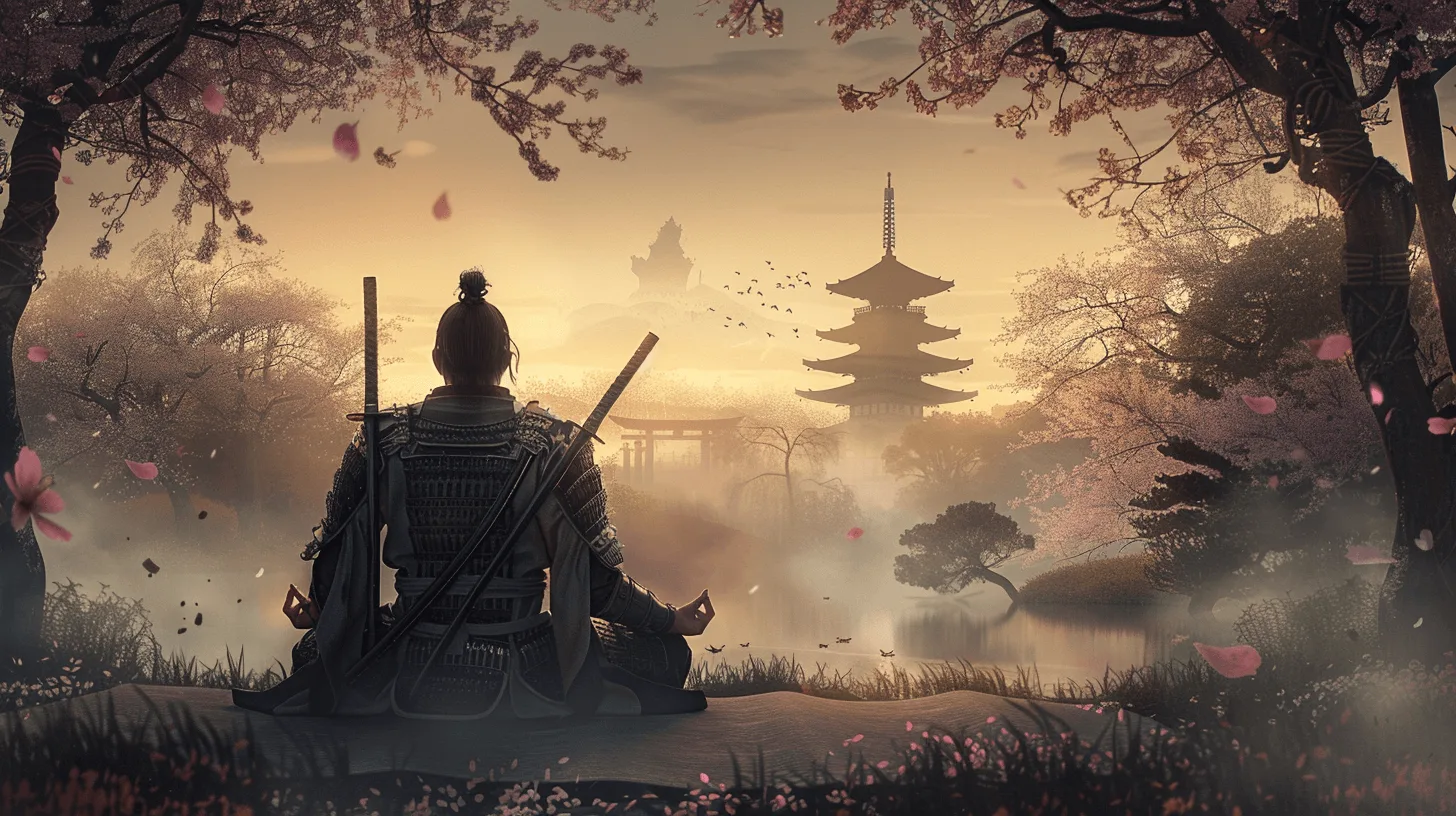
Who Were the Bushido? a Complete Guide to the Way of the Samurai Warrior
Introduction: The Samurai’s Moral Compass
Picture a warrior standing before his lord, falsely accused of a crime. He has two stark choices: protest his innocence and live under eternal suspicion, or accept responsibility through ritual suicide to safeguard his family’s honor. For centuries, Bushido (武士道) – the Way of the Warrior – forced samurai to wrestle with such life-and-death dilemmas. This unwritten code governed not only how they fought but how they lived, loved, thought, and died. It demanded perfection of character while acknowledging human imperfection. It celebrated martial prowess while elevating compassion. It prepared warriors for death while teaching them to live with purpose.
Yet Bushido was never a single, rigid set of rules. It evolved over nearly a millennium, shaped by Shinto spirituality, Buddhist acceptance of impermanence, and Confucian emphasis on social duty. The reality is far richer and more complex than the simplified version often found in popular culture. This guide explores Bushido in full – from its origins to its core virtues, from its darkest practices to its enduring legacy. Whether you’re a martial artist, a student of Japanese culture, or simply someone curious about codes of honor, this article will deepen your understanding of one of history’s most influential warrior philosophies.
Historical Origins: The Evolution of Bushido
The Heian Period (794–1185): The Proto‑Samurai
Before Bushido, there were simply warriors – bushi hired by provincial aristocrats. These early fighters were primarily mounted archers who valued martial skill, personal glory, and pragmatic loyalty to patrons. No unified code existed. Instead, warrior families followed their own customs, influenced by Chinese military classics and Buddhist teachings. The concept of honor was still tied to battlefield success rather than abstract virtue. During this era, the term mononofu was often used to describe these men of war, but they lacked the philosophical framework that would later define the samurai class.
Kamakura Period (1185–1333): The Birth of Warrior Culture
When Minamoto Yoritomo established the first shogunate in Kamakura, warriors suddenly became the ruling class. They needed a distinct identity to legitimize their power. Early ideals coalesced around Kyuba no michi (the Way of Horse and Bow), emphasizing martial skill. House precepts (kakun) began to articulate expectations for loyalty, courage, and proper conduct. Zen Buddhism’s influence deepened, teaching warriors to accept impermanence and act without hesitation. The concept of “name” (na) – personal reputation – became a driving force. A warrior’s name was his legacy; to lose it was worse than death.
Sengoku Period (1467–1603): Pragmatism Over Ideals
The Warring States period tested every warrior value. Constant warfare made survival paramount, and treachery – gekokujō (“the low overcomes the high”) – became common. Firearms reshaped battlefields, forcing warriors to adapt. Yet paradoxically, this era of chaos produced some of the earliest systematic texts on warrior ethics, like the Kōyō Gunkan, which sought to distill ideals from brutal reality. The tension between ideal and practice gave Bushido its depth: it became not just a list of rules but a guide for navigating moral complexity. Figures like Takeda Shingen and Uesugi Kenshin became legendary not only for their generalship but for their personal codes.
Edo Period (1603–1868): The Crystallization of Bushido
Peace under the Tokugawa shogunate transformed samurai into administrators and scholars. Without wars to fight, they turned to philosophy. Two seminal works emerged:
- Hagakure (completed 1716) – by Yamamoto Tsunetomo, emphasizing absolute loyalty, death acceptance, and single-minded devotion. Its famous line, “The way of the samurai is found in death,” is often misunderstood as a death wish; actually it urges warriors to live as if already dead, free from fear of dying.
- Budō Shoshinshū (1632) – by Daidōji Yūzan, a more moderate guide to peacetime conduct, stressing education, filial piety, and proper behavior in both public and private life.
Neo-Confucian philosophy reinforced social hierarchy, self-cultivation, and the ideal of the bunbu ryōdō – the warrior-scholar who balanced pen and sword. This period also saw the formalization of many rituals, from tea ceremony to the etiquette of sword drawing, embedding Bushido into daily life.
Meiji Period (1868–1912) and Beyond: Transformation
The Meiji Restoration abolished the samurai class in 1876, but Bushido was repackaged as a national ideology. Nitobe Inazō’s “Bushido: The Soul of Japan” (1900) presented a sanitized, idealized version to Western audiences, equating it with European chivalry. In the 1930s‑1945, militarists weaponized Bushido to justify emperor worship, suicide tactics, and atrocities. After World War II, many Japanese rejected it, but others recovered earlier, less militaristic interpretations. Today, Bushido lives on in martial arts, business ethics, and popular culture, albeit often stripped of its historical context.
The Core Principles: Bushido’s Seven Virtues
While Bushido varied by era and interpreter, seven virtues are most commonly cited. Understanding each reveals the system’s moral depth and its practical applications.
Gi (義): Rectitude or Righteousness
Definition: The ability to discern right from wrong and act accordingly, regardless of personal cost.
Gi demanded moral courage – standing up for justice even when authority opposed it. The 47 Rōnin (1701–1703) illustrate this perfectly. After their lord was forced to commit seppuku, they balanced law and loyalty, ultimately avenging him while accepting their own execution. Modern gi translates to integrity: doing the right thing when no one is watching, and refusing to compromise principles for convenience.
Yū (勇): Courage
Definition: Acting rightly despite fear. Bushido distinguished physical courage (facing danger) from moral courage (speaking truth to power). True courage required wisdom – knowing when to fight and when to yield. It was not recklessness but composed effectiveness under pressure. Today, courage means having difficult conversations, taking necessary risks, and standing by principles even at a social or professional cost.
Jin (仁): Benevolence or Compassion
Definition: Sympathy for others, especially the weak. The paradox of the compassionate warrior: because they possess the power to harm, they must use it mercifully. Saigō Takamori, a Meiji leader, was famed for showing mercy even to enemies. The ideal of katsujinken (the sword that gives life) versus satsujinken (the sword that takes life) embodies this – the true samurai’s blade protects, even when it kills. In modern terms, power creates responsibility to help others, not just oneself.
Rei (礼): Respect or Courtesy
Definition: Treating others with dignity through proper behavior. Rei went beyond superficial politeness; it reflected genuine respect for others’ worth. Formal rituals – bowing, honorific language, composure under stress – served social cohesion and self-discipline. Even in battle, samurai observed forms, such as identifying themselves before duels and treating enemy dead honorably. Today, respect means treating everyone with basic dignity, maintaining professionalism under pressure, and listening before acting.
Makoto (誠): Honesty and Sincerity
Definition: Complete truthfulness in word and deed. A samurai’s word was as binding as a signed contract – to lie was to destroy one’s honor. Makoto demanded fulfilling promises regardless of cost, admitting mistakes, and living authentically. In warfare, deception of enemies was acceptable, but one owed truth to those with obligations. Modern application: letting your yes be yes and your no be no, aligning private actions with public words, and avoiding hypocrisy.
Meiyo (名誉): Honor
Definition: Living in a way that maintains personal and family reputation. Honor was more valuable than life. Disgrace required restoration through seppuku, revenge, or extraordinary service. Bushido operated partly as a shame culture, where social judgment shaped conduct, but also incorporated internal conscience. The danger: excessive concern with honor could lead to unnecessary violence over trivial insults. Modern insight: reputation matters, and integrity builds a reputation worth having, but honor should be balanced with humility.
Chūgi (忠義): Loyalty and Duty
Definition: Unwavering devotion to one’s lord, obligations, and principles. For many, loyalty was the supreme virtue. The 47 Rōnin again exemplify its extremes. However, the object of loyalty shifted over time – from specific lords to domain to emperor to nation. When loyalty contradicts righteousness (gi), Bushido’s moral complexity emerges. Modern loyalty should be earned and balanced with other virtues, not blind obedience to authority or ideology.
Death and Dying: Bushido’s Most Controversial Element
The Philosophy of Death Acceptance
“The way of the samurai is found in death” is often misinterpreted. It does not glorify death but demands acceptance so complete that fear no longer controls one. By contemplating mortality, samurai aimed to live each moment fully, act without hesitation, and appreciate life’s fleeting beauty. This drew heavily from Zen Buddhism’s mujō (impermanence) and muga (no‑self). In battle, warriors who had accepted death acted decisively while others froze. This mindset was not morbid; it was liberating.
Seppuku: Ritual Suicide
Seppuku (also called hara‑kiri) was performed for many reasons: as an alternative to execution, to protest a lord’s decision, to take responsibility for failure, to avoid capture, or to follow one’s lord into death (junshi). The ritual involved wearing white robes, writing a death poem, then cutting the abdomen from left to right (and often upward) while a kaishakunin severed the head to end suffering. The abdomen was considered the spiritual center; opening it proved one’s integrity even in death. While modern perspectives rightly condemn it as a product of toxic honor culture, it reflects profoundly different values about autonomy and dignity. The practice was eventually banned in the 19th century but remains a powerful symbol of Bushido’s extremes.
Living as if Already Dead
This mindset granted complete freedom: if you are already dead (in acceptance), you are free from fear and able to act rightly without second‑guessing. The danger: it could justify recklessness or cruelty. The ideal: use death acceptance as foundation for fearless righteousness, not nihilism. Many samurai found this a practical tool for maintaining composure in crisis.
Bushido in Daily Life: Beyond the Battlefield
Education and Cultural Refinement
The ideal samurai pursued bunbu-ryōdō – the dual path of letters and arms. Martial training included swordsmanship, archery, and tactics. Cultural education encompassed classical literature, calligraphy, poetry, tea ceremony, flower arranging, and Noh theater. The purpose: to prevent martial skill from becoming mere brutality. The Edo period’s Neo-Confucian curriculum emphasized history, rhetoric, and governance for administrative roles. Even today, the combination of mental and physical discipline is seen as the mark of a complete person.
Family and Social Relations
Filial piety was paramount. Marriages were often arranged for political alliance, but still governed by honor. Children were raised strictly, especially sons. Samurai women (onna-musha) sometimes trained in martial arts, though their primary duties were household management and raising children to embody Bushido. The code applied differently to women but still demanded loyalty, courage, and readiness to defend home and family. Women could perform a form of seppuku (jigai) by cutting the throat, preserving honor even in death.
Administration and Governance
As peacetime administrators, samurai applied Bushido to governance: duty and service, frugality, incorruptible justice, and acceptance of responsibility for subordinates’ actions. The ideal magistrate combined martial honor with Confucian leadership – strong but just, firm but compassionate. The concept of kōgi (public duty) meant that personal interests were secondary to the well-being of the domain. This legacy influenced Japan’s modern civil service ethos.
Bushido’s Dark Side: When the Code Goes Wrong
Violence and Brutality
Not all Bushido was noble. Tsujigiri (crossroads killing) involved testing swords on random passersby – essentially sanctioned murder. Kirisute gomen gave samurai the legal right to kill a disrespectful commoner with few consequences. Harsh punishments, collective responsibility, and brutal treatment of enemies were common. The code often applied only within the warrior class, creating a two‑tier moral system where those outside the samurai rank were seen as lesser. This hypocrisy is a dark stain on Bushido’s legacy.
Rigid Hierarchy and Inequality
Bushido reinforced a strict class system where birth determined worth. It suppressed individuality and innovation, demanding conformity. Loyalty could mean abandoning personal judgment. The code was easily weaponized by authority to demand absolute obedience, discouraging critical thinking. The social rigidity of the Edo period, while peaceful, stifled progress and kept the peasantry in subjugation.
The Weaponization of Bushido in the 20th Century
From the 1930s to 1945, militarists twisted Bushido to justify imperial aggression, death‑before‑surrender tactics, brutal treatment of prisoners (who were seen as having lost honor), and suicide attacks. After Japan’s defeat, many rejected Bushido entirely, recognizing how it had been corrupted. This period remains a cautionary tale about how any ethical system can be perverted by those in power. The post-war Japanese constitution explicitly renounced war, partly as a reaction against this misuse.
Modern Legacy: Bushido Today
In Japanese Culture
Bushido’s influence persists in Japanese business ethics: loyalty to company, duty, continuous improvement (kaizen), attention to detail. In sports, respect for opponents, mental discipline, and character development echo the warrior code. Traditional martial arts (budō) like judo, kendo, and aikido explicitly preserve Bushido values. Social interactions still reflect politeness, collective responsibility, and aesthetic sensitivity. The annual Seijin no Hi (Coming of Age Day) even sees young people reminded of their responsibilities to society.
In Global Martial Arts
Budō arts exported Bushido worldwide. Dojos teach not just techniques but respect, self‑discipline, humility, and character development. Bowing and formal etiquette maintain the emphasis on respect and discipline. However, Western adaptations sometimes strip cultural context, reducing a complex philosophy to an aesthetic or marketing tool. Serious practitioners often study the philosophical roots to deepen their practice.
In Popular Culture
Samurai films (Kurosawa, The Last Samurai), literature (Shogun, Musashi), anime (Rurouni Kenshin, Samurai Champloo), and video games (Ghost of Tsushima, Sekiro) keep Bushido alive. These portrayals often romanticize the code, omitting its darker aspects. While inspiring, they risk simplifying a nuanced philosophy. The popularity of these works, however, shows continuing fascination with the samurai ideal.
Philosophical and Ethical Relevance
Modern virtue ethics draws on Bushido as a comprehensive moral framework. Leadership theorists reference its emphasis on leading by example, taking responsibility, and servant‑leadership. At the same time, scholars use Bushido as a cautionary example of how rigid honor cultures can become dangerous. The key lesson: no code exists in a vacuum; its application determines its value. The seven virtues remain relevant as personal development goals, but they must be balanced against universal human rights and modern ethics.
Conclusion: The Enduring Questions
What should we make of Bushido today? It offers a sophisticated attempt to create ethical warriors – people with power who are restrained by conscience, who face death but value life. Its virtues – righteousness, courage, benevolence, respect, honesty, honor, and loyalty – remain timeless. Yet we cannot ignore its dark legacy: authoritarian control, unnecessary violence, brutal inequality, and weaponization of death acceptance.
The most important lesson may be that no code of honor exists in a vacuum. Bushido evolved constantly, shaped by historical circumstances and political needs. It could produce a Saigō Takamori – the compassionate warrior – or be twisted to justify atrocities. The principles themselves do not determine outcomes; interpretation and application do.
For modern readers, Bushido offers both inspiration and warning: a comprehensive life philosophy that demands excellence of character, but also a reminder of how easily noble principles can be corrupted. Perhaps the truly Bushido response is to approach Bushido itself with gi (righteousness) – taking what is valuable while rejecting what is harmful; with yū (courage) – questioning even revered traditions; with jin (compassion) – recognizing the human cost of rigid codes; with rei (respect) – honoring context while maintaining critical distance; with makoto (honesty) – acknowledging both virtues and flaws; with meiyo (honor) – living with integrity; and with chūgi (loyalty) – remaining faithful not to any particular formulation but to the ongoing search for how to live and die well.
The Way of the Warrior endures not because it provides final answers, but because it asks enduring questions: How should those with power use it? How can we face death without fear? What do we owe to others and ourselves? These questions remain as relevant today as they were centuries ago. That is Bushido’s true legacy – an ongoing conversation about living with courage, honor, and purpose in any age.
For further reading, explore the Encyclopaedia Britannica entry on Bushido or the classic text Bushido: The Soul of Japan by Nitobe Inazō. You may also find insights from modern martial arts philosophy at Budo.se and a scholarly perspective at JSTOR’s academic articles on samurai ethics.